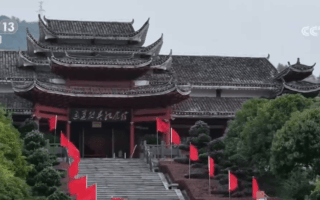
Original title: Continue the spirit of the Long March and forge ahead on the journey of rejuvenation | Close-up: One grain of highland barley, the journey of two generations
The Mako River is surging with blue waves. The harvest of highland barley has been completed on both sides of the river valley, and there are only a few wheat stubbles left in the fields. The reporter followed the marching route of the Red Army and walked into Banma County, Goluo Tibetan Autonomous Prefecture, Qinghai Province. The plateau land beneath our feet carries two journeys spanning 90 years: a grain of highland barley, one connected to the iron discipline of the Long March era, and the other connected to the revitalization of the snow-covered countryside. The fire of the Long March is still alive and well on the banks of the Marco River.
Banma County is the only place where the Red Army’s Long March passed through Qinghai. In July 1936, officers and soldiers of the Second and Fourth Red Fronts entered Banma County and rested in the river valley for more than 20 days. At that time, the army was in short supply of food, and many soldiers were exhausted and hungry. The highland barley in the field is in the grain-filling period, and the green ears are getting fuller and plumper. However, the Red Army soldiers abided by the “Three Major Disciplines and Eight Points of Attention” and would rather eat wild vegetables and pick up cattle and sheep bones to make soup to satisfy their hunger, rather than occupying a grain of food from the people or damaging a single crop.
In Banqian Village, Dengta Township, Banma County, 70-year-old herdsman Gama Qiuer often hears his grandfather talk about the Red Army: “The Red Army has strict discipline and no mistakes, which has won the trust of the local people. Villagers who had hid in the mountains returned to the village one after another, taking the initiative to provide highland barley and butter to support the Red Army. They also acted as guides and rescued the stragglers and sick people.”
As time goes by, the land that witnessed the Iron Age of the Red Army has now become a contiguous plateau black barley field, driving a steady increase in income for the people on the plateau.
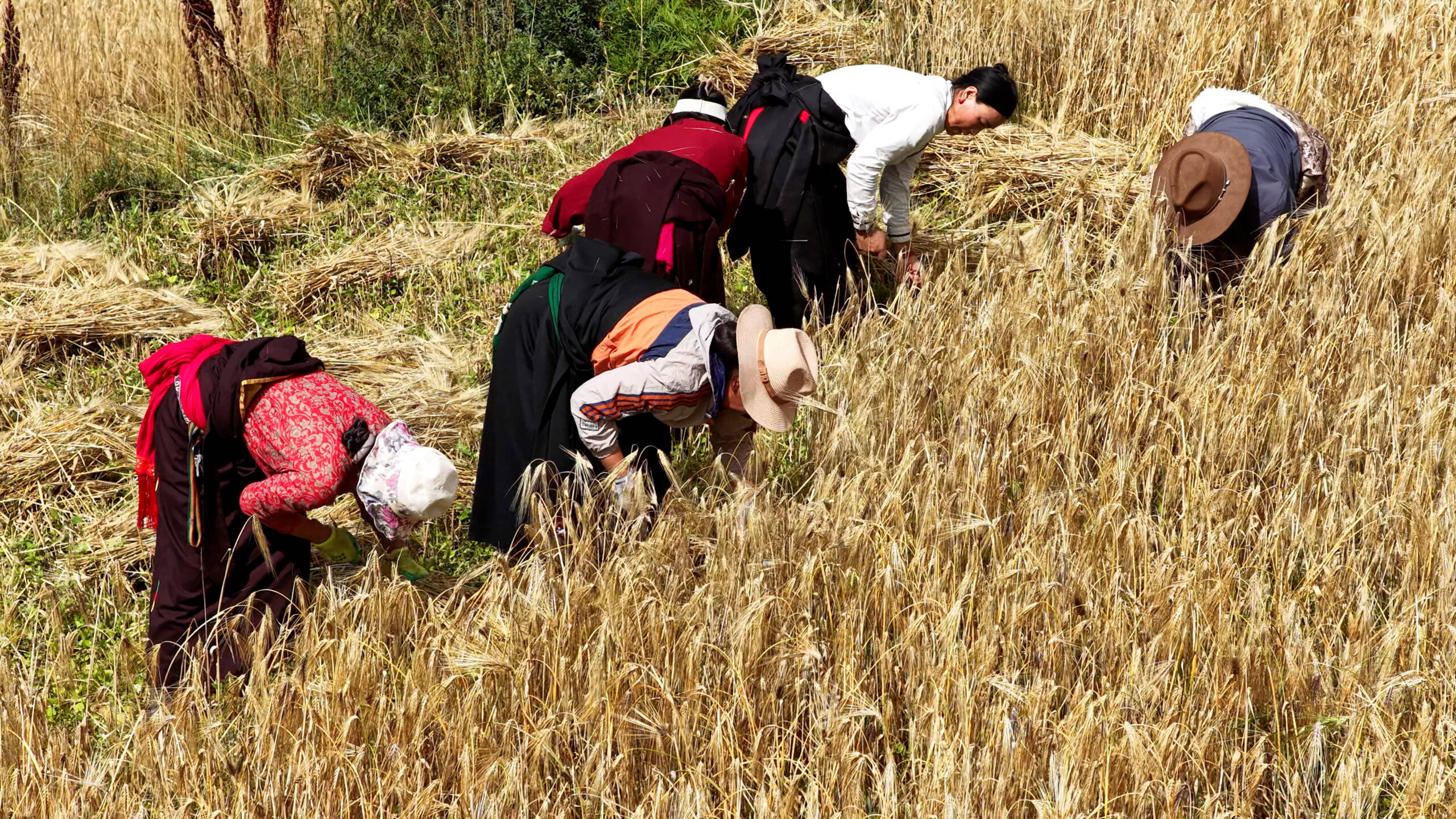
On September 20, local villagers harvested highland barley in Banma County, Goluo Tibetan Autonomous Prefecture, Qinghai Province. (Photo by Ji Taijia)
In Wangrou Village, Yartang Township, Banma County, the machines of the highland barley noodle processing factory are roaring, and the drying ground is covered with black highland barley to be processed. “In recent years, we have continued to promote improved varieties and supporting agricultural machinery, implemented farmland fertility protection subsidy policies, and built up the plateau black highland barley brand. Relying on the customer base and market brought by the red study tour, fried noodles, black highland barley milk tea, biscuits and other products processed from highland barley have come out of the plateau.” Dan Zhengjie, secretary of the Yaltang Township Party Committee, said that some villagers also moved highland barley products into the live broadcast room. This ancient crop has extended a complete industrial chain, and the village collective economy has grown steadily. Many farmers and herdsmen have increased their income and become rich at home.
Not just highland barley. Relying on the excellent ecology of the Makhe River forest area, underforest industries such as Banma Tibetan snow tea and morels have flourished.
In the tea garden of Banma County Green Industrial Park, Jing Guomei, the head of Banma County Zangxue Tea Industry Development Co., Ltd., is leading tea farmers to take care of Zangxue tea trees. According to Jing Guomei, Banma Tibetan Snow Tea is made from the young leaves of Begonia mosaic and Begonia Variefolia using “traditional + modern” tea-making technology.
“In recent years, we have promoted the transformation of the Tibetan snow tea industry from wild picking to artificial cultivation, quality from traditional experience to scientific certification, processing from traditional craftsmanship to modern technology, and sales from offline direct sales to online and offline integration. It has embarked on the road of standardized development, and people can work and increase their income at home,” Jing Guomei said.
Related Reading
- Norway announces that it plans to temporarily ban the use of AI glasses in specific places2026-10-06
- A new long march2026-10-06
- Video丨National Day movie box office exceeded 800 million! “Movies + Cultural Tourism + Food” activates new momentum for holiday consumption2026-10-06
- Sun Yingsha returns to world number one in table tennis women’s singles2026-10-06
- Karoline Leavitt joins Fox News as contributor after leaving White House press secretary role2026-10-06