Cover News Reporter Yao Ruipeng
The cumulative evaporation of more than 210 billion US dollars in 5 years has exceeded 80%, and it has fallen by more than 45% since 2026. On October 1, Nike’s first quarter report for fiscal year 2027 was released. Total revenue was US$11.2 billion, down 4% year-on-year. Revenue in Greater China was US$1.18 billion, down 26% at fixed exchange rates. It has been negative growth for nine consecutive quarters. On the one hand, young people are “disenchanted” with big brands, and on the other hand, the sports consumption scene is fragmented. How does Nike find consumers who have turned away.
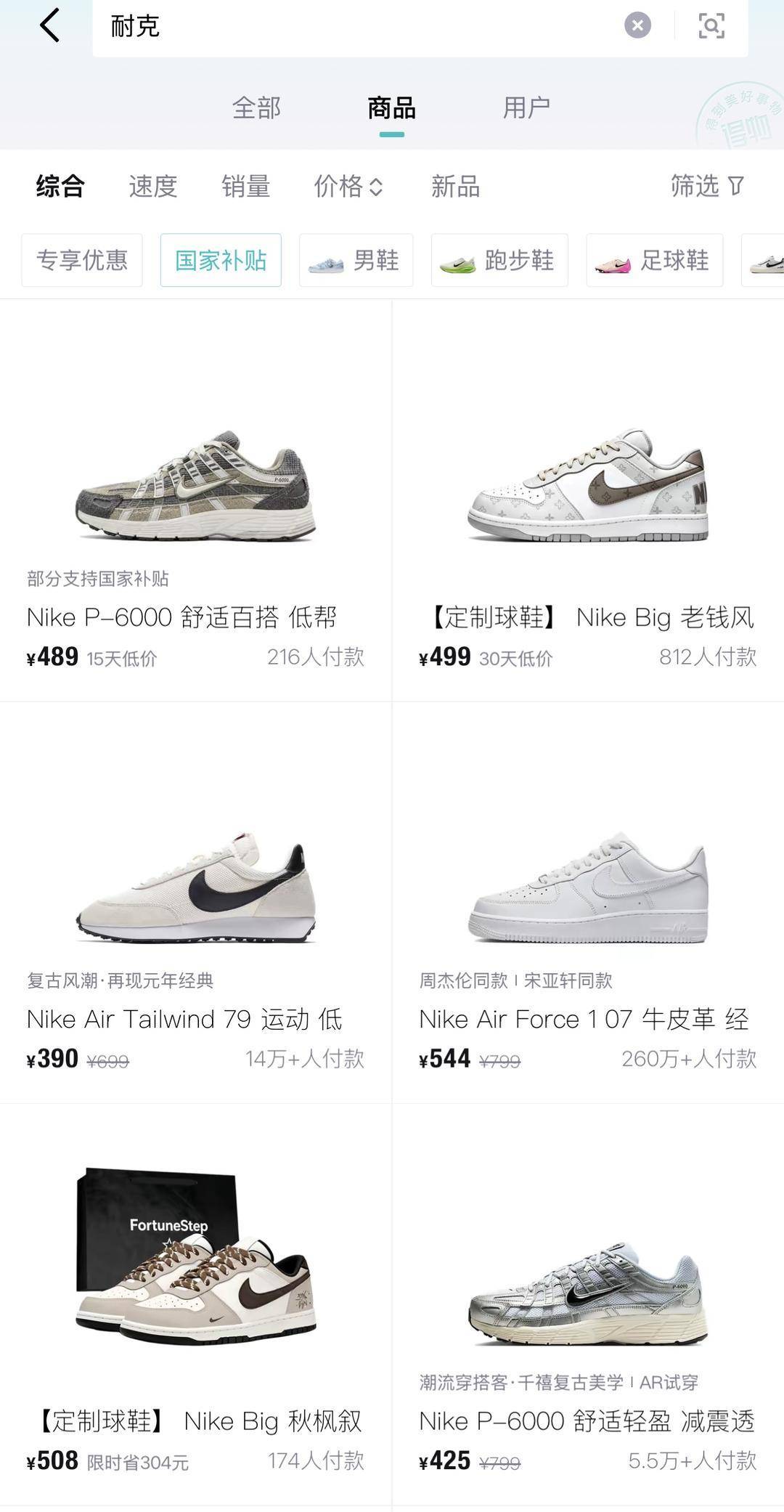
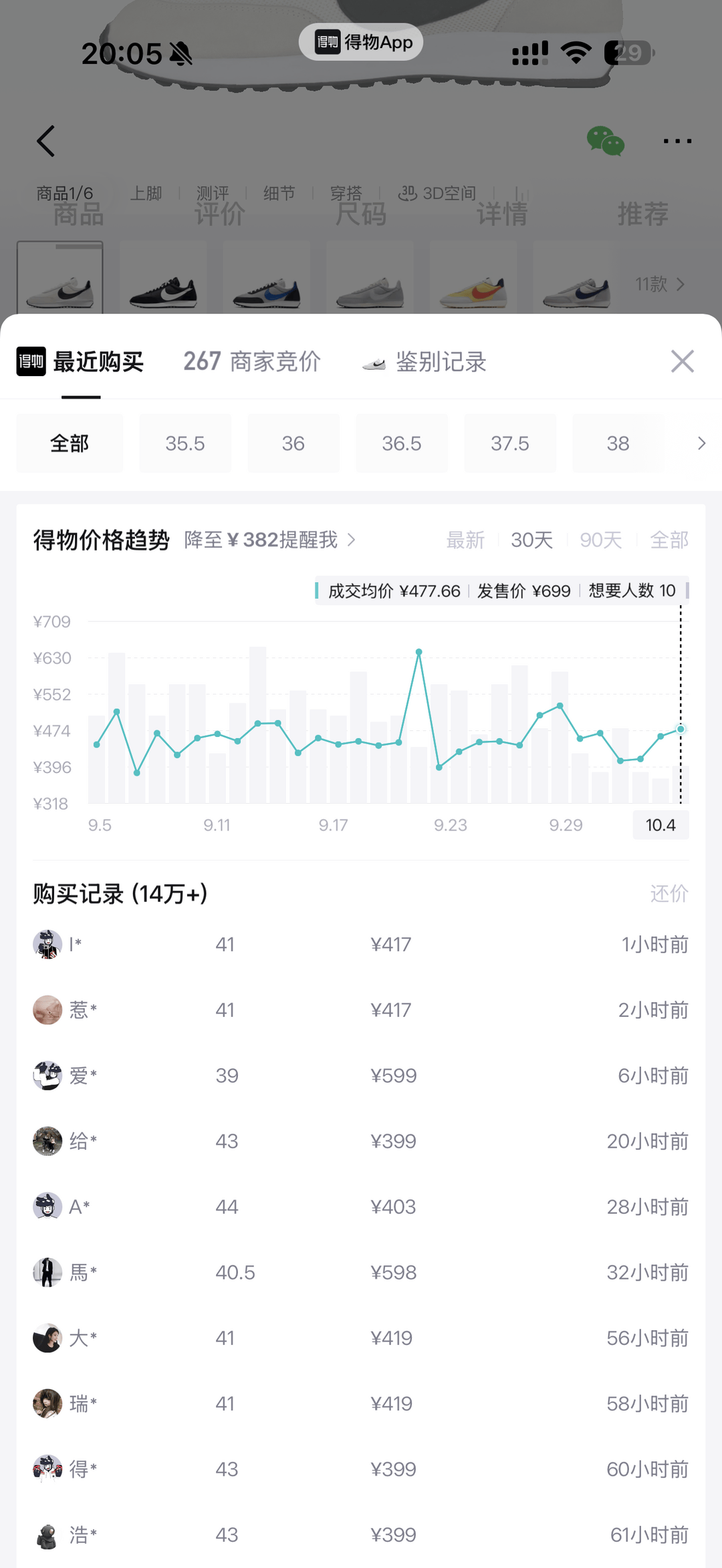
(Nike products on an e-commerce platform have large price fluctuations)
From “worship of big names” to “comfortable to wear”
Why did the young man turn around?
In the past, many people’s first memory of Nike was that a pair of limited-edition shoes could be purchased all night long and could be resold several times. Nowadays, do young consumers still think Nike is a big brand? The reporter found that the answer has quietly changed direction: no one denies that Nike is “still a brand”, but more and more people are adding, “But I don’t want to spend more money on it anymore.” When Nike’s identity symbol expires, even if Nike hands over the world’s number one revenue report card, with US$46.4 billion in fiscal year 2026, it cannot stop the loss of the “quality” of its big name.
A sneaker enthusiast with a collecting history of nearly ten years and hundreds of pairs of AJs at home confirmed this mentality: “Now there is not a single message in the shoe circle group every day. Nike sales are often discounted. New models are sold in outlets soon after they are put on the shelves. The collection value has long been inferior to before. I now turn to collecting co-branded models of domestic brands.” The reporter also learned on multiple social platforms that the choices of the new generation of consumers The selection criteria have shifted from “decent and fashionable” to “comfortable and everyday”, and no longer pay a premium for a logo; random price comparisons have found that the price difference between the same pair of Nike shoes between official flagship stores and dealers is often hundreds of yuan, and some classic models are even close to 50% off the official price in authorized online stores – the out-of-control price system has further overdrawn the brand’s weight in the hearts of core users.
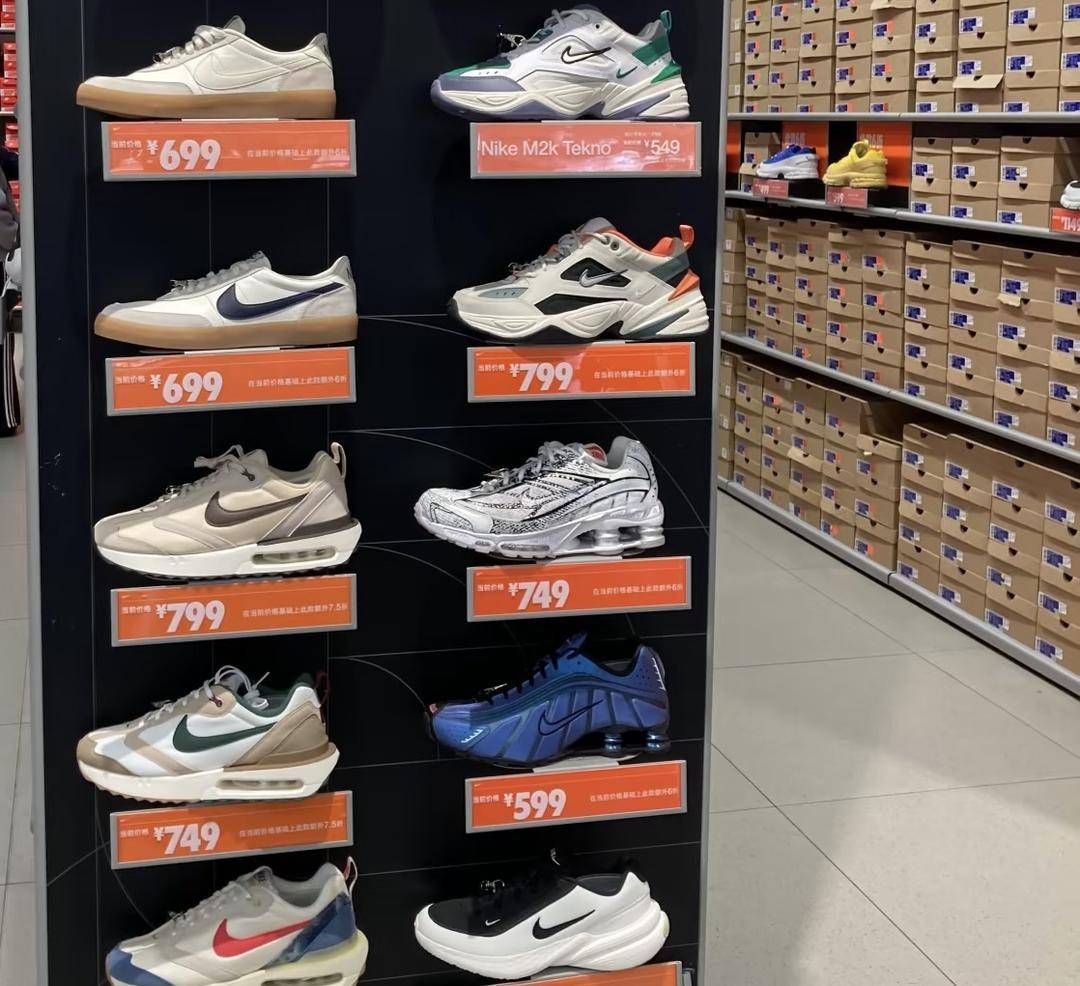
(Such discount labels can be seen everywhere in the Nike discount store in Chengdu Outlet.)
What’s more fundamental is that both products and narratives have fallen behind. In recent years, Nike’s focus has been obviously on re-engraving old models and limited sales. Its investment in iteration of the basic mass running shoes and basketball shoes has been narrowing. However, domestic running shoes have already caught up with core technologies such as carbon plates and supercritical foaming. As one interviewed expert said: “No matter how well the brand story is told, it cannot be exchanged for a pair of shoes that truly fit.”
Fragmentation of sports consumption scenes
Nike is losing every home court?
Nowadays, consumers are turning around, which has amplified the changes in the market structure. Sports consumption is rapidly changing: running circles like HOKA and Angpao, people who like hiking choose Salomon and Archaeopteryx, yoga has been equated with Lululemon, ASICS and New Balance have their own fixed crowds, and the marathon track is firmly occupied by domestic products such as Anta, Li Ning, and Xtep. Each market segment has its own “home champion”. Angpa’s Asia-Pacific revenue surged 96.5% year-on-year, and HOKA is rapidly penetrating among professional runners. Nike is still trying to use one brand spirit to take over all sports. The result is that every home game becomes an “away game.”
Data confirms this “home loss”. According to the company’s financial reports, Anta Group’s revenue in 2025 will be 80.219 billion yuan, a year-on-year increase of 13.3%, ranking first in the Chinese market for four consecutive years, with a market share of approximately 21.8%; Anta The total revenue of the four major domestic brands, Li Ning, Xtep and 361 Degrees, will reach 135.114 billion yuan in 2025; in the first half of 2026, Anta’s revenue was 43.51 billion yuan, exceeding the sum of Li Ning, Xtep and 361 Degrees. Behind every carving up scene, there may be a group of consumers who have deeply recognized Nike before.
Nike also tried to save itself. The first blow was towards the channel: starting from January 1, 2027, it will completely terminate the online platform sales of the two major dealers, Taobao and Baosheng, in mainland China, and take the online to self-operation, trying to rebuild the price system and regain pricing power. However, many interviewed experts believe that under the dual background of consumption disenchantment and scene fragmentation, the acquisition of channel power can only stop the bleeding, but cannot cure the root cause – Nike’s real crisis is not that “it sells cheaper” but that “no one wants to pursue it.”
A channel dealer said frankly that in the six months before the authorization expires, no one dares to stock up on a pallet that is about to lose its authorization. Consumers are also waiting for the “last wave of discounts” and “discounts and cash flow will be ugly.” The industry generally judges that Nike’s current downward pressure on revenue will be difficult to reverse in the short term, and it will have to wait until fiscal year 2028 at the earliest to truly return to the growth track.
Related Reading
- With 32 consecutive wins at the China Open, Djokovic sets another record in the Open era2026-10-05
- Noah’s Ark researchers ‘inching towards’ confirmation after drilling challenges natural2026-10-04
- Appointments are over, capacity is limited, and announcements have been released in many scenic spots across the country.2026-10-04
- Numbers say holidays in China2026-10-04