Noah’s Ark researchers ‘inching towards’ confirmation after drilling challenges natural-rock theory
Core drilling at the Durupinar formation near Mount Ararat found no bedrock but revealed deposits of rich black soil
Published
Andrew Jones, vice president of the Noah’s Ark Research Project, told Fox News Digital about the project’s latest field season at Turkey’s Durupınar formation, where researchers collected more than 300 soil samples and conducted deep-core drilling.
A team investigating a boat-shaped formation in eastern Turkey says new evidence is strengthening its case that the site could hold the remains of Noah’s Ark.
“In archaeology, you deal with probabilities, and we’re inching towards where we believe we will have confirmation this winter after our soil analysis is done with Sivas University, who’s our partner in this,” Noah’s Ark Scans founder Andrew Jones told “Saturday in America.”
The focus of the investigation is the Durupınar formation, an approximately 538-foot-long geological structure near Mount Ararat. Its shape and proximity to the region identified in the biblical account have fascinated Ark hunters for decades.
The boat-shaped formation was first discovered in 1959 and has long-drawn speculation over a possible connection to Noah’s Ark.
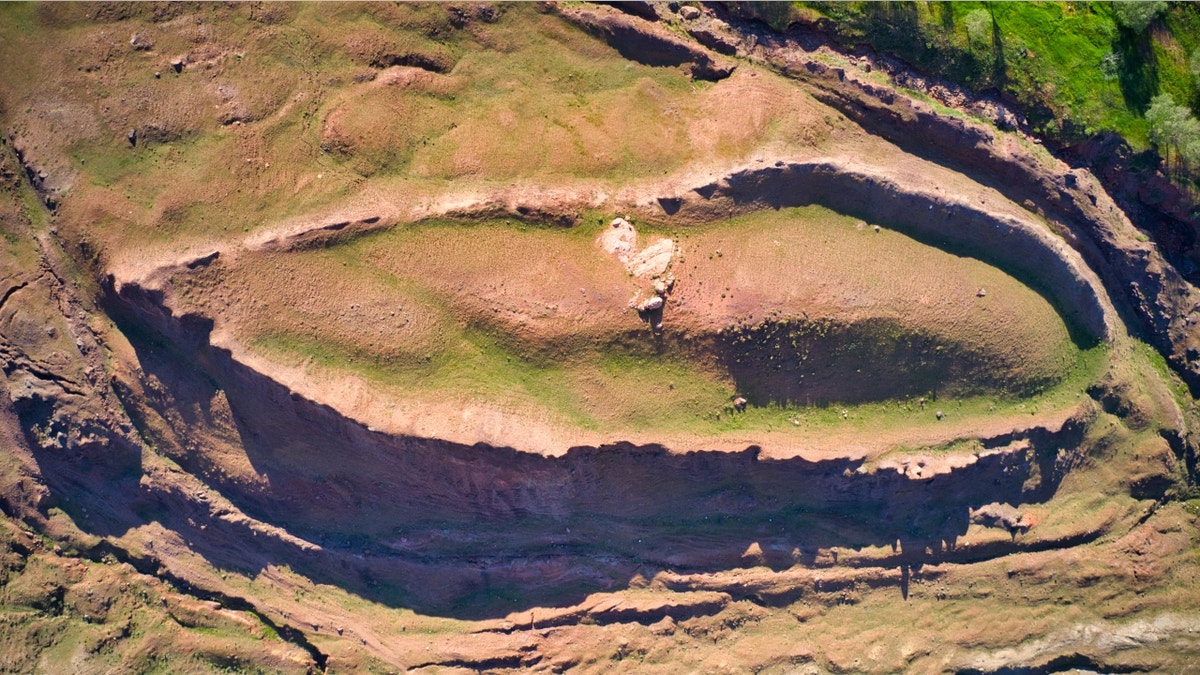
Scientists who have researched at Turkey’s Durupinar site say they’ve found convincing evidence regarding the Noah’s Ark hypothesis. (NoahsArkScans.com)
Critics have maintained that the formation is naturally occurring, but Jones said recent drilling, soil sampling and ground-penetrating radar have given his team new reasons to challenge that conclusion.
“They’ve criticized in the past, saying all those scans you can interpret different ways, ‘This is a solid mass of rock, a syncline or a block of bedrock,'” Jones said. “Well, we’ve core drilled… over 12 locations. We did not find bedrock at all.”
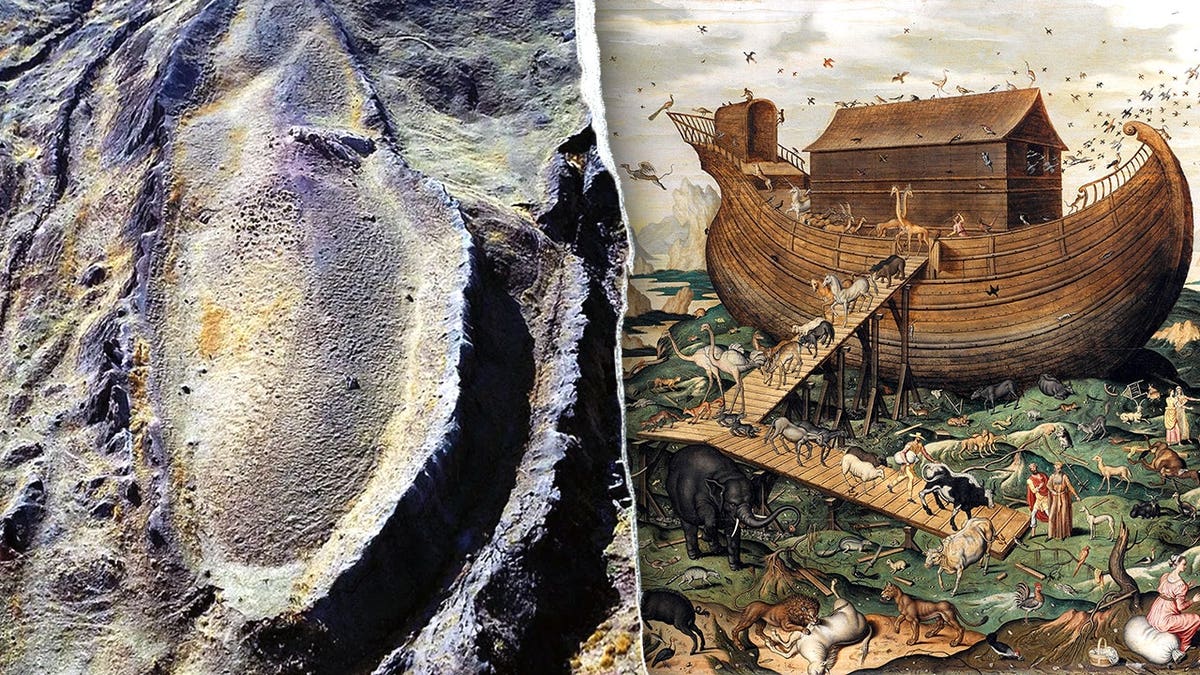
Researchers say new soil analysis from Turkey’s Durupinar formation shows chemical differences consistent with decayed organic material. (Huseyin Yildiz/Anadolu Agency/Getty Images; Fine Art Images/Heritage Images/Getty Images)
Jones said the drilling uncovered rich black soil, which researchers plan to test for organic content this winter at Ankara University.
“Noah’s Ark was a giant wooden boat, according to the Bible,” he said.
“As wood decays, you’re gonna find elevated organic matter. This year, as we drilled into the formation, we did not find a solid rock layer, like the critics said. But we did find large deposits of highly rich black soil that has hopefully high organics.”
The researchers hope the analysis will help determine whether there are signs of human activity or materials consistent with decayed wood beneath the formation.
Jones also pointed to a 2024 soil survey that he said contained three times more organic matter inside the boat-shaped formation than samples collected just outside it.
Fox News’ Andrea Margolis contributed to this report.
Taylor Penley is an associate editor for Fox News Digital and contributor to FOX Business and Fox Nation who covers media, culture and Flash
Related Reading
- In the early morning, an international flight from Hong Kong made an emergency landing. 146 people were evacuated through emergency slides. Reports said the plane showed signs of fire; the airline responded2026-11-22
- The AI cheating incident in South Korea’s college entrance examination has been brewing, and Education Minister Choi Gyo-jin has resigned. Previously, Lee Jae-myung offered a large reward to investigate and punish those who cheated in the college entrance examination: 100 million won for every cheating case reported2026-11-22
- The spectacle of “Hai Hao” appears in Weihai, and the sea suddenly seems to be “boiled and smoking”2026-11-22
- Iran’s President: The ongoing economic war is “far more difficult” than a military conflict2026-11-22
- Why are T and K classified as high-speed passenger trains? How to choose Z, N and V for normal speed trains? The authoritative answer is here2026-11-22