Hot news:According to CCTV news reports, Russian President Vladimir Putin signed a presidential decree on September 28, determining the total number of Russian Federation armed forces to be 2,441,630 people, including 1,550,500 active military personnel. The presidential decree also requires the Russian government to allocate corresponding budget funds from the federal budget to the Ministry of Defense and abolish the relevant presidential decrees signed on July 27 and June 12 this year. This is the fourth time since early 2026 that Putin has signed a presidential decree on military expansion.
點評:Currently, Russia’s military construction is at a critical stage of transition from “scale expansion” to “capability generation”. The signing of multiple presidential decrees in 2026 shows that Russia has adopted the expansion of military power as a core means to deal with long-term wars of attrition and external strategic pressure. However, the pressure of financial sustainability, the diminishing marginal benefits of soldier recruitment, and the dependence on foreign military technology are still structural obstacles that are difficult to avoid for the Russian military. They also make this large-scale military expansion face a realistic test of “organization first and capabilities lagging behind.” From the perspective of future development, whether Russia can convert the increase in establishment personnel into sustainable combat effectiveness will determine its actual position in the global military landscape in the post-conflict era.
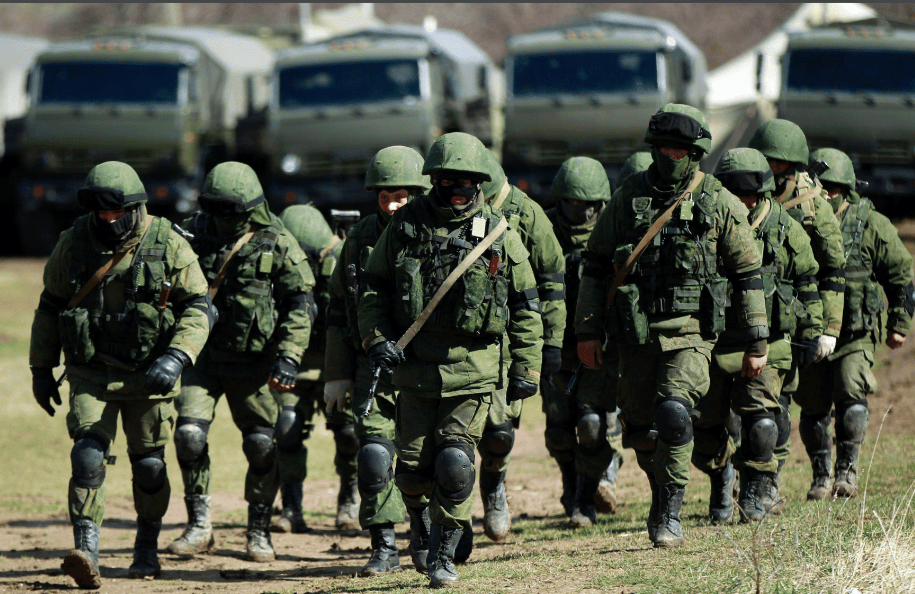
The most significant feature of the Russian military’s organizational adjustment in 2026 is that the pace of expansion has accelerated significantly, showing the new characteristics of “small steps, fast running, and gradual adjustments.”
Military expansion shows a parallel trend of “high frequency and small amplitude” and “structural differentiation”
The most significant feature of the Russian military’s organizational adjustment in 2026 is that the pace of expansion has accelerated significantly, showing the new characteristics of “small steps, fast running, and gradual adjustments.” In March, June, July and September this year, Putin signed presidential decrees four times, gradually increasing the total number of personnel from more than 2.39 million at the beginning of the year to 2.44 million, and the number of active military personnel increased from 1.51 million to 1.55 million. In contrast, a single expansion will increase by approximately 137,000 people in August 2022, approximately 170,000 in December 2023, and approximately 180,000 in September 2024. The four expansions in 2026 will only add a total of approximately 49,900 new establishments, which is not as large as any previous single expansion. This contrast shows that after the Russian army has experienced high-intensity consumption in the past five years, its available troop reserves have entered a stage of “marginal decline” and the space for large-scale one-time expansion of its establishment is narrowing.
From the perspective of the military structure, the composition of the four expansions in 2026 shows a clear feature of “structural differentiation.” The two adjustments in June and September were mainly based on a small increase in active military personnel, adding approximately 7,700 and 15,500 personnel respectively. The presidential decree in July did not simply increase front-line combat personnel, but decided to establish several military construction engineering units. The new establishment mainly went to logistics support and infrastructure construction positions. This arrangement means that the Russian military is shifting from “focusing on the expansion of combat forces” to “focusing on strengthening system support capabilities.” Although frontline consumption requires the replenishment of troops, gaps in rear systems such as equipment maintenance, fortification construction, material transportation, and base support also restrict the continuous output of combat effectiveness. The establishment of the military construction engineering force is essentially providing infrastructure support for the long-term war of attrition.
From the perspective of the military expansion model, the pace of military expansion in 2026 is in sharp contrast to the “step-like jump” from 2022 to 2024. The substantial expansion in the early stages of the conflict was partly due to the emergency response after the expectation of “quick victory” failed. The organizational adjustment has an obvious “filling gap” nature, while the high-frequency fine-tuning in 2026 is more like “refined adjustment” within a relatively stable organizational framework, repeatedly calibrating the force configuration in a limited space according to the battlefield situation and rotation needs. This transition from “emergency expansion” to “actuarial adjustment” reflects the transition of Russia’s war system from “temporary mobilization state” to “normal consumption system.”
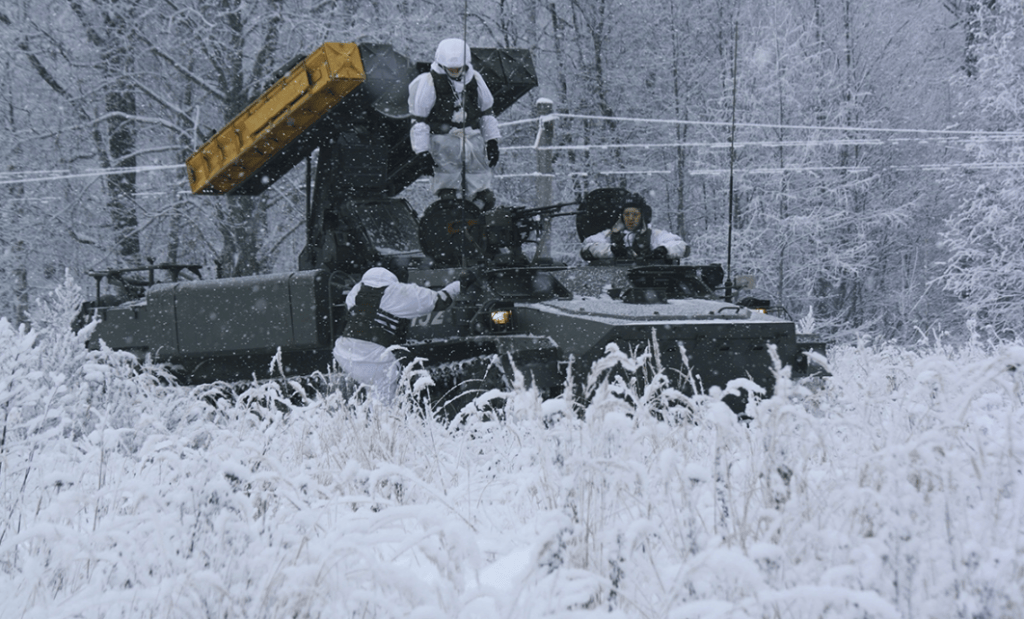
Ukraine’s continued in-depth attacks on Russia have greatly increased the pressure on the Russian military’s air defense. For this reason, Russia is expanding its mobile air defense forces.
Forced to deal with the dual pressures of long-term consumption and strategic containment
The primary reason for the continued expansion of the Russian army is the huge consumption of troops caused by the protracted conflict between Russia and Ukraine. According to multiple assessments, the gap between the monthly casualties and recruitment of the Russian army in the Ukrainian battlefield in 2026 is widening. According to data from the Ukrainian intelligence agency, the current average daily losses of the Russian army on the front line are more than 1,400 people. What is even more noteworthy is that since February 2026, the recruitment of Russian military contract soldiers has continued to decline, and there has even been a phenomenon of “recruitment lower than attrition” for the first time since 2022, which means that the Russian military force pool is shifting from “net growth” to “net contraction.” In this context, although raising the upper limit of the number of personnel cannot directly solve the problem of the source of soldiers, it at least provides institutional space for each unit to maintain its full strength rate, giving frontline commanders greater room for maneuver when applying for additional soldiers.
The second core motivation comes from the sharp deterioration of the geosecurity environment brought about by NATO’s eastward expansion. Since Finland and Sweden joined NATO, the length of Russia’s land border with NATO has almost doubled, and the strategic depth in the northwest has been greatly reduced. Russian analysis clearly points out that one of the core purposes of military expansion is to “fill the strategic defense gap in the western region” and respond to the geosecurity changes brought about by new NATO member states. This judgment can also be traced in the details of this military expansion and adjustment. For example, the deployment direction of the newly added military construction engineering troops in July is likely to be closely related to the infrastructure construction needs on the western and northwest borders. At the same time, Ukraine’s attacks on deep targets in Russia’s mainland have become increasingly frequent, and drones and cruise missiles have harassed oil depots, airports and military facilities, forcing the Russian military to invest more troops in local air defense and defense of key areas. Therefore, Russia’s four military expansions this year are, to a certain extent, an institutionalized response to the new normal of “simultaneous pressure on the front and rear.”
The third important motivation is Russia’s practical need to maintain wartime economic operations and upgrade its military-industrial system. According to public data, Russia’s military spending has soared from 3.6 trillion rubles in 2021 to approximately 16 trillion rubles in 2025, accounting for 7.5% of GDP from 3.6%. The “defense” project allocation in the 2026 federal budget is 12.9 trillion rubles, accounting for 29.3% of all budget expenditures. Such huge military spending can provide a strong support for the expansion of the establishment, so that the expanded troops can maintain frontline rotation and combat intensity.
In addition, Russia’s military industrial production capacity has also been significantly increased. According to data released by Putin at the December 2025 arms conference, tank production has increased to 2.2 times that of 2022, the production of various ammunition and strike weapons has increased by more than 22 times, and the production of military aircraft has increased by 4.6 times. Through military expansion, it can provide stable manpower, logistics and rotation support for the expansion of military industrial production capacity, so that the wartime economy can continue to operate in the cycle of “production-consumption-reproduction”, thus forming a necessary carrier to maintain the continuous upgrading of the military industry system and the operation of the wartime economy.
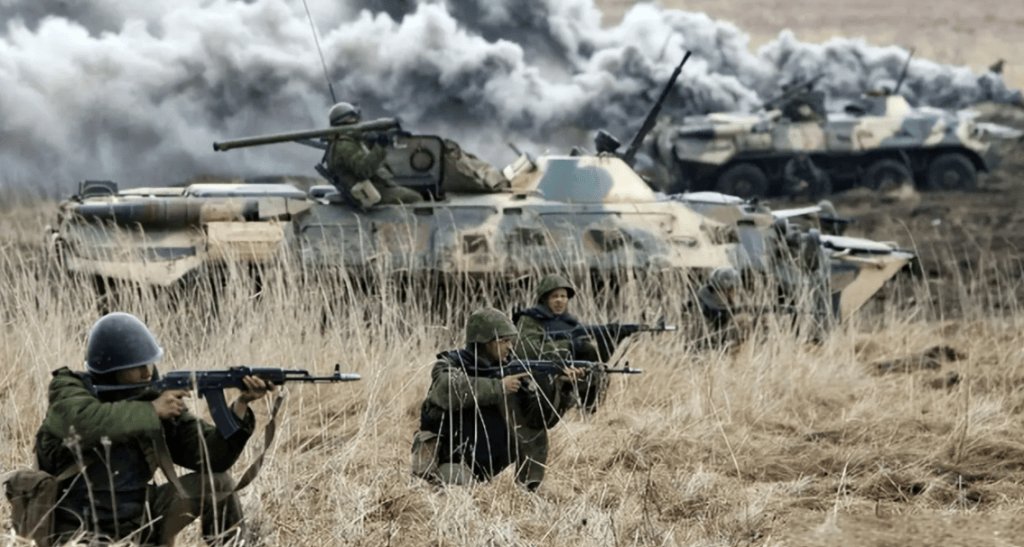
Russian troops during exercises.
Faced with the structural contradiction between “preparation first” and “lagged ability”
In the short term, the biggest test of the Russian military expansion is whether it can convert the increase in personnel into actual combat effectiveness. Russia’s military mobilization system has long relied on the dual-track model of “contract soldiers + annual conscription”. Contract soldiers undertake the main combat tasks, while compulsory soldiers provide basic manpower supplements. But as casualties continue and the marginal utility of recruitment incentives diminishes, the difficulty of maintaining this model is rising sharply.
For Russia, the shortfall in actual posts mainly stems from huge irreversible losses on the battlefield. Tens of thousands of Russian military contract soldiers were killed or seriously injured and have been unable to return to service. In order to make up for this gap, Russia even increased the signing bonus of contract soldiers to one million rubles at one time. The average signing bonus in March 2026 reached a record high of 1.47 million rubles, and came with debt relief and other benefits, but the recruitment situation is still grim. For example, in the first quarter of 2026, the number of Russian military contract recruits dropped by about 20% compared with the same period in 2025. In view of the social backlash caused by “partial mobilization” in 2022, Russian decision-makers have always regarded forced mobilization as a political taboo and dare not make a fundamental breakthrough. Therefore, as the manpower gap continues to expand in the future, Russia may be forced to make a difficult choice between maintaining gradual expansion and implementing a new round of forced mobilization.
In the long term, the sustainability of future Russian military expansion depends on three key variables. One is financial affordability. As the conflict between Russia and Ukraine continues to stalemate, the rapid expansion of military spending will have a “crowding-out effect” on the civilian economy, and Russia will be forced to continue to walk a tightrope between “war priority” and “maintenance of people’s livelihood and stability.” The second is the sustainability of troop recruitment. Currently, Russia is facing the most severe demographic crisis since the Cold War, and military mobilization has further accelerated population decline and structural aging. A more far-reaching impact is that military mobilization has also accelerated the deterioration of the demographic structure: the loss and casualties of the working-age population may continue to weaken Russia’s economic vitality and military reserve base in the next decade. The third is the fragility of technological autonomy. Although Russia has made certain breakthroughs in fields such as drones and electronic warfare, its technological independence still faces long-term challenges, especially in core areas such as microelectronics, precision guidance and high-end sensors. It is difficult for Russia to achieve real import substitution in the short term.
According to Ukraine’s claims, each of the Kh-101 missiles used by Russia in the attack on Kiev contained more than 100 Western-made components. About 90% of Russia’s cruise and ballistic missiles contain electronic components manufactured by Japanese companies. If this fact is established, if the West intensifies sanctions on Russia in the future, its procurement model through a network of third-country shell companies may face the risk of being gradually blocked. In this case, even if the number of personnel continues to increase, the actual battlefield effectiveness of the military expansion will still be compromised.
Related Reading
- Centuries-old lava rock arch in Hawai’i Volcanoes National Park collapses into ocean following Hurricane Nolo2026-10-04
- Jingcai Observation丨From “seeing the scenery” to “entering the scenery” to unlock new trends in cultural tourism consumption during the National Day2026-10-03
- Video丨Remember to prepare a thick coat when returning from vacation! Know the holiday weather conditions in advance2026-10-03
- Movie丨The total box office exceeded 30 billion! Family film becomes the highlight of National Day movie viewing2026-10-03
- Celebrate the National Day holiday and feel the vibrant China2026-10-03