CCTV news(Focus Interview): If the Long March is a heroic epic of swallowing up mountains and rivers, then climbing snow-capped mountains and crossing grasslands is undoubtedly the most tragic and unforgettable chapter in this epic. The snow-capped mountains during the Long March had thin air, few people, high mountains and deep valleys, and unpredictable climate. During the crossing, many Red Army soldiers collapsed from exhaustion, froze, and slept on the snowy mountains.
Today’s Jiajin Mountain has long been a tourist attraction with accessible roads. In 2025, with the completion of the Jiajinshan Tunnel, it will only take 10 minutes to cross the mountain. But more than 90 years ago, this place was a daunting natural hazard.
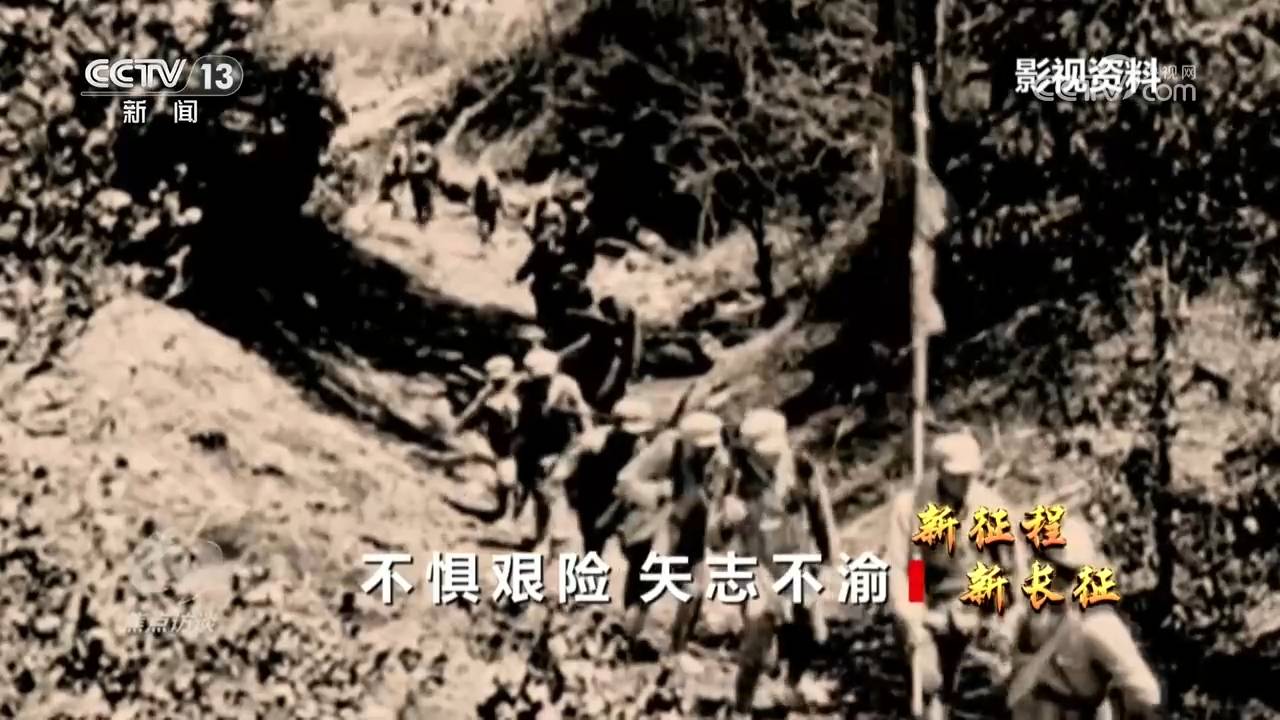
In May 1935, the fighting Red Army passed through the hot valley area and reached Jiajin Mountain. At the Luding Bridge Conference held not long ago, the decision was made that the Central Red Army would continue to move north to join forces with the Fourth Red Army. In a desperate situation with pursuers behind and heavy troops on the flanks, overcoming natural dangers became an inevitable choice for the Central Red Army. Most of the soldiers wore straw sandals and only single clothes. After convening a mobilization meeting and making simple preparations, on June 12, the vanguard began to march towards Jiajin Mountain.
“Jiajin Mountain, Jiajin Mountain, birds can’t fly and people can’t climb it. If you want to cross Jiajin Mountain, you have to have a god come to earth.” This folk song circulated in the local area shows the majesty and danger of Jiajin Mountain. Jiajin Mountain is more than 4,100 meters above sea level. The air gets thinner as you climb higher, and strong winds carry hailstones and hit the soldiers.
Xiao Linda, an old Red Army soldier: “There was a cook who was carrying a big iron pot. As soon as he put down his luggage and the pot, he rolled his eyes and, boom, he fell down.”
Seeing the sacrifice of his comrades at such close range, Xiao Linda was frightened. He quickly stood up and continued to climb to the top of the mountain. Facing the harsh environment, the soldiers maintained an almost stubborn optimism. The road down the mountain was very slippery, and the steep slopes covered with ice and snow made it impossible to stand. The soldiers simply put their minds aside and slid down the ice path, and their songs echoed in the valley.
Zhao Shixin, an old Red Army soldier: “When I slip into the snow, only my head is exposed, and the rest is buried in the snow.”
After a narrow escape, the soldiers of the First Red Army and the Fourth Red Army who came to greet them finally met.
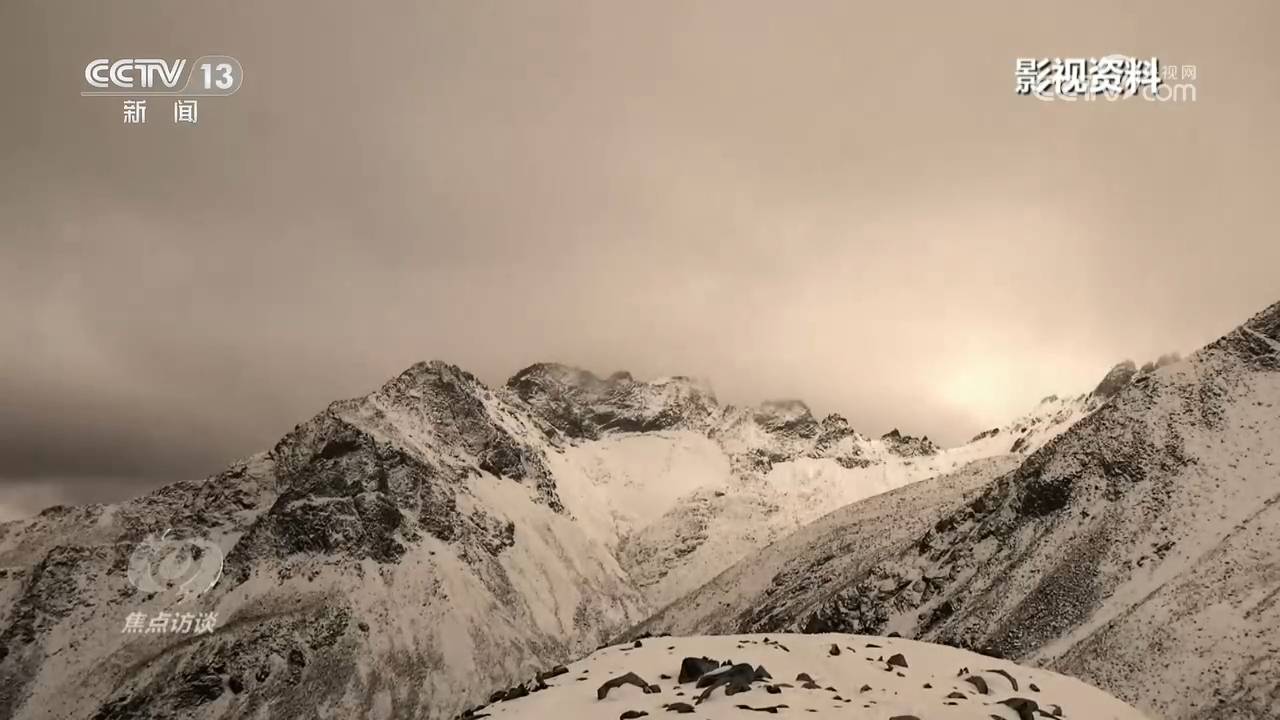
During the Long March, the Red Army soldiers climbed more than 40 dangerous peaks with perseverance, including more than 20 snow-capped mountains above 4,000 meters above sea level. However, the snow-capped mountains are not the most brutal test on the Long March. When the Red Army commanders and fighters left the snowy mountains behind, they were greeted by the vast grasslands of the Aba area.
The grasslands in August are lush with green grass and flowers. Under the breathtaking scenery, the water plants are full of death traps. In order to avoid pursuing soldiers and bandits, the Red Army had to move deeper into the grassland. During the march on the grassland, Zhang Buxing once saw his comrades around him being swallowed up by the mud.
Zhang Buxing, an old Red Army soldier: “There was a woman who couldn’t pull her back, and she was sinking deeper and deeper. She said you should give up soon, and if you don’t give up, you would come down. Watch her disappear slowly. Finally, she said, I wish you success in reaching your destination.”
Unpredictable weather and extreme hunger became another fatal threat to the grass march. The sky was still clear at noon, but suddenly dark clouds came over in the afternoon, with thunder and lightning.
Unable to find food, wild celery, grass roots, saddles, and belts became food for the commanders and soldiers to satisfy their hunger.
Due to Zhang Guotao’s erroneous separatist line, the Fourth Front Army repeatedly turned back and forth between going north and going south, stepping into the same swamp of death three times. The troops in front ate all the edible wild vegetables. Hungry was the most painful memory for the Red Army soldiers who were crossing the grassland for the third time.
Zhang Bin, an old Red Army soldier: “People behind us would catch the peas pulled on the roadside and eat them. There was nothing we could do at that time.”
The further we go, the more we see our comrades sleeping in the grass. In the grassland where death is everywhere, only the most determined will can survive. In 1936, following the bones of their comrades, these skinny and ragged soldiers, relying on their iron will and firm ideals and beliefs, finally walked out of the grassland and headed towards northern Shaanxi.
“The spirit of not being afraid of any difficulties and obstacles and making all sacrifices in order to save the country and the people” is a distinctive feature of the spirit of the great Long March. Back then, the Red Army climbed snowy mountains and crossed grasslands in order to find a way out for the suffering China. Today, in the “Three North” regions of our country, there is also a group of people who have given everything to this land. Combating desertification is their “Long March” in the new era.
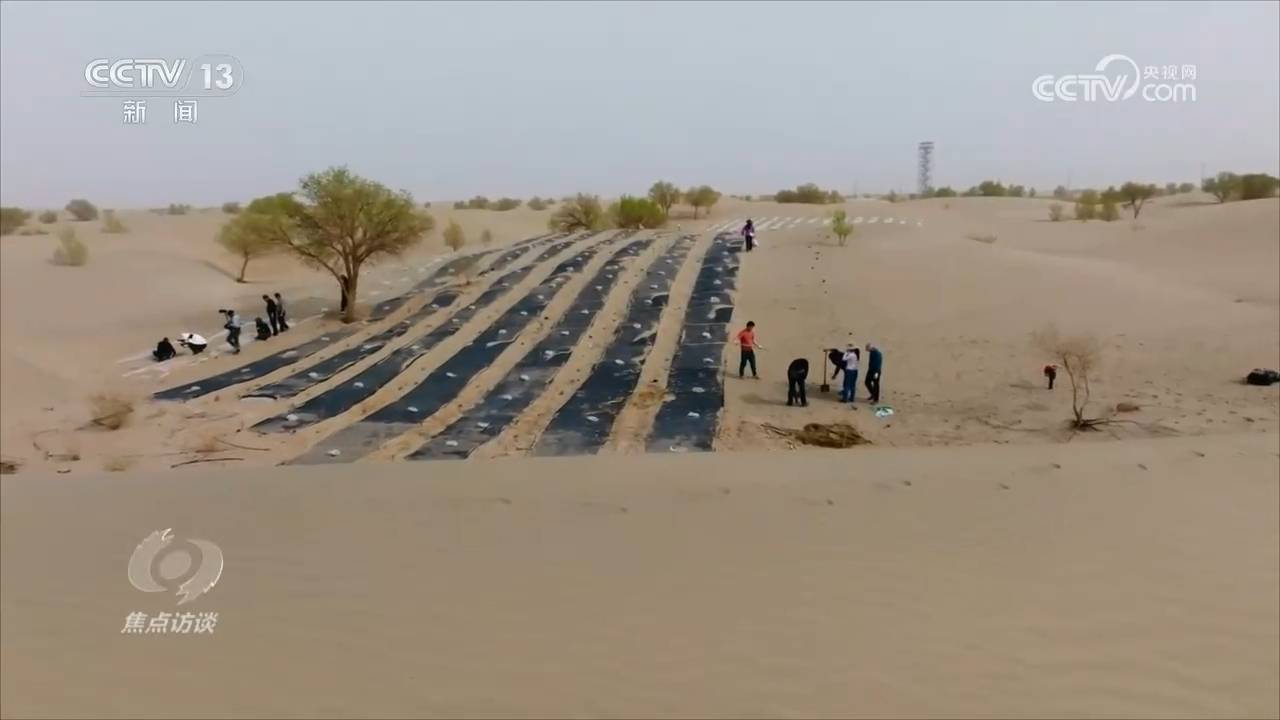
In 2023, with the start of the battle for the “Three Norths” project, three iconic battles – the battle for the “Several Bends” of the Yellow River, the battle to annihilate the two sandy areas of Horqin and Hunshandake, and the Hexi Corridor-Taklimakan Desert edge blockade battle – are in full swing. Among them, the urgency and arduousness of ecological management of the Yellow River’s “Several Bends” are particularly prominent, and Ordos in Inner Mongolia is the main battlefield.
According to the mission requirements, by 2030, the Kubuqi Desert must complete more than 70% of the control rate, and the Mu Us Desert must basically eliminate mobile sand dunes. Now, as we continue to advance into the hinterland of the desert, all that remains are the hardest “hard bones” to crack.
In mid-September, when we first met Zhou Zhizhong, he was building sand barriers with workers in the hinterland of the Kubuqi Desert in preparation for autumn planting in October and the upcoming sandstorm season. This slope is typically the most difficult to manage in the hinterland of the desert. It is small and scattered, has serious soil desertification, and has a steep slope, making it difficult for machinery to enter. In the past few years, Zhou Zhizhong has repeatedly replanted, and the results he has seen are still limited, but he is still persisting.
This year is Zhou Zhizhong’s 19th year of desertification control. His home is in a village on the southern edge of the Kubuqi Desert. This old house where he has lived for many years cannot escape his memory, because it is almost a part of life.
Over the past many years, desert management has been advancing, but the situation of “advancing sand and people retreating” has not changed. The environment became worse and worse, and people in the village moved away one after another, but Zhou Zhizhong’s family chose to stay. In 2007, in order to continue to survive on this land, he decided to plant trees.
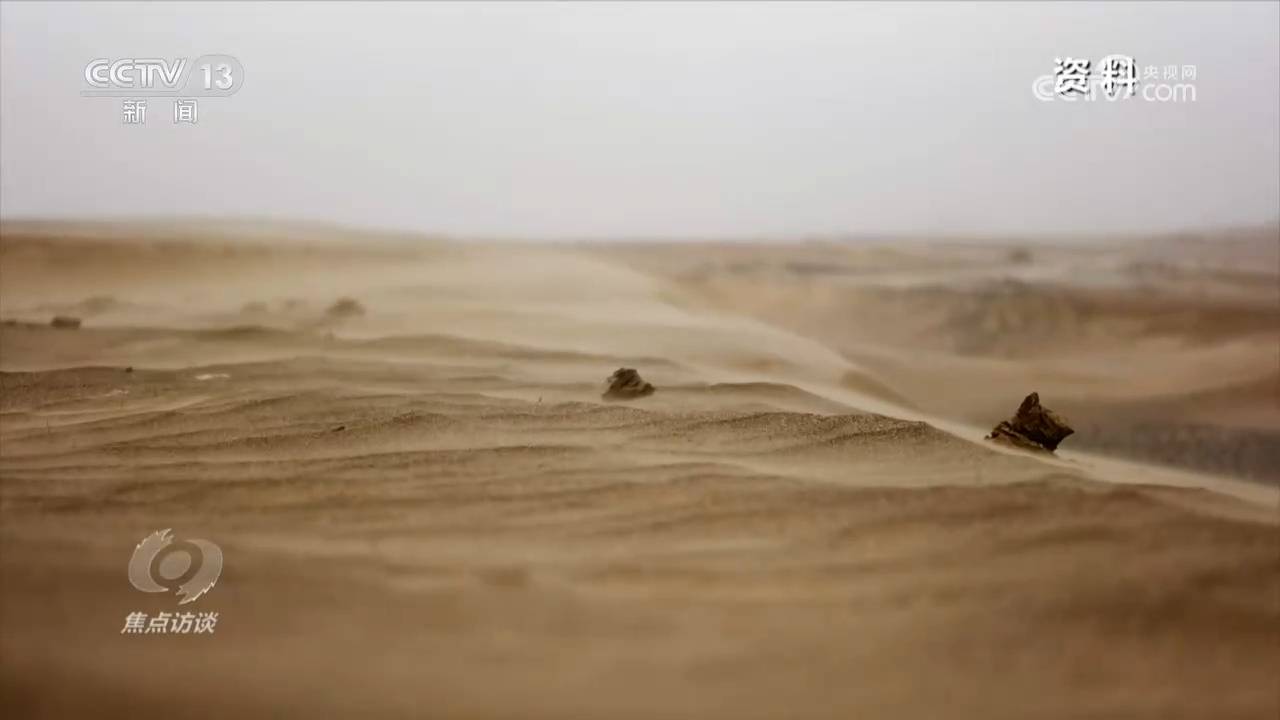
Zhou Zhizhong had no experience in sand control. He learned from the practices of other places, bought saplings from outside and started planting them on a trial basis. Due to lack of experience, the survival rate of saplings is very low. Zhou Zhizhong still invested all his savings. If his family didn’t have enough money, he took out a loan.
In order to realize this simple wish, Zhou Zhizhong suffered a lot. In an era without machinery, saplings could only be transported inside by people carrying them on their shoulders. The survival rate of saplings is not high, so we can only be patient and keep trying to find solutions.
In recent years, as the country has increased its emphasis on and investment in desert control, Zhou Zhizhong applied for the national afforestation project and contracted the project, greatly improving the efficiency of tree planting. Sitting in Zhou Zhizhong’s car, he told reporters that the grasslands covered with green vegetation outside the window were once deserts. Over the years, he planted one piece and pushed another piece forward, pushing all the way to the hinterland of the desert.
It is precisely because of the perseverance and dedication of generations of sand control people like Zhou Zhizhong that the green has advanced and the sand has receded, and oases have re-spread on the former sand.
After years of desert control, Feng Shui Liang Town has become tree-lined. As more and more deserts turn into oases, how to consolidate hard-won achievements has become a new problem faced by sand control people. Because it is located on the edge of a desert, the soil here is loose, the water table is deep, and some trees are aging. If this continues, the land may become desertified again.
Liu Ping is also a veteran in desertification control. He worked in the Desertification Control Office after graduating from university and has been working there for 30 years. During the exploration, Liu Ping and the staff of the bureau tried to add a certain proportion of shrubs in the arbor forest that have low water demand and can rely on the sky for food. Recently, the effects of trial planting have begun to show.
In the past few years, in the battle with wind and sand, sand control people have always faced the difficulties and tried their best to protect every inch of land. In the three years since the start of the “Three North” project battle, the eastern battle zone has been annihilated, and the “green advance and sand retreat” trend has accelerated significantly; the central battle zone has seen a significant decrease in the amount of sediment discharged into the Yellow River; and the western blockade battle zone has effectively controlled the spread of sand sources and the expansion of deserts.
Deeply advancing the construction of key ecological projects in the “Three Norths” is related to my country’s ecological security, the construction of a strong country, and the sustainable development of the Chinese nation. Only by working hard one generation after another can we win this tough battle.
Related Reading
- @New Energy Car Owners, please check this “Charging Service List” when traveling during the National Day holiday↓2026-10-03
- Video | The National Day holiday is full of vitality. Enjoy visiting the mountains and rivers to bless the motherland.2026-10-03
- Rainfall in the south first increased and then weakened, and the temperature dropped significantly in many places in my country2026-10-03
- Cornell rape accuser is ‘under siege’ as people online try to identify her, lawyer says2026-10-03
- Winning three gold medals in the Asian Games, I am still a high school student when I return!2026-10-03