Reporter Zhang Ling
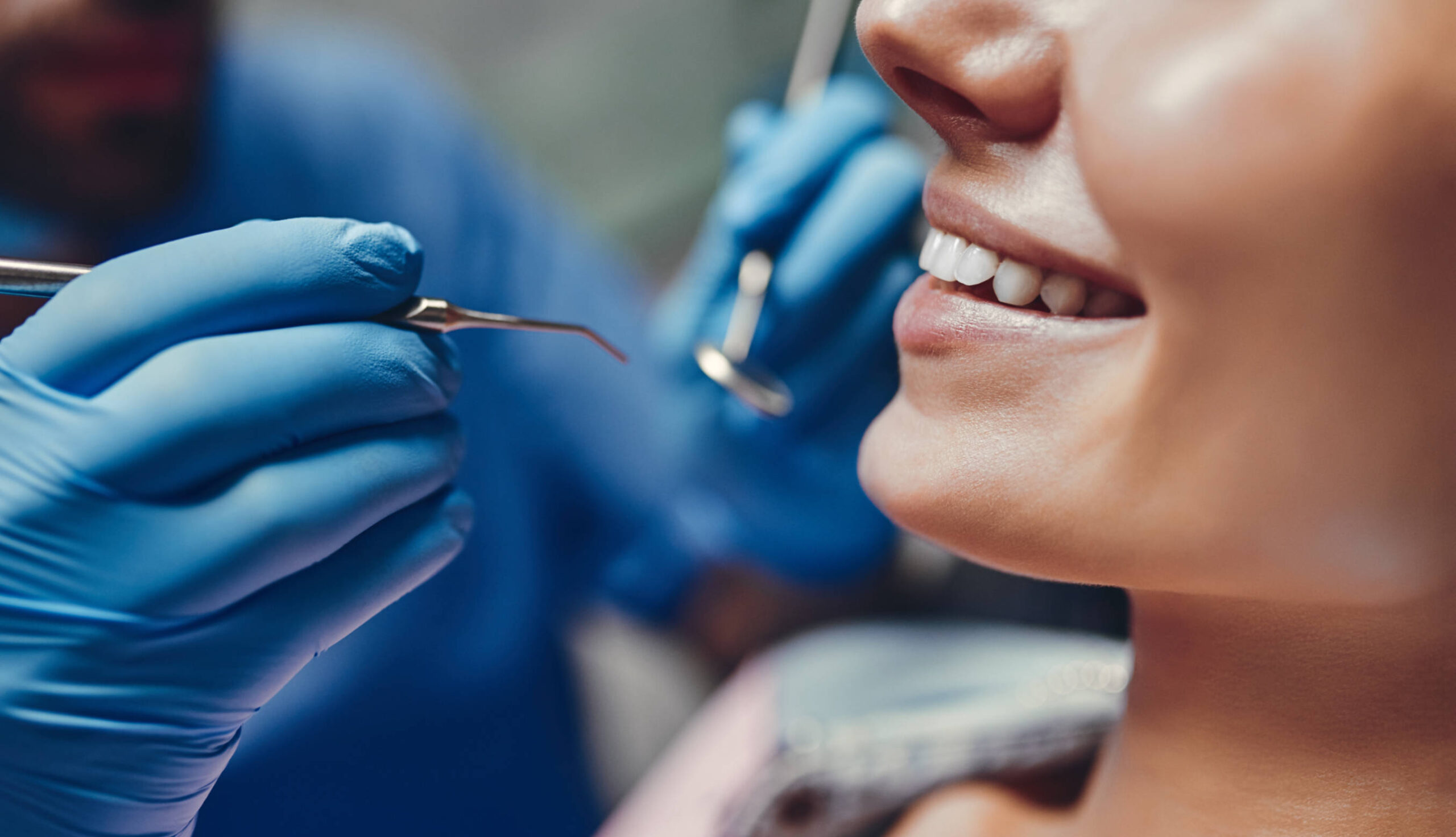
On September 28, with the expiration of the first round agreement period for the centralized procurement of oral implants and orthodontic brackets, the National Medical Insurance Administration held a press conference on the results of the centralized procurement of oral medical consumables in Ziyang, Sichuan, the “Dental Valley of China”, and launched the second round of procurement.
In the past three years, the first round of centralized purchasing has reduced the price of a single dental implant by about 8,000 yuan. The number of dental implant surgical services in public medical institutions has increased by 680,000 cases, and the completion rate of agreed purchase volume has reached 143%.
In this centralized procurement, private dental medical institutions are players that cannot be ignored: nearly 18,000 medical institutions participated in the first round of centralized procurement of implants, including about 14,000 private hospitals, accounting for about 80%.
In this round of continuous procurement, the role of private dental hospitals has changed. They are no longer just the enforcers of centralized procurement rules, but will also participate in the formulation of rules for the first time.
At the same time as the continued procurement of the oral implant system was launched, the National Medical Insurance Administration publicly solicited some dental specialist medical institutions to serve as formal members of the National Alliance Procurement Office for Oral Implants and Orthodontic Brackets (hereinafter referred to as the “Joint Procurement Office”) to jointly participate in the research and formulation of centralized procurement rules and the monitoring and evaluation of implementation effects. The medical insurance department revealed that the seats for this expansion are limited, and priority will be given to dental specialty medical institutions that actively participated in the first round of centralized purchasing, have a wide business scope, and serve a large number of patients, including chain private medical institutions.
“In the past, there were a lot of negative voices in the collective procurement of drugs and consumables. Letting more user institutions participate is to seek the greatest common denominator and reduce conflicts.” A chief of the Medical Service Management Section of a municipal medical insurance bureau told the Economic Observer that the most important thing about adding dental specialist medical institutions to the joint procurement office is to make the rules closer to clinical practice and allow medical institutions to participate in supervision.
In addition to the addition of joint procurement member units, the second round of procurement will adjust the bidding method, changing the original bidding mode to open inquiry, and proposes to stabilize clinical practice, maintain quality, resist involution, and prevent bid rigging, and find a new balance in addition to price reduction.
Why are private hospitals “on the table”?
In 2023, under the guidance of the National Medical Insurance Bureau, the Sichuan Provincial Medical Insurance Bureau will lead the alliance provinces to carry out centralized procurement of oral implant systems. This is a special collective purchase. Due to the many links involved, the complex price system, and the high level of social attention, it was once called the most difficult collective purchase in history. Dental implants are not covered by medical insurance, and patients pay for them themselves. Private dental institutions undertake most of the services. Therefore, it is difficult to rely mainly on public hospitals to implement procurement and usage like centralized drug procurement. Being able to mobilize 14,000 private institutions to report statistics means that the governance boundaries of centralized purchasing have been pushed beyond public medical institutions.
This is also the realistic basis for private dental institutions to further enter the rule-making process in September 2026.
Ling Yi, general manager of Sichuan Zhuohaoya Medical Equipment Co., Ltd., told the Economic Observer that dental medicine is different from other medical fields. The consumption of consumables by private institutions is much higher than that of public medical institutions. Appropriate addition of private institutions will be more conducive to all parties’ support for centralized procurement.
A person in charge of the supply chain of a large domestic chain dental medical group who participated in the conference on centralized procurement results also told the Economic Observer that about 80% of consumables in the dental field are used in private medical institutions, and public institutions are relatively small. His company will continue to cooperate with centralized procurement, but whether to join the joint procurement office still depends on the results of the registration application. “The number of places is limited.”
“The centralized procurement three years ago was relatively successful, and a very important reason was the participation of private medical institutions.” A participating executive from Tongce Medical (600763.SH) told the Economic Observer that Tongce Medical has signed up to participate in the joint procurement, but it is not yet certain whether it can join.
The feature film played at the press conference on the results of centralized procurement mentioned that before the centralized procurement, there were various ways to purchase oral implants and the prices were not transparent; after the centralized procurement, the procurement prices and processes were more transparent and standardized. The medical insurance department believes that this will also push the competition among private dental medical institutions from fighting for relationships and marketing to returning to the track of fighting for technology, service, and management.
At the results conference, Wang Xiaoning, director of the Department of Pharmaceutical Pricing and Bidding and Procurement of the National Medical Insurance Administration, expressed his gratitude to the vast number of medical institutions, including private medical institutions, for their active participation, active reporting of quantities, standardized use of the selected products, and strict implementation of the selected prices, so as to provide support for the implementation of centralized procurement. He called on private dental medical institutions to continue to actively participate in centralized procurement, and invited capable and confident dental specialist institutions to participate in the formulation, implementation, and effect monitoring and evaluation of procurement rules.
Centralized purchasing is not only about price reduction
After the centralized procurement of dental implants was completed, the Sichuan Provincial Medical Insurance Bureau reduced the average price of a single dental implant from 15,000 yuan to 6,000-7,000 yuan through measures such as the dental crown bidding network and full-process regulation of medical services. It also set many firsts: it was the first time to carry out collective procurement of non-medical insurance medical consumables, it was the first time to carry out collective procurement of medical consumables that accounted for a higher proportion of medical service costs, and it was the first time to fully mobilize private medical institutions to participate in collective procurement.
When the first round of centralized procurement entered the subsequent procurement stage, the medical insurance department began to face another problem: how to prevent the industry from falling into pure low-price competition after prices dropped.
At the aforementioned centralized procurement results conference, Li Dewei, director of the Sichuan Provincial Medical Insurance Bureau, revealed that the National Medical Insurance Bureau decided to take the lead in Sichuan to carry out the continued procurement of oral implant systems, and it is expected that all work will be completed by the end of 2026. After the meeting, the Sichuan Provincial Medical Insurance Bureau will organize all medical institutions that provide oral implant services to fill in the purchase volume.
Compared with the first round of centralized procurement, the bidding method for subsequent procurement was first adjusted. Li Dewei said that the continued procurement will change the original bidding mode to an open inquiry mode, guide enterprises to make reasonable quotations through multi-dimensional price comparison, and at the same time, new material implants with consensus will be included in the procurement scope.
The National Medical Insurance Administration disclosed that continued procurement will improve the rules around clinical stabilization, quality assurance, anti-involvement, and bid rigging, including four aspects: optimizing centralized procurement varieties, encouraging innovation, and adapting to clinical practice; optimizing bidding strategies and replacing the original bidding model with open inquiry. Optimize the weight rules and adhere to gradient weight and dosage reduction, so that high-quality and affordable products can obtain more agreed purchase quantities; Optimize supporting services and provide unified online reporting and weighting services for implant systems and orthodontic medical consumables through the Sichuan Procurement Platform.
Behind the anti-involution are the new changes faced by some companies and medical institutions after the first round of centralized purchasing.
The person in charge of the aforementioned supply chain told the Economic Observer that the price competition in the industry has been fierce in the past few years, and everyone is trying to control prices and services. However, after prices continue to drop, the service quality of some medical institutions has also been affected, and some medical disputes have arisen. He believes that the medical insurance department may further strengthen supervision of the quality of medical services.
Ling Yi also noticed that the number of private dental medical institutions and the number of patients are large, and the technical strength of different institutions is uneven, so it is particularly complicated.
The pressure felt by enterprises is more direct. The deputy general manager of a leading domestic implant company told the Economic Observer that in the first round of centralized purchasing, the price of his company’s products was reduced by about 70%. After centralized procurement, product usage increased, but profits and revenue declined. Next, his company will continue to participate in centralized purchasing, because if it does not participate in centralized purchasing, it may lose market share.
However, he believes that the anti-involution signal released by the second round of centralized purchasing means that the price pressure faced by enterprises may have eased. For companies that have already entered the market, the market foundation formed in the early stage may also become an advantage in subsequent procurement.
A staff member of the provincial medical insurance bureau told the Economic Observer at the press conference that in the past, a small number of companies maliciously participated in collective purchases and quoted extremely low prices. Nowadays, anti-involution and anti-bid rigging have become important principles for the medical insurance department to promote the centralized procurement of pharmaceutical consumables.
At present, various procurement tasks are being advanced, and the scope of procurement participation has been significantly expanded. According to statistics, the total number of declaration companies participating in continued procurement has increased from 53 to 101, an increase of 91%; the number of medical device registrants has increased from 59 to 111, an increase of 88%; the number of medical device registration certificates has increased from 269 to 660, an increase of 145%; the number of product parts has increased from 391 to 1,008, an increase of 158%.
Related Reading
- Iran claims to have “captured” a US unmanned submarine again, escalating the secret underwater war between the US and Iran2026-09-30
- Many places “limit height limits” on individual money2026-09-30
- Original It’s hard to get a ticket for the National Day in Yading, Daocheng. Someone offered 500 yuan to grab a ticket. The cultural and tourism department responded.2026-09-30
- US “Starship”‘s first Earth orbit flight ends early2026-09-29
- Ahead of rare execution, lone woman on Tennessee death row says ‘I am at peace’2026-09-29