In Kampala, the capital of Uganda, when waiting for a red light, sometimes dozens or even hundreds of motorcycles will crowd into the intersection.
Guan Junqi, vice president of operations and investment promotion at Kilimall, one of the leading e-commerce platforms in East Africa, often sees such scenes. Many riders carry huge delivery boxes on their backs. They are Africa’s courier boys. Different from the common electric tricycles in China, the delivery tools here are all second-hand straddle motorcycles with large tires that can withstand the bumps of potholed dirt roads. In sub-Saharan Africa, the overall road infrastructure is weak, with paved roads accounting for less than 30% in many countries.
Over the past year or so, more and more Chinese businesses have begun to set their sights on Africa, hoping to find new markets beyond Southeast Asia, Europe, the United States, and the Middle East.
Kilimall was founded by a Chinese team. Guan Junqi is responsible for the platform’s domestic investment promotion. He visited factories in the Yangtze River Delta and Pearl River Delta and found that many people are interested in the African market. Jumia, another African e-commerce platform, was founded in 2012. The vast majority of its more than 3,000 international merchants are from China. Jumia held an investment conference in Shenzhen last year, and the number of people online during the live broadcast exceeded 50,000, five times that of the previous year.
According to data from the General Administration of Customs, China’s exports to Africa will grow by 25.8% year-on-year in 2025. The base is not large, but the growth rate is higher than the 14% to ASEAN and 9% to Europe. In the first eight months of 2026, China’s exports to Africa grew at a rate of 20.9%, basically the same as ASEAN’s 20.8%.
With a population of more than 1.5 billion and a median age of less than 20 years old, coupled with continued urbanization and the popularity of smartphones and mobile Internet, Africa is becoming an emerging consumer market that Chinese businesses are paying attention to. But after really getting involved, many practitioners found that China’s experience cannot be simply transferred to African e-commerce. How consumers pay, how goods are cleared, and how packages are delivered to consumers, each link has its own rules.
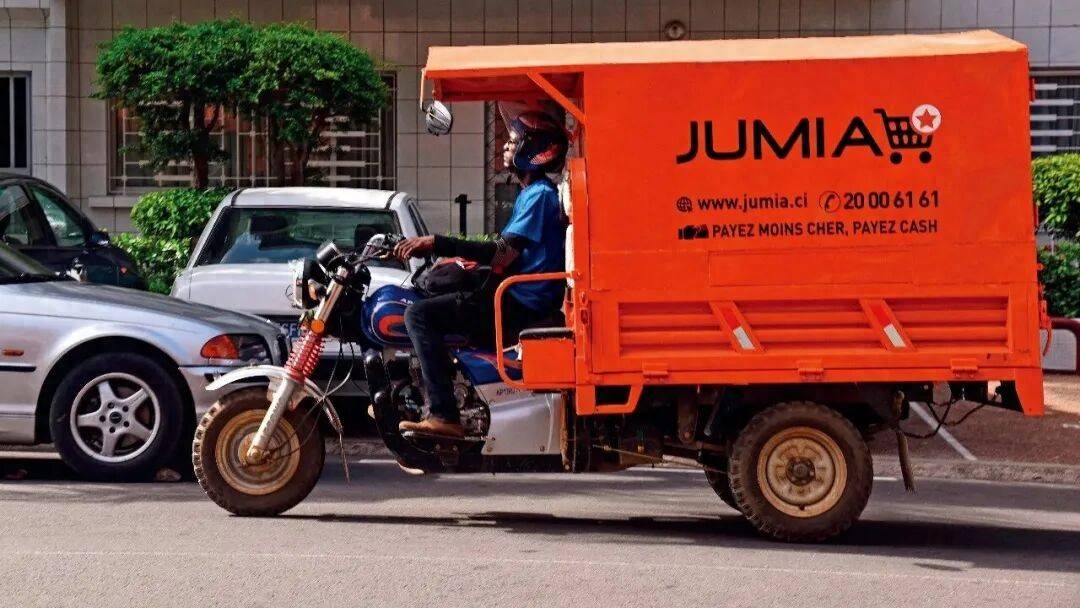
In April 2019, a transport truck with Jumia advertising on the streets of Côte d’Ivoire. Picture/Visual China
strong demand
In the African market, smartphones are absolute “hard currency”. Guan Junqi noticed that with the penetration of mobile Internet, local young people are highly receptive to smartphones. Refurbished and second-hand mobile phones are in good circulation, and many people even take out loans to buy mobile phones.
According to statistics from the Global System for Mobile Communications Association, only 24% of the population in sub-Saharan Africa will own a smartphone in 2024. For many consumers, a cheap smartphone may cost a month’s salary.
On the Kilimall platform, 3C products such as mobile phones and Bluetooth headsets are best-selling categories. Kilimall started in Nairobi, the capital of Kenya, in 2014 and has more than 10 million registered users in Kenya.
Products related to home life such as home furnishings and home appliances are also popular. “The population is young and gradually forming families. The government promotes affordable housing. More and more people own or rent houses. Furniture and home appliances are all in urgent need.” Guan Junqi told China News Weekly. Fashion products such as beauty products, shoes and bags also have great consumer demand.
Young people have supported e-commerce consumption, but their overall spending power is still limited. Take Kenya as an example. The country has a population of about 56 million, and the median age is only 19 years old. There are about 3 million people in formal employment, most of whom have a monthly income of less than US$800, and more than 8 million people are informally employed. Kilimall’s internal judgment is that the current primary consumer group with stable consumption capacity only accounts for about 20% of the total local population. For this group of consumers, price and practicality are still the most important things when shopping online.
The founder of Jumia has also publicly mentioned that platform consumers are mainly from low- and middle-income groups in Africa, with monthly incomes between US$150 and US$500.
Mang Ge, a cross-border e-commerce practitioner who moved from Southeast Asia and TikTok in the United States to Africa, currently operates independent websites in Ghana, Kenya, Cameroon and other countries. What he sells the most are 3C digital, household and automobile and motorcycle supplies. “Many young people like shiny things, such as headphones, and they also want lights on them to light up.” Brother Mang said that hardware tools are also very popular. He has an old customer who is a Ghanaian miner in his 30s and once placed an order for six or seven hammers.
The consumption habits of young people in Africa are also different from those in China. Many practitioners mentioned that these consumers like to enjoy themselves immediately and do not save money to buy a house or a car for their children. “They may spend all their money on the day they are paid.” Mang Ge attracts traffic through social platforms such as Facebook, and then contacts customers through WhatsApp (overseas social software). The transaction method is cash on delivery. Some customers will directly say: “I don’t have enough money on hand now. My salary will be paid on Friday. You can arrange for someone to deliver the goods then.” He also encountered that when the express delivery was delivered, the customer had already spent the money.
But Africa is not just a low-price market. Xu Xuchang, Chairman and CEO of Hong Kong CEFC International Group, who has been deeply involved in the African market for many years, once mentioned that Africa is a pragmatic market where cost-effectiveness is given priority and adaptability is king. Many companies encounter obstacles when going overseas, not necessarily because the quality of their products is poor, but because the products do not adapt to local usage scenarios.
Chen Juntao, chairman of Taohong Group and vice president of Shenzhen Cross-Border E-Commerce Association, has started overseas business in Africa since 2019. He took West Africa as the starting point for cross-border e-commerce. The opportunity came when he encountered multiple power outages while inspecting the African market in 2019. He noticed that in Conakry, Guinea, two power generation ships from Turkey are parked at the port all year round and are rented by the local government to provide power to the entire city. Later, when he went to Cameroon and Senegal, power shortages were also common.
The World Bank ranks West Africa as one of the most unreliable power supply regions in the world, with many countries experiencing power outages of approximately 80 hours per month, and in severe cases, power outages can last as long as 16 hours a day. After returning to China, Chen Juntao entered the West African market from energy storage batteries and photovoltaics. At that time, the domestic industrial chain was mature and product prices also had advantages. He purchased the first container of lithium batteries from Dongguan and sent them to Conakry, the capital of Guinea. Until now, photovoltaic panels and energy storage batteries are still the company’s main products.
But behind Africa’s strong demand is relatively weak local supply. Data from the World Bank and other institutions show that the added value of Africa’s manufacturing industry accounts for less than 2% of the world’s total. Many countries still rely on the trade structure of “exporting raw materials and importing finished products”. At the same time, rapid urbanization is continuing to drive up demand for consumer goods such as mobile phones, home appliances, furniture, and clothing, but local production capacity is far from being able to fully meet it.
In 2012, Kilimall founder Yang Tao was still a Huawei engineer and was sent to Africa. Once, he wanted to buy a projector screen and visited markets and supermarkets. In the end, he only found a second-hand screen, but the price was as high as more than 3,000 yuan, while the same domestic new product was less than 300 yuan. The lack of local industrialization, high reliance on imported goods, and poor infrastructure push up transportation costs, creating a huge price difference. This experience also allowed him to see the potential of African e-commerce for the first time.
Address without house number
“My home is in a certain town. Walk 100 meters forward and you will see a gas station. You can see a tree further ahead. I live in the red house next to it.” This is not a joke. Many places in Africa do not have a standard address system, and people cannot tell where they live.
Guan Junqi found that in the local area, the 150 characters in the recipient address field were not even enough to fill in. Even for a capital city like Nairobi, positioning depends on reference objects. Kilimall’s warehouse in Nairobi, when they introduce the address to customers, they will say, “There is a big supermarket opposite.”
Road conditions directly restrict the cost and timeliness of logistics. The average paved road coverage in sub-Saharan Africa is only about 13%, and with the exception of South Africa, most countries have less than 30%. Guan Junqi has spent half of his time in Africa every year since 2020 and has a deep understanding of this. The main road leading to the city from his residence only has two lanes. Once a car accident occurs, the entire road will be blocked. Once, a colleague went to the city at 3 p.m., a distance of more than 20 kilometers, but he didn’t get home until 2 a.m. due to traffic jam.
A cross-border e-commerce practitioner also mentioned that during the transportation of goods, vehicles may also encounter breakdowns and rollovers, and there have even been cases where goods were snatched away by people along the way. In the past two years, with the opening of highway projects undertaken by some Chinese companies, the logistics efficiency of some local areas has improved.
This is one of the reasons why Chen Juntao only does To B business in the African market. His photovoltaic panels, energy storage and other products are sold directly to local appliance stores and small shopping mall owners. He frankly said that if we do To C, cash on delivery plus point-to-point delivery, the investment is too high and unrealistic. These are more dependent on large-scale e-commerce platforms for deployment.
For e-commerce platforms doing To C business, the “last mile” cannot be bypassed. Express delivery cannot be delivered to your home, so a more common approach for platforms is to set up self-pickup points. Mom-and-pop shops, canteens, bookstores, stationery stores, and mobile phone repair shops on the roadside may all become African versions of “express delivery stations.” The platform cooperates with store owners, who collect packages on their behalf, and consumers pick them up at the store. The store owners earn commissions and can also attract traffic to their stores.
Currently, Kilimall has deployed more than 15,000 pickup points in Kenya, covering 100% of counties and about 80% of the population. Jumia also has more than 1,000 self-pickup points and seller delivery points in Africa.
Guan Junqi introduced that Kilimall has a set of screening criteria for self-pickup points, including store area, sanitary conditions, location, flow of people in front of the door, and whether the store owner has a mobile phone and can operate according to platform standards. Partner stores also need to pay a deposit to reduce the risk of package loss.
The heavier investment is how to deliver the goods. When entering Kenya in 2014, Kilimall found that there was no mature express delivery network like “Three Links and One Express” or SF Express. Founder Yang Tao remembers that when they handed the package to a local logistics company, the other party would always ask a troublesome question: “Where do you want to send it?” In the end, they decided to do the delivery themselves.
But in the early days, there was an e-commerce platform that hired 10 riders to deliver the goods, and it would be good if a few came back in the end. “There are people who steal things from warehouses and riders who run away, and they pay a lot of tuition.” One interviewee mentioned that local people have high job mobility, and only a few people have stable jobs.
Kilimall manages and motivates riders through a collaborative approach. There is no employment relationship between the platform and the riders. The riders have relatively fixed delivery routes. The more orders they receive, the higher their income will be. Guan Junqi told China News Weekly that riders with better performance can earn four to five thousand yuan a month, which is two or three times the average local income.
Another e-commerce platform, Jumia, is based in Nigeria and was listed on the New York Stock Exchange in 2019. As of 2022, the company operates its own terminal delivery fleet and also cooperates with third parties to adopt a door-to-door delivery model. However, as profitability pressure increases, the company has shifted more orders to self-pickup points to reduce end-delivery costs. Jumia disclosed at the 2025 Investor Day that fulfillment costs have dropped from US$3.4 per order in 2022 to approximately US$1.9 in 2025, nearly halved.
Today in Africa, e-commerce has not yet entered the “free shipping era”. The free shipping offered by domestic e-commerce companies essentially amortizes logistics costs into the selling price of goods. But in Africa, logistics costs are not only high, but also vary greatly between different regions. If the highest logistics cost is directly allocated to all goods, the price-performance advantage of the goods will be weakened. Guan Junqi mentioned that the platform separated the shipping costs separately, and priced them separately for self-pickup and door-to-door delivery. Self-pickup can reduce logistics costs, and the freight is significantly lower than door-to-door delivery; when orders become more concentrated, unit distribution costs can be further reduced.
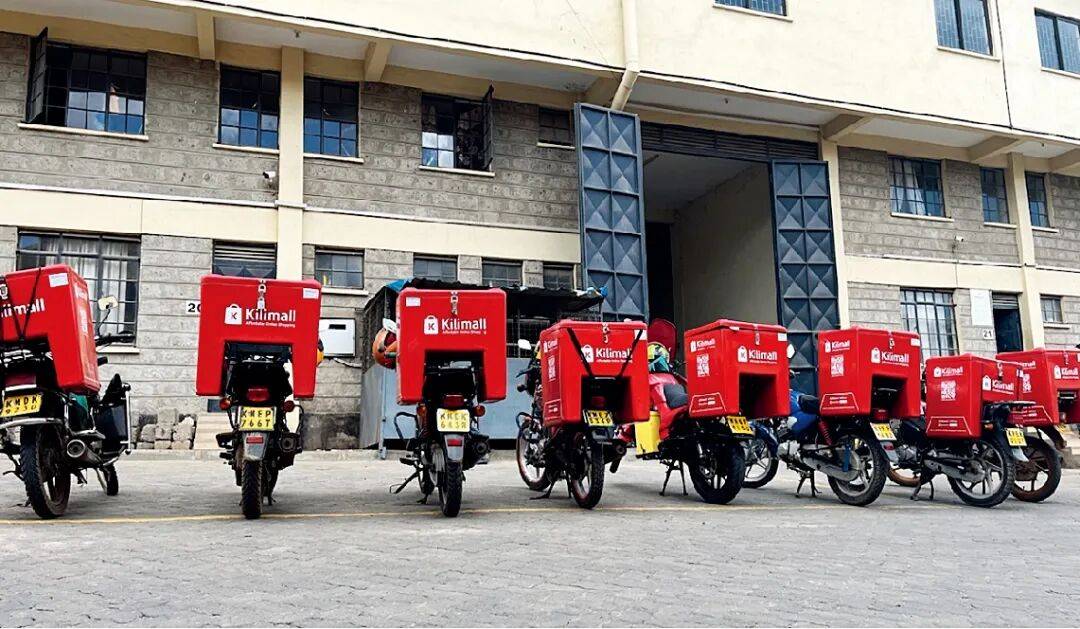
Kilimall riders deliver to your door multiple times a day, and same-day delivery is possible in the Kenyan capital. Picture/provided by interviewee
The unavoidable cash on delivery
Payment is a bigger problem facing African e-commerce companies. in the country, online shopping defaults to payment first and delivery later. But in Africa, cash transactions and cash on delivery are more common.
Kenya is one of the few exceptions. In recent years, M-Pesa has made mobile payments deeply integrated into daily consumption. Some large cities in countries such as Nigeria and South Africa have also formed the habit of placing orders online and receiving goods offline. But looking at more African countries, online payment has not yet become the default method of e-commerce consumption.
“This is very similar to China’s consumption scene in the 1990s.” Chen Juntao described that local consumers are accustomed to carrying cash when going out and doing face-to-face transactions. Many people are not sure whether the goods will be delivered to their homes after placing an order, and whether the items they receive will match the pictures. In addition, although mobile payment tools such as M-Pesa and Orange Money are rolled out in some countries, the amount of transfer transactions is limited. “A few hundred to several thousand yuan is basically the upper limit.” Mobile phone networks also restrict online payments. The network in most countries is still stuck at 4G, and some areas only have 3G. The network speed is slow, and payments are often delayed or even failed.
Therefore, cash on delivery has become an unavoidable method. Mang Ge acquires customers through Facebook and TikTok, and uses cash on delivery: consumers do not need to pay when placing an order. After the express delivery, they open the package and inspect it before deciding whether to pay or not.
In addition, Africa’s customs environment is another threshold. 54 African countries correspond to dozens of sets of customs rules and enforcement systems. Port efficiency, law enforcement standards, and policy stability vary greatly, making it difficult to guarantee logistics timeliness.
Chen Juntao has a more direct experience of this. During the first customs declaration, it took three or four months for a container to be cleared. Now the fastest time is 45 to 55 days. Port congestion, customs clearance channels and familiarity with local executors can all affect how much a shipment ultimately costs and how long it takes to wait. He mentioned that many local ports are small and large cargo ships have to queue up to enter the port. It is not uncommon to wait for several months. “You don’t know whether the waiting time is three months or five months.” Later, the team was able to reduce the waiting time by getting familiar with the local green channels and special docks.
For businesses unfamiliar with local rules, customs clearance costs are sometimes difficult to estimate. “I told you today that customs clearance for this container costs 300,000 yuan. Will you pay it? If not, the goods will be deducted.” Chen Juntao told China News Weekly that after being familiar with local policies and procedures, the normal customs clearance fee for the same batch of goods may only cost hundreds of thousands of yuan.
In June this year, at an industry collaborative matchmaking meeting jointly sponsored by the China Overseas Enterprises Collaboration Alliance and the Yiwu China-Africa Chamber of Commerce, more than 50 political representatives from the African Union and African countries communicated with Yiwu entrepreneurs who are deeply involved in the African market. Many business representatives called for the local government to provide a more stable and predictable business environment in terms of industrial policy, customs system, currency and finance, and social security.
“The last blue ocean”
There are 54 countries in Africa, with varying governments, legal and market systems. Different colonial histories have left behind different languages and business habits. Even in neighboring countries, business may not be directly accessible. “Even if you take goods from Nigeria and send them to Ghana, you still have to declare and clear them again. The process is similar to that of sending goods from China.” Chen Juntao said.
Guan Junqi has traveled between Kenya and neighboring Uganda many times and has a deep understanding of the different market environments in the two places. Kenya’s economy is relatively open, the Port of Mombasa connects regional trade in East Africa, and its financial, technological and logistics infrastructure is relatively mature. The business environment is good, the exchange rate is more stable, and African headquarters such as Facebook and Google are located in Kenya. Uganda is a landlocked country with less infrastructure than Kenya, but there is less competition in the market.
Xu Xuchang once regarded South Africa, Kenya, Rwanda, and Mozambique as markets suitable for new entrants to investigate. “South Africa’s industrial base and infrastructure are the most complete in Africa; Rwanda’s foreign investment registration process is extremely simple and its approval efficiency is high; Kenya has long-term income tax exemptions for foreign investment in manufacturing; Mozambique’s foreign investment access rules are clear and suitable for small and medium-sized manufacturing enterprises.” In his view, there is no one-size-fits-all approach to developing Africa.
Kilimall has been working in Africa for 12 years and has now become one of the most important e-commerce platforms in East Africa. In Guan Junqi’s view, e-commerce is more like building up a “technological tree” locally bit by bit: first there are mobile phones, then the Internet; with information flow, then payment and logistics problems are solved.
The Internet is also an easily overlooked threshold. Guan Junqi mentioned that in Kenya, data rates are not cheap relative to income. He has seen some people quickly turn off data after opening a webpage in order to save data. Sometimes, orders on the platform may drop on weekends because some people are reluctant to use data at home.
Therefore, in Africa, many e-commerce platforms, including Kilimall, will consider saving traffic and making lightweight software packages when designing web pages and apps. “The installation package is large and consumes traffic, so users will uninstall it directly.” Guan Junqi said that many local mobile phones have limited storage space, and whether an App can stay is itself a threshold.
The growth of the “technology tree” is also inseparable from infrastructure, which also includes the shadow of many Chinese companies. Companies such as Huawei are involved in the construction of local communication networks, and other Chinese companies have also been involved in the construction of roads and other infrastructure for a long time. The gradual popularization of mobile Internet, smartphones and mobile payments has given e-commerce the conditions to continue its development.
Today, the global craze for overseas travel has extended from Southeast Asia to the Middle East and Latin America. Many interviewees mentioned that Africa may be the last “blue ocean” because the barriers to entry are indeed high: each of the more than 50 countries has its own market and rules, and there are obvious differences in economic levels and infrastructure. Some large companies are temporarily dismissive of Africa’s business volume. Various complexities have led many companies to choose to wait and see for the time being. However, there are currently overseas companies that have extended their production links to Africa, setting up factories and cooperating locally, and participating in the construction of local supply chains. Starting from May 1 this year, China has fully implemented zero tariffs for 53 African countries that have diplomatic relations with China, further opening up the policy environment for China-Africa trade. One interviewee lamented: “The window period will not be too long. Everyone can see that this is the market with the largest room for growth in the future.”
Published in the 1254th issue of “China News Weekly” magazine on September 28, 2026
Magazine title: Africa’s e-commerce “new blue ocean”
Reporter: Yang Zhijie
Related Reading
- Mexico’s Baja California braces for major Hurricane Polo as Hurricane Nolo still threatens Hawaii2026-09-28
- No detection2026-09-28
- Why do we have to wait until the problem of washing pots and mops is solved before it is exposed?2026-09-28
- Heavy rain fell for three days in a row, causing Bangkok to become a flood-stricken area. Thai Prime Minister Anutin returned to Thailand in advance to deal with the situation.2026-09-28
- High-speed rail is focused on new projects, with four new lines opening today2026-09-28