The Paper reporter Tang Yingying
September 25 is the first day of the Mid-Autumn Festival holiday. Visiting relatives during the holiday and surrounding vacations form a small travel peak. Tongcheng travel data shows that cross-city travel orders departing on the day before and on the day of the Mid-Autumn Festival holiday increased by 18% compared with the same period of this year’s Dragon Boat Festival holiday (June 18 and June 19).
Qunar travel data shows that this week, the search volume for keywords related to “Mid-Autumn Moon Appreciation” and “Autumn Appreciation Tour” increased 3.1 times month-on-month; domestic air ticket bookings on the first day of the Mid-Autumn Festival on September 25 increased by more than 60% year-on-year, making it the most popular Mid-Autumn Festival in history.
A search by The Paper found that all tickets for the entire Mid-Autumn Festival holiday in many museums are fully booked.
For example, the Hunan Provincial Museum and Luoyang Museum reservation mini-programs show that tickets from September 25 to 27 are fully booked.
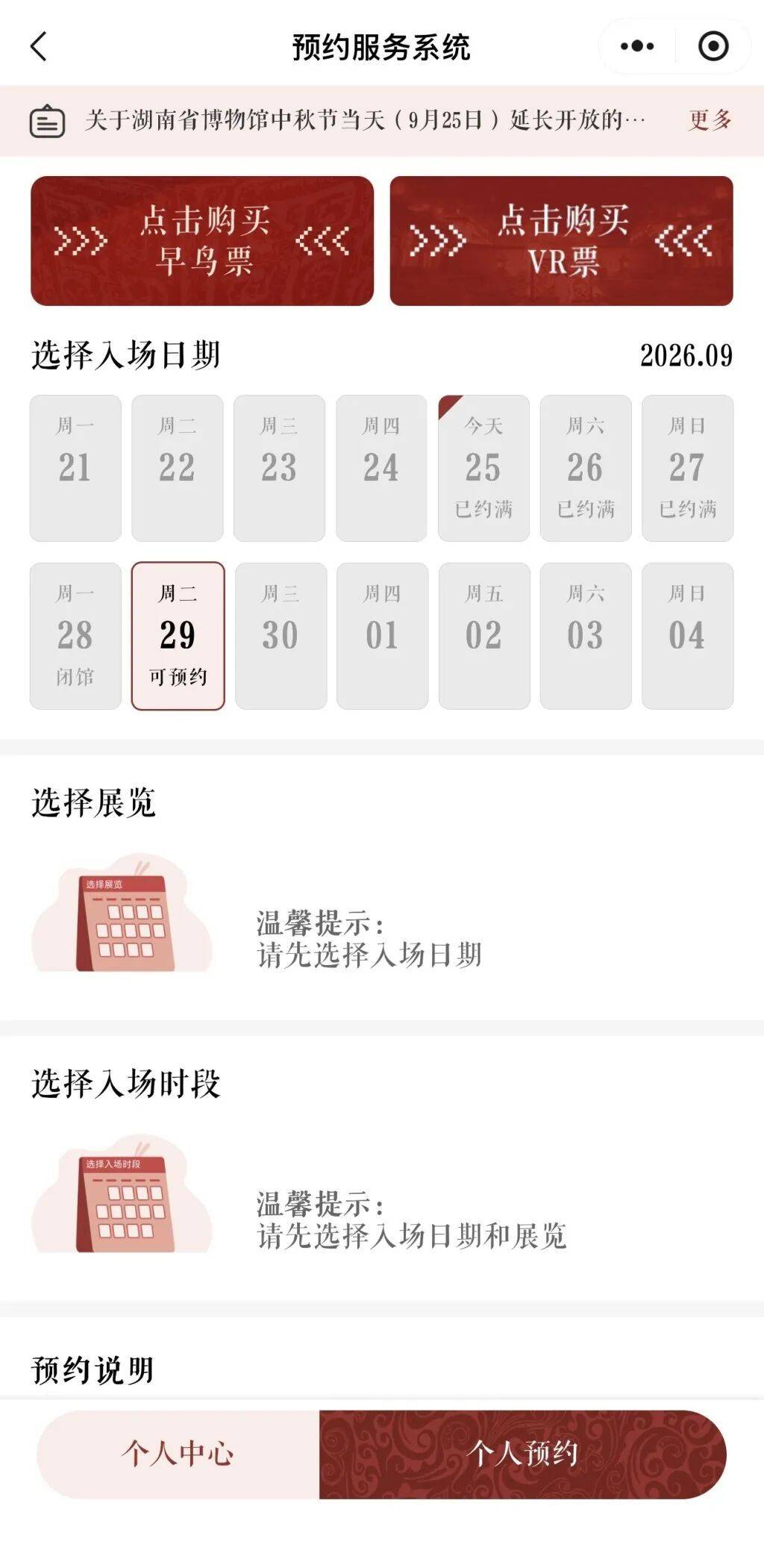
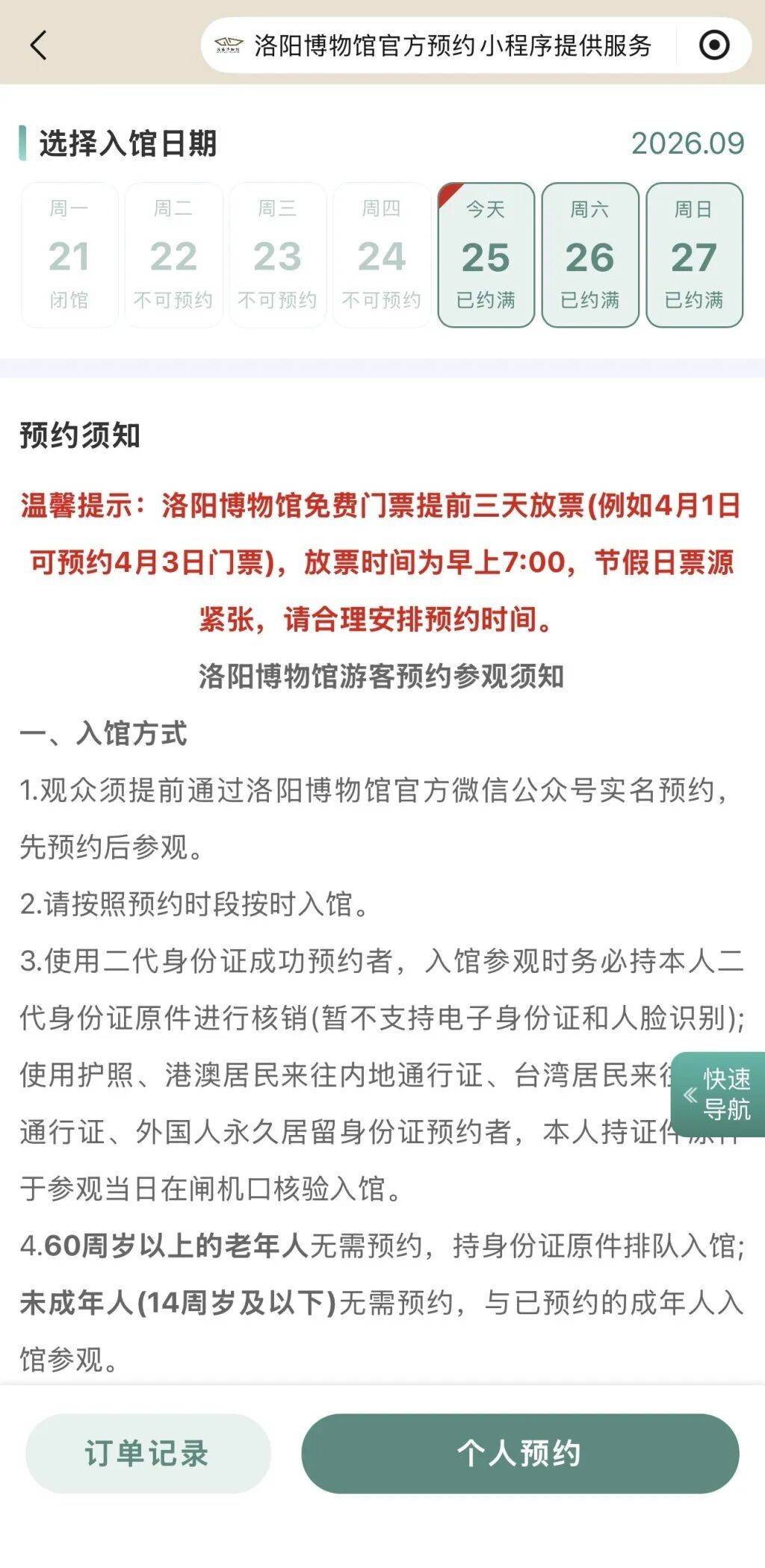
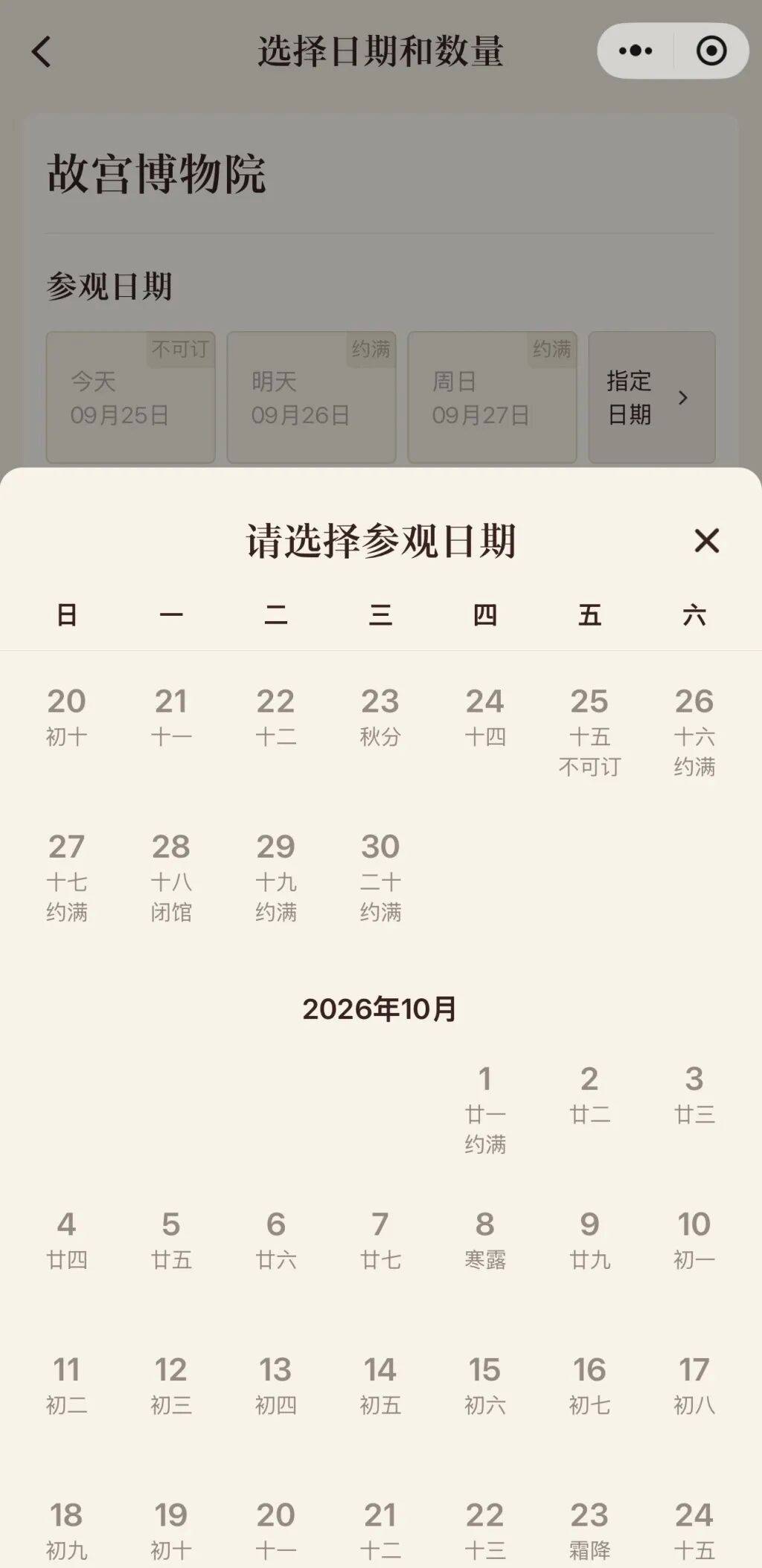
Even the tickets available for many museums during the National Day holiday are fully booked, and there are no remaining tickets in the three working days between the two holidays. For example, tickets for the Palace Museum from September 26 to October 1 are fully booked.
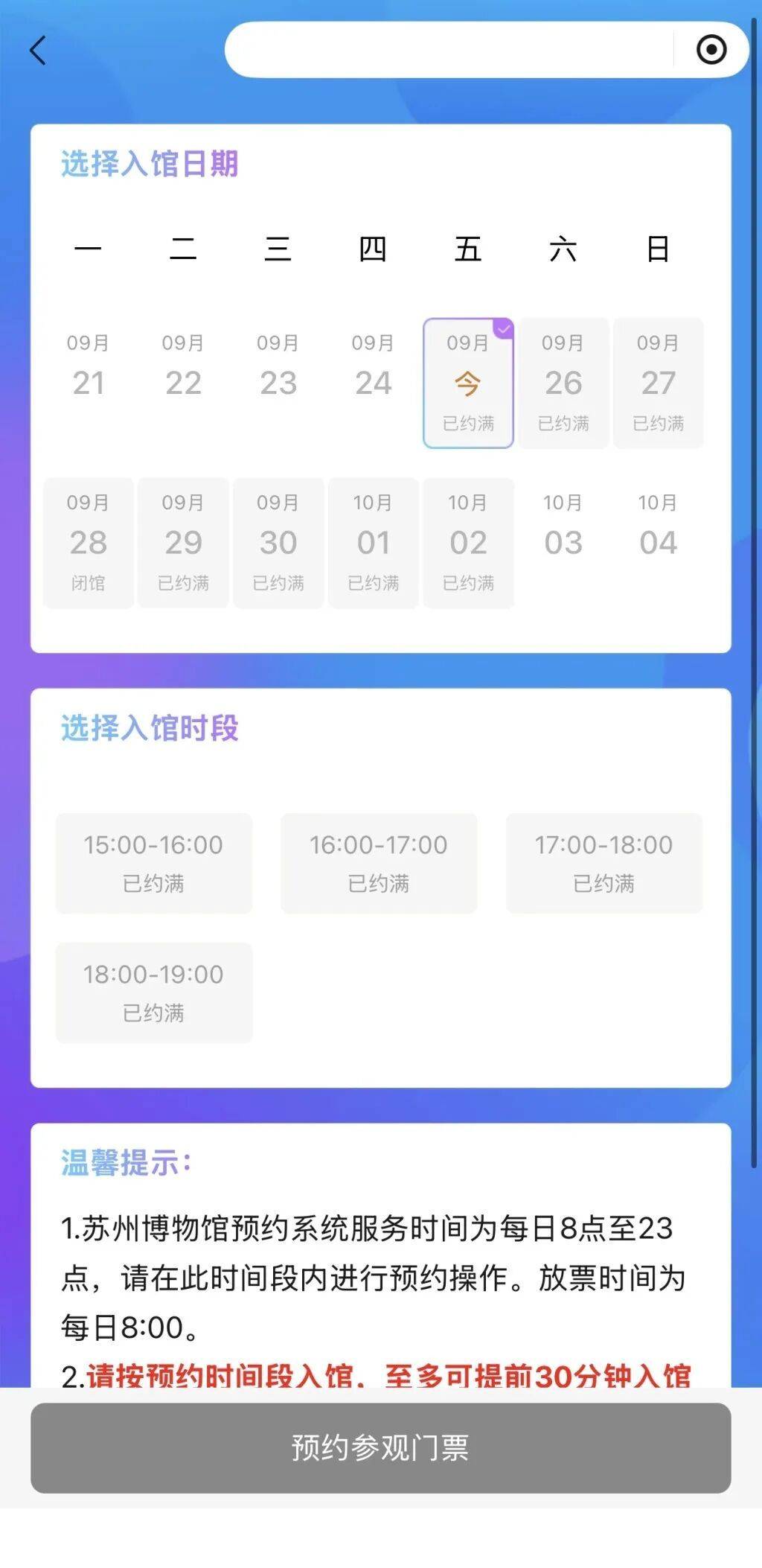
Tickets for Suzhou Museum from September 25 to October 2 are fully booked.
On that day, many scenic spots also issued traffic restriction announcements. For example, Shanghai Xinchang Ancient City announced at 09:54 that it will initiate traffic restriction measures in a timely manner based on real-time passenger flow dynamics. Xinchang Ancient Town estimates that the peak passenger flow period during the festival will be 11:00-16:00 every day.
The Tangmo Scenic Area also issued an announcement saying that as of 14:40 that day, the tourist reception capacity of the scenic area was close to saturation, and traffic restriction measures were initiated.
Tongcheng travel data shows that local and surrounding travel bookings account for more than 60% of the Mid-Autumn Festival holiday, and user travel shows a two-stage characteristic of “first returning home for reunion, and then taking a vacation nearby”. On September 25, the first day of the Mid-Autumn Festival, ticket bookings for scenic spots around the platform increased by 36% compared with the first day of the Dragon Boat Festival. Gardens, ancient towns, cultural museums and theme parks were the most popular.
Yang Han, a researcher at the Qunar Big Data Research Institute, analyzed that as the Mid-Autumn Festival is a traditional Chinese festival, more tourists are willing to go mountain climbing to admire the moon, immerse themselves in the national customs and ancient charms, and experience the Mid-Autumn folk customs on the Mid-Autumn Festival. Many Chinese-style theme parks have become top-notch.
Qunar travel data shows that on the first day of the Mid-Autumn Festival, the top 10 scenic spots with the highest ticket bookings in the country are: Shangrao Gexian Village, Shanghai Disneyland, Tangshan Hetou Old Street, Aba Jiuzhaigou, Beijing Universal Resort, Jiangxi Shangrao Wuyuan Huangling, Anhui Huangshan, Huai’an West Amusement Park, Suzhou Humble Administrator’s Garden, and Pingxiang Wugong Mountain.
At the same time, holiday users who “please take 3 days off and 13 days off” are also starting to set off.
Qunar’s report shows that due to the “3 days off until 13 days” holiday rush, a large number of long-term passenger flows originally scheduled to depart during the National Day have moved forward to September 25th, which is superimposed with the flow of passengers returning home to visit relatives and surrounding micro vacations, and converge on the road.
According to Tongcheng travel data, on September 25, long-haul air ticket orders of more than 1,200 kilometers increased by 46% compared with the first day of the Dragon Boat Festival, mainly those born in the 00s and 90s. In the domestic direction, the flow is concentrated to autumn belts such as Inner Mongolia, Xinjiang, Yunnan, Guizhou, and Gansu, while in the cross-border direction, the flow is mainly to destinations such as Southeast Asia, Central Asia, and Europe.
Qunar data shows that on the first day of the 13-day long window, bookings for premium small-group tour-related products grew 2.2 times year-on-year. Among them, 5-8 day itineraries with groups of 2-8 people and a maximum of 10 people have become the mainstream. The price per passenger exceeds that of traditional bus groups. Long-term destinations such as the Northwest Ring Road, Western Sichuan, and Xinjiang are the most popular.
Qunar’s report shows that some people are heading north and west to chase the autumn colors that are in the “best viewing period”, driving the search volume of “Autumn Chasing Route” to increase by 170% week-on-week. Data shows that the golden birches in Altay, grass cutting in Xilinhot, Linzhi ushering in the colorful forest season in the snow-capped mountains, and the golden rice waves in Xizhou, Dali, have doubled the number of air ticket bookings to the local areas on the first day of the Mid-Autumn Festival. Many of them are long-distance flights to “chasing autumn.” Qunar travel data shows that long-distance autumn routes from South China and East China have grown significantly. On the first day of the Mid-Autumn Festival, bookings from Guangzhou to Lanzhou increased by 2.1 times year-on-year, and bookings from Hangzhou to Urumqi increased by 1.6 times year-on-year.
In terms of accommodation, Huazhu Group’s data as of September 21 shows that from September 25 to October 7 this year, the overall hotel booking rate increased by about 2 percentage points compared with the same period last year (September 26 to October 8), and the number of room nights booked increased by 22% year-on-year. The long holiday travel market is full of vitality.
Tongcheng Research Institute believes that travel on the first day of the Mid-Autumn Festival in 2026 will show the characteristics of “peripheralization and quality”: the short holiday has increased the consumption density of local and surrounding cultural tourism scenes, and users prefer to “enjoy the festival well in the surrounding areas.” From the perspective of product trends, scenic spots with strong cultural attributes, in-depth tours, and complete supporting facilities perform more prominently. Whether the festive atmosphere can be transformed into vacation products that can be experienced and stayed is becoming the key to the attractiveness of surrounding destinations.
Related Reading
- American tourists dead after building explosion and collapse in Athens2026-09-27
- Live updates: Powerful nor’easter batters East Coast with coastal flooding, high winds and power outages2026-09-27
- Hurricane Nolo expected to bring heavy rain as it skirts Hawaii’s Big Island2026-09-26
- New scenes and new business formats in business districts across various regions are accelerating the introduction of new products. Special services accelerate the upgrading of consumer “taste”.2026-09-26
- Original U.S. stocks closed: All three major stock indexes rose, storage chip stocks generally rose; Apple hit a record high; Chinese assets fell2026-09-26