From September 22 to 23, the 2026 Beijing Cultural Forum was held in Beijing. Among them, the 2026 Beijing Cultural Forum Cultural Industry Investors Conference kicked off on September 23, with the theme of “Financial Dynamics and Culture, Digital Intelligence and New Wings to Open the Future”, bringing together about 600 investment and financing institutions, experts, scholars, and representatives of cultural enterprises.
During the forum, reporters from Beijing News and Shell Finance came to the Beijing Economic and Technological Development Zone to follow the “Exploring the Science and Technology City and Appreciating the Intelligent Future” observation activity. From humanoid robots that can write poems and dance to exoskeleton robots that have entered scenic spots, to robot products in logistics, industry, medical and other fields, robots are trying to enter more and more application scenarios. Among them, areas such as entertainment and cultural tourism that are directly oriented to consumers have become a window for ordinary people to perceive the implementation of robots.
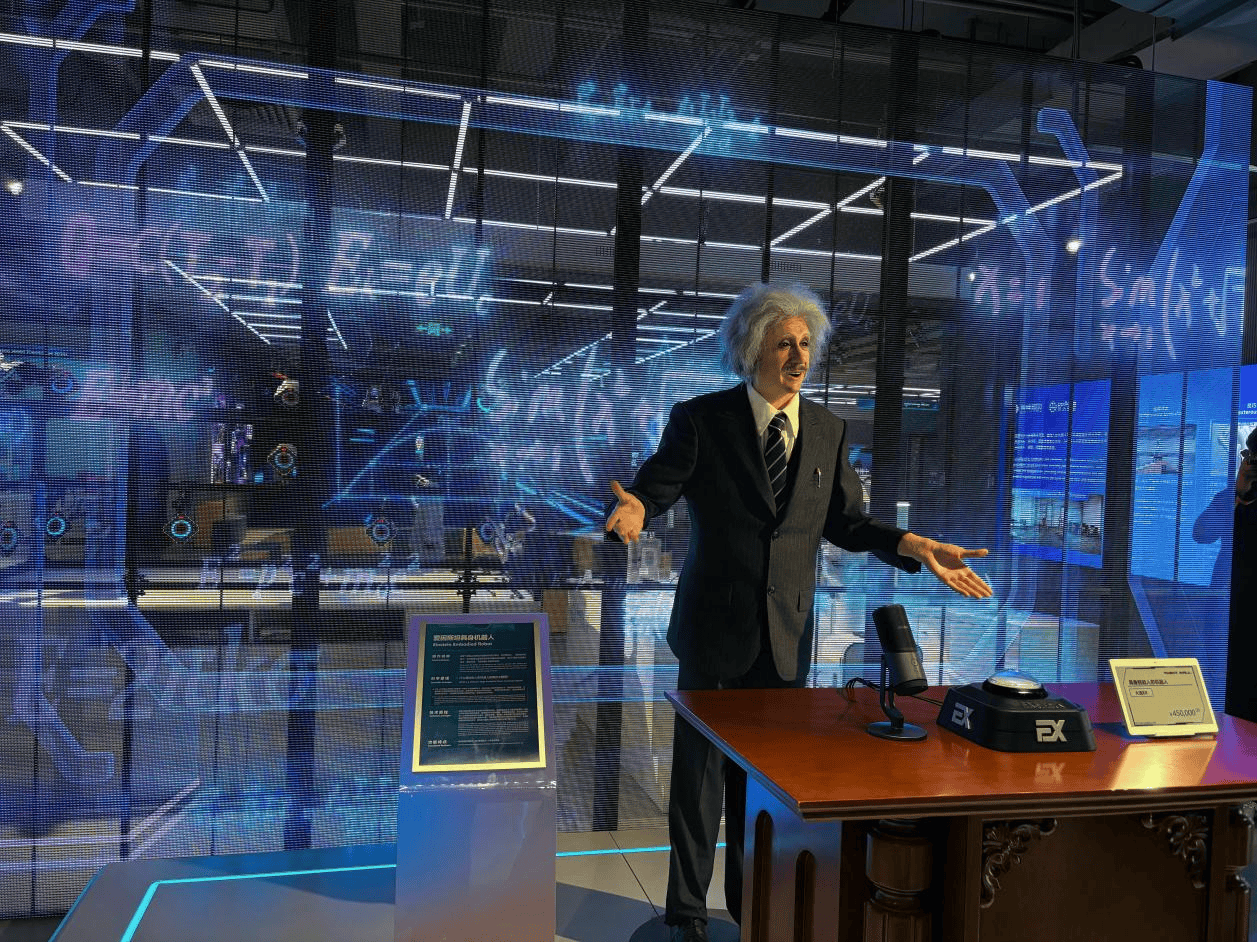
The “Einstein” robot displayed at Robot World. Photo by Beijing News Shell Finance reporter Wei Yingzi
Composing poetry, dancing…from simply “showing skills” to serving positions
“Hello, what’s your name?”
Faced with the question, a humanoid robot that looks like Einstein quickly responded. According to on-site staff, this robot can simulate facial expressions and body movements of characters, is connected to a large AI model, and imports Einstein-related information. It can interact in Chinese and English and answer questions as a set character.
A few steps away, another robot that looked like Li Bai was exchanging poems. You can give a topic and ask it to compose a poem, or you can give the first half of a poem and the robot will pick up the second half. According to the above-mentioned staff, this type of product supports customization according to different IP images and can be used in cultural tourism scenic spots or museums to undertake guided tours, reception and other tasks.
When robots enter the cultural consumption scene, it’s not just about being able to chat.
At the scene, robots that boxed, played football, played piano, performed Tai Chi, and danced on stage in turn. A robot named “Lingxi X2” can complete actions such as singing, running, dancing, and cycling. It is currently mainly used in entertainment and commercial performance scenes. Staff said that the robot has already appeared as the host of this year’s Hunan Satellite TV New Year’s Eve party. In addition, the UBTECH small robot “Alpha Ebot” can complete group dance performances through a unified control system, and some teaching and research institutions have used it as an educational platform.
Compared with scenes such as industrial manufacturing, entertainment and cultural tourism pay more attention to the interaction and display capabilities of robots. From stage performances to scenic spot tours and museum explanations, robots are changing from a mere “display technology” to a part of specific services.
In addition to performances and interactions, robots have also begun to assume more practical service functions in scenic spots. According to the staff, Daai’s intelligent walking exoskeleton robot adopts a lightweight carbon fiber design, weighs 2.5 kilograms, and is equipped with an AI gait recognition system that can identify different actions such as starting and going up and down stairs and provide assistance. At present, this product has entered scenic spots such as Mount Tai, Xiangshan and Badaling Great Wall, and provides services on a rental basis.
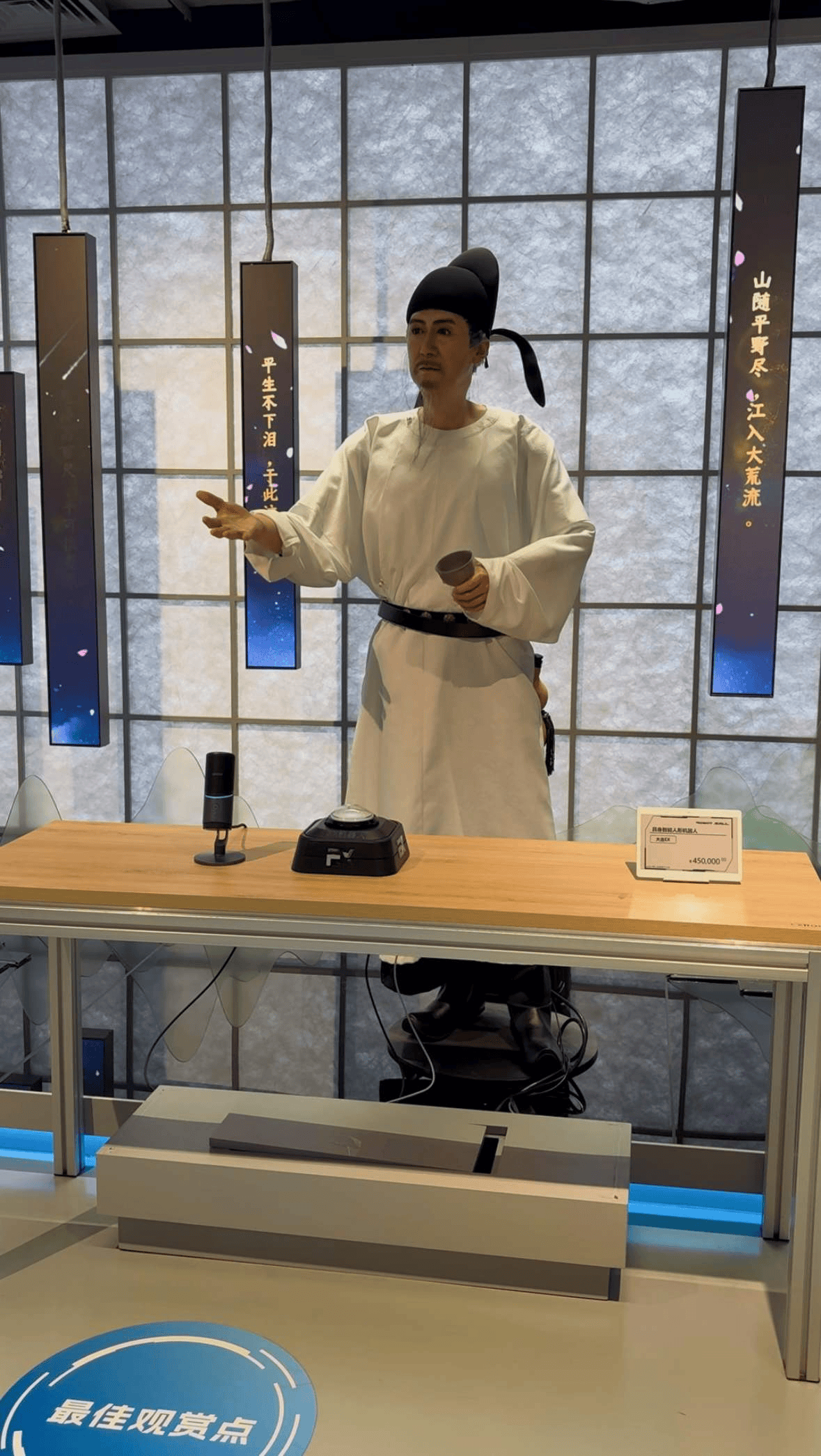
“Li Bai” robot. Photo by Beijing News Shell Finance reporter Wei Yingzi
On average, about 1,200 small express items are sorted per hour, and embodied intelligence leverages corporate procurement.
Culture, entertainment and tourism are just one part of the robot’s implementation.
At the scene, reporters saw robots simulating the e-commerce fulfillment environment to complete operations such as order understanding, picking, and packaging, as well as logistics sorting and autonomous power swapping. In another exhibition area, robot dogs were used for industrial park logistics, inspections, and other tasks. According to on-site staff, a half-length humanoid robot has 43 degrees of freedom and 12 degrees of freedom in one hand. It can sort about 1,200 small express items per hour on average. It has been put into use in logistics companies such as SF Express and the Postal Service.
In the field of embodied intelligence, enterprise procurement needs are growing. Data from the State Administration of Taxation show that from January to May this year, the sales revenue of embodied intelligence industry companies achieved a relatively rapid growth rate of 22.4% based on the 13.9% annual growth in 2025. From the perspective of subdivisions, the sales revenue of robot body and complete machine manufacturing, AI algorithm and software integration, system integration and industry application companies increased by 30.1%, 24.5% and 27.9% year-on-year, and the sales revenue of core parts manufacturing companies increased by 6.8% year-on-year. During the same period, the total purchase amount of embodied intelligent robots by industrial enterprises increased by 2.3 times year-on-year.
There is also growth on the consumer side. According to data from the Ministry of Commerce, in July this year, sales of embodied intelligent robots on key platforms increased by 95.1%, sales of exoskeleton boosters increased by 39.5%, sales of action cameras increased by 24.7%, and sales of sweeping robots increased by 19.4%.
According to data from Beijing Yizhuang, there are currently more than 300 robotics and embodied intelligence ecological enterprises, with an industrial chain scale exceeding 20 billion yuan, and a complete industrial layout covering core components, complete machine research and development, pilot verification, and scenario demonstrations.
From scenic tour guides, entertainment and commercial performances to logistics sorting, robots are entering more specific scenarios. With the growth of market data such as procurement and sales, the industry’s focus has further shifted to application and commercialization. Entertainment and cultural tourism have become one of the scenarios where ordinary people can most intuitively perceive robots entering real life.
Beijing News Shell Finance Reporter Wei Yingzi
Editor Wang Jinyu
Related Reading
- U.S., Greenland and Denmark sign deal in bid to end Arctic standoff2026-09-23
- AOC opens up about her race and gender in weighing a possible White House bid2026-09-23
- (Aichi2026-09-23
- Video shows injured man on the ground in Illinois after ICE mistakenly targets U.S. citizen2026-09-23
- Build a strong community and build a strong Chinese family2026-09-23