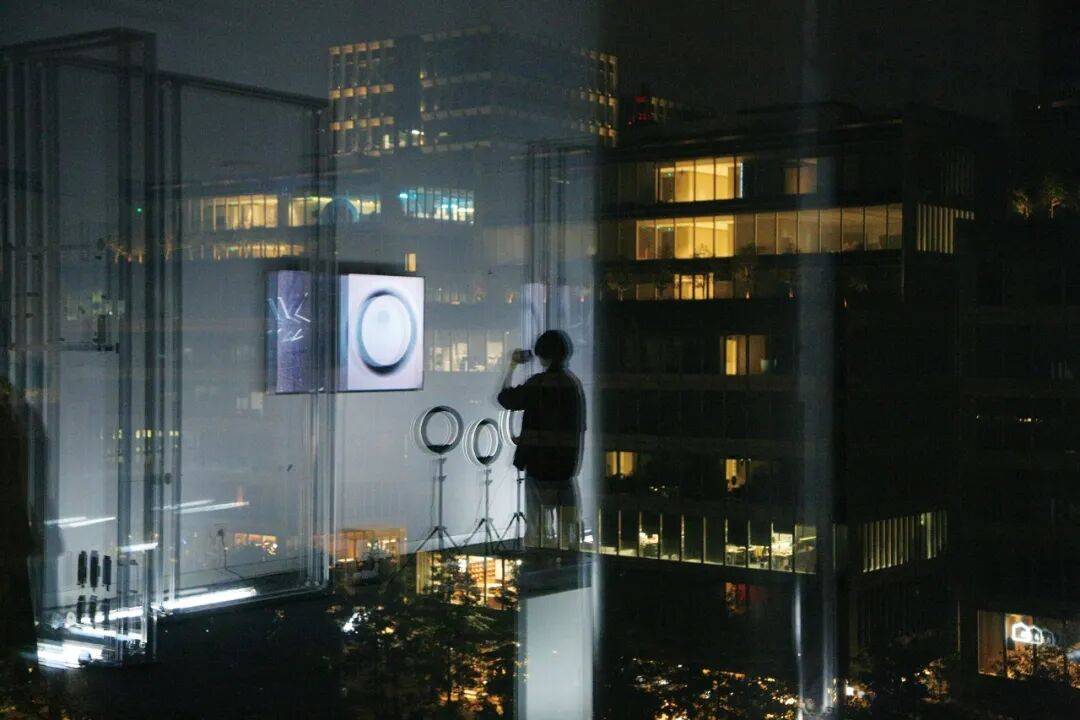
After 10 years of rapid development, live broadcasting has become far richer than before, and has even become a familiar way of life for people.
Author | Chi Di Bao
Editor | You Lei
Title picture | Acan
“‘Zhu Bao’ really can’t stand it any longer” “‘Zhu Bao’ will tell you a story”…
On today’s Internet platform, you will find that everyone calls themselves “the main package”. This word evolved from the homophony of “anchor” and has almost become a synonym for “I”, promoted to a new contemporary first person, regardless of whether you have actually broadcast live.
Everyone is a “master package”, which of course means that everyone’s life is a potential object to be watched and disseminated. In 2016, “New Weekly” recorded this change in the way of viewing in its cover feature “Live Broadcast Addiction”: “From professional TV stations to private live broadcasts, it vividly explains what ‘the medium is the message’… The boundaries of the screen have long been broken, and the trends of communication tend to converge.”
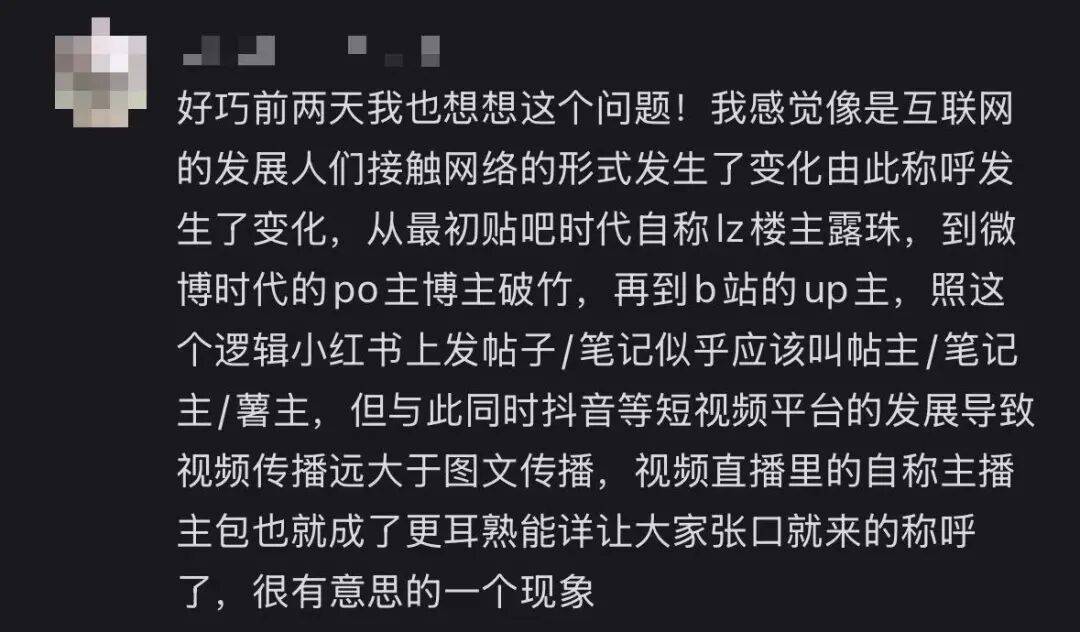
Everyone is a “master package”. (Picture/Social media screenshot)
Ten years later, live broadcasting has become far richer than before, and has even become a familiar way of life. It is not only watched as an entertainment program, but also becomes an important carrier for people’s daily activities such as shopping, sports, and learning.
And when the content of live broadcasts changes at an accelerated pace and the novelty of the past fades away, what do people today want to see more in live broadcasts?
The live broadcast lens is not only set up on the opposite side of life,
It’s still in life
Looking back on 2016, which is known as the “first year of online live broadcasting”, the rise of live broadcasting may be an explosion that has been preparing for a long time. Previously, show live broadcasts and game live broadcasts have accumulated a large number of users. With the popularization of smart phones and the improvement of network conditions, live broadcast footage has gradually left the computer desk and entered more flexible scenes such as streets, shopping malls, and travel. Mobile live streaming has greatly expanded the world that can be watched and slowly changed the people who stand in front of the camera. They can be celebrities between filming, or ordinary people eating and shopping.
The emergence of live broadcast may have truly changed people’s inherent understanding of “what is worth watching”. One no longer has to own a complete work before he has a chance to meet the audience. Freshness, boredom, and abstraction may all be reasons for being watched. In the huge online world, you can easily find any kind of life that is happening.
According to data from the China Internet Network Information Center (CNNIC), as of June 2016, the number of online live broadcast users in China was 325 million; by December 2025, this number will be approximately 814 million, accounting for 72.3% of the total Internet users. In 2024, three departments, including the Ministry of Human Resources and Social Security, issued an announcement officially identifying online anchors as a new nationally recognized profession.
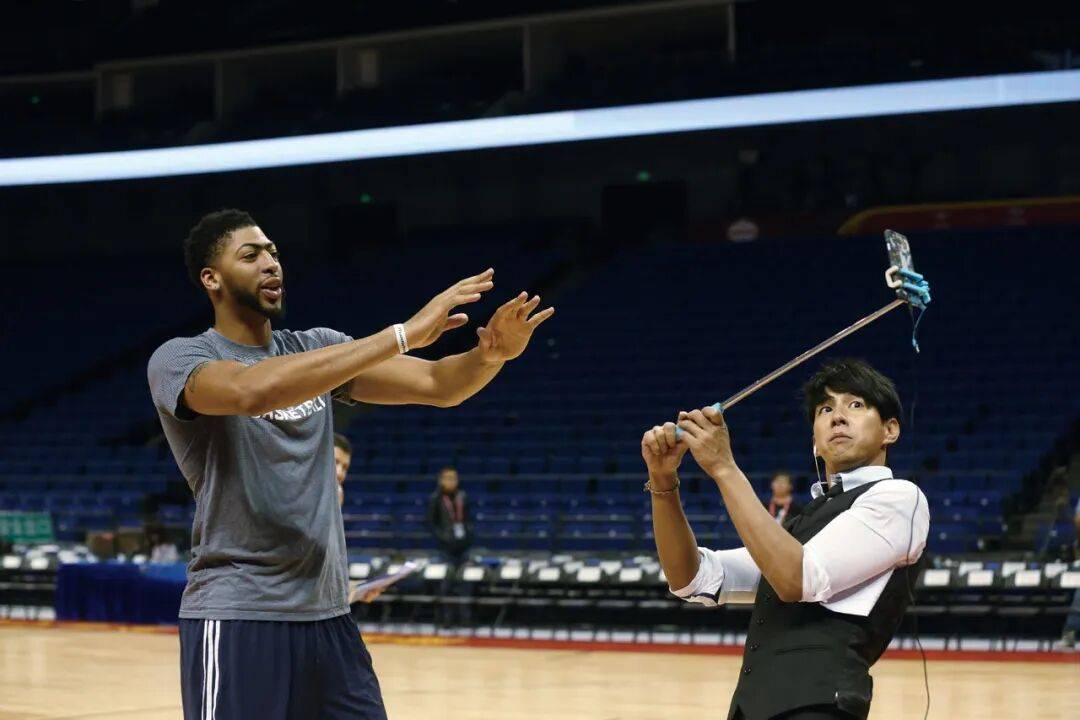
October 8, 2016, Shanghai. Inside the Mercedes-Benz Arena, New Orleans Pelicans player No. 23 Anthony Davis participates in the 2016 NBA International Series in China.During the competition, direct communication via Weibobroadcast. (Photo/NBAE/CFP)
It’s not just simple “watching and rewarding”, daily transactions are also embedded in the lens. Live streaming has quickly become the hottest red ocean in a while. In 2019, Li Jiaqi and his “OMG, buy it!” became a phenomenon-level topic. Although many years later, he once lost his house because of “Where is it expensive?”, in 2025, he still won the first place in the “Top 50 Live Broadcasting Experts” in the “2025 Hurun Talents Top 100 Commercial Value” with an annual GMV (gross merchandise transaction) valuation of 175 billion yuan. Ranked second is Dong Yuhui, another anchor with a personal style.
In 2020, Luo Yonghao, who was burdened with debt due to the failure of his business, also announced that he would enter the live broadcast room to bring goods. At the end of the first live broadcast, he picked up a razor and shaved off his iconic beard, completing a live demonstration of the product that was “drama-worthy”. Now, this long “return of truth” has come to an end.
Over a long period of time, selling goods itself has become a watchable program, and live streaming is even gradually becoming a mainstream sales method. When you walk into an offline store, you will find that there is always a clerk in the corner who is broadcasting live to the mobile phone camera. The “2025 Live Streaming E-commerce Industry Development White Paper” shows that the GMV of brands’ independently operated store broadcasts has accounted for more than 50%.
Even if you have never followed a certain anchor, when the live broadcast slices are spread to your circle of friends, office, and dinner table…a whole set of words may be quickly embedded in your daily life, such as “family members”, “all girls”, “uplink”, etc. The live broadcast lens is not only set up opposite to life, but in many cases, it is inside life. Ten years ago, “New Weekly” once mentioned in a special feature that live broadcasts that are “celebrated by celebrities” seem to be being replaced by live broadcasts without stars.

The catchphrase of being “brought bad” by live broadcasts. (Picture/Social media screenshot)
Every device is its own parallel universe
Starting from 2025, “group broadcast” has become a new live broadcast track that has suddenly emerged. It is a group live broadcast method in which multiple anchors appear together. The form is mainly dancing, singing and other performances. Compared with regular live broadcast rooms, group broadcast stages have more professional directors, lighting, camera operators, and field control hosts… Live broadcast team members are both teammates and compete with each other. The audience determines the performance content and interaction methods of the team members through rewards, as well as the order of performances, positions, and times on stage.
This is easily reminiscent of the talent show variety show back then. In 2021, after the talent show and variety shows were suspended, the idol industry was greatly impacted, and trainees could only find other ways to find a way out, such as going overseas. But audiences always need new emotional sustenance, and group broadcasting seems to have become a meal replacement. The group broadcast’s PK, ranking, performance and other forms are almost a “vertical copy” of the talent show variety show.
Every night, countless group broadcast anchors work hard in front of mobile phone cameras, which makes people nostalgic for the talent show variety shows that once called for “shooting” on TV and competed for ratings. The popular group broadcast has provided material for the wider entertainment field. During that time, half of the entertainment industry learned the “leg sweep dance”.
You may find that many times, a new live broadcast track that suddenly becomes popular may just be “old wine in new bottles.” The same is true for the sudden explosion of fitness live broadcasts in 2022. Liu Genghong’s fitness live broadcasts have turned “Compendium of Materia Medica” into a familiar sports soundtrack for many people. “Liu Genghong boys” and “Liu Genghong girls” follow the video to dance shuttlecock exercises, complete check-ins, and share their exercises. Videos of “handing in homework” even appear on overseas social platforms.
“The whole internet is full of ‘Liu Genghong girls’’. ” (Picture/Social media screenshot)
On the other hand, more serious and functional content is also put into the live broadcast footage. Knowledge anchors such as “Fan Deng Reading”, “Zhang Chaoyang’s Physics Class” and “Infinite Light” also attracted a lot of attention. The “Learning Without Boundaries, Together Here – Short Video Live Broadcast and Knowledge Learning Report” released by the Intelligent Media Research Center of the School of Journalism and Communication at Tsinghua University shows that as of November 2023, there are 4.73 million scientific experiment-related videos on Douyin. The cumulative duration of these videos exceeds 16.29 million minutes, equivalent to 362,000 classes. The massive “cloud courseware” resources realize the sharing of courseware resources across time, region, and industry, lowering the threshold for knowledge sharing.
Live broadcast rooms for different tracks are popping up everywhere, forming a truly “decentralized” live broadcast ecosystem. The “2025 Live Streaming E-commerce Industry Development White Paper” shows that the proportion of GMV driven by top anchors has dropped to 10.66%. Traffic no longer just flows into a few live broadcast rooms, but is scattered among countless “tracks” that are constantly changing.
Open everyone’s mobile phone, and the world pushed by algorithms is very different. Each device is its own parallel universe.
In the AI era, the scarce “sense of being alive”
However, the end of live performance ultimately points to “virtual”. The big trend of AI has also swept through the live broadcast field, and the people in front of the camera may not be real people anymore.
On April 16, 2024, JD.com’s digital person “Purchasing Dong Ge” completed his first live broadcast. Within 40 minutes, the number of viewers in the live broadcast room exceeded 13 million. By the first quarter of 2026, the number of JD Digital People broadcasts has increased 10 times year-on-year. At Station B, “Mu Jimeng”, who calls himself “AI Angel”, has been chatting with the audience as an AI virtual anchor. AI anchors began to have names and personalities, and also gave birth to their own live broadcast memes, becoming followed “idols”.
But on the other hand, the potential risks of digital live streaming are also obvious. In December 2024, someone used AI-synthesized “Zhang Wenhong” to sell protein bars live, and more than 1,200 copies were sold. Many elderly people believed it and placed orders like crazy. The issue of infringement of AI image has always been controversial.
In 1956, sociologists Donald Horton and Richard Wall proposed the theory of “parasocial interaction”: the audience will have a one-way, long-distance sense of intimacy with the media figure. The other person does not know you, but you feel that he understands you. The words “family” in the live broadcast room may also be a portrayal of this one-way interaction. Nowadays, distinguishing between true and false has become a compulsory media literacy course for almost everyone.
If before the emergence of AI live broadcasts, people were still reflecting on and wary of the “emotional labor” pressure faced by anchors, then in the new context, AI anchors that can be copied in batches have brought new discussions.
On August 12, 2026, at the 2026 Fourth Shanghai Embodied Intelligent Robot Industry Exhibition, the humanoid robot on the booth of Shanghai Xinfu Technology Co., Ltd. was live broadcasting online. (Picture /rex/IC)
Dong Chenyu and Ye Zhen put forward the term “relational labor” in their paper “Being an Anchor: A Digital Ethnography of Relational Labor” – the anchor’s labor has long gone beyond the performance emotions, but continues to manage relationships. Even if the broadcast is off-air, the relationship is still billed. AI anchors who are tireless, never give up, and can keep smiling in thousands of live broadcast rooms at the same time are almost tailor-made for the opposite of “relational labor”.
When perfect performances can be copied in bulk, “perfection” itself begins to depreciate. The “average face” in AI videos still makes people feel uncomfortable to a certain extent. After all, nowadays, “feeling alive” is the greatest compliment, and true images and true expressions have become quite scarce.
In the first half of 2026, a live broadcast room that looked most like a performance became popular because it had no fixed script. By a small river in Shouguang, Shandong Province, the four masters and apprentices of “Journey to the West” used a mobile phone and a stand to start the broadcast. They waded in the water, picked up stones, and made fires to cook. About 8,000 people were online during the first live broadcast. More than 10 days later, the number of people online in real time in the live broadcast room exceeded 100,000. Netizens called it the “2026 version of “Journey to the West”” and joked that “the suspected White Dragon Horse Horse Recorder was leaked”, and live broadcast slices were also spread across the Internet.
There are four masters and apprentices in “Journey to the West”. (Picture/Social media screenshot)
The main creator of the live broadcast room mentioned that they only set a rough framework before each broadcast, and more than 80% of the remaining content relies on “on-the-fly” content. For example, a strong wind blew and the branches were bent, and the four people took advantage of the situation and acted out “The evil wind is coming”. The widely circulated phrase “I beg you to save me?” was also improvised by the actor in front of the camera.
In an era of accelerating technological progress and continuous involution of content, slow and real things begin to gradually highlight their value. After all, in a life where everyone is performing, the boundaries between virtual and real have become increasingly blurred.
In 2016, live broadcasts were initially exciting because ordinary people could turn on the camera at any time and let people far away see everything that was happening. And 10 years from now, when AI can create anchors with smoother and more stable live broadcasts, what impresses people about live broadcasts may still be its freshness and authenticity. People who have seen enough of countless “tracks” are still looking forward to a new live broadcast era of anti-performance, real experience, and slow connection.
Typesetting: Kong Shuyan
This article was originally published in the 715th issue of “New Weekly” “Live Broadcast is Very Busy”
Original title: “10 Years of Live Broadcasting: In an era of per capita “main package”, what is missing is a “sense of being alive””
715 issues of magazine已上市
, available for purchase