Written by | Zhou Zhou Editor | Lin Xi
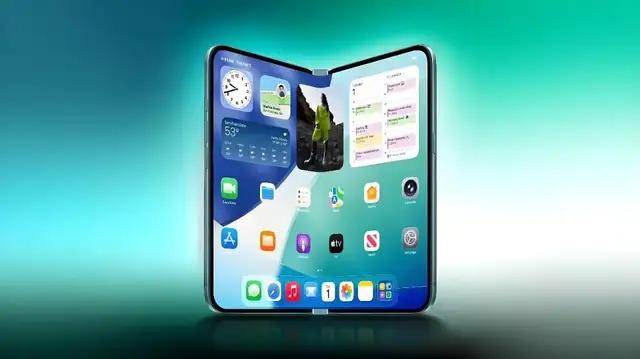
In the early morning of September 10th, Beijing time, Apple’s new CEO John Ternus stood on the stage of Apple Park and released the first folding screen mobile phone in Apple’s history – iPhone Duo, priced from 15,999 yuan. This is the first show of the new CEO after Cook stepped down, and it is also Apple’s biggest change in hardware form in the past ten years.
But Apple did not grab the “head soup”. Just three days ago, Huawei released its new generation of three-fold mobile phone Mate XT 2, priced starting at 19,999 yuan; a few hours later, Xiaomi launched its first “mid-folding” flagship Xiaomi 18 Fold, priced starting at 10,999 yuan. In just 72 hours, three leading manufacturers intensively showed off their folding screen trump cards, and a “super release week” focusing on screen form began.
Why did Apple, seven years late, finally choose to enter the game? Why has the new form of wide folding become the direction that giants are collectively betting on? How far are we from folding screen mobile phones to a real explosion?
Why did the giants unanimously choose “wide folding”?
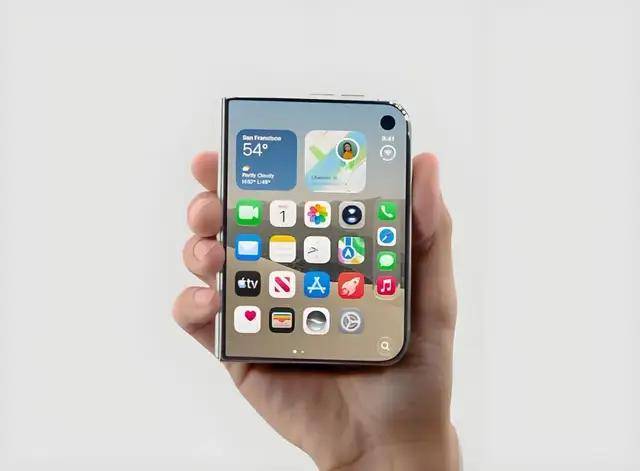
As Apple’s first foldable screen phone, iPhone Duo does not follow the old path of Samsung or early Huawei in design. It adopts a horizontal book-style folding design, with an outer screen of 5.4 inches and an inner screen of 7.6 inches. When unfolded, the display area is 50% larger than the iPhone 18 Pro Max. The size of the closed body is similar to that of a passport, making it easy to operate with one hand and easily fit into a pocket.
The hinge is carefully crafted from more than 100 components to precisely control opening and closing and provide support for the center of the screen. This means that Apple has chosen a high-standard solution that is deeply customized with suppliers for the core mechanical structure of the folding screen. It is worth noting that Samsung Display has won an exclusive three-year supply contract for the folding panel of the iPhone Duo. The price of a single inner folding panel is as high as about US$250, making it one of the most expensive hardware components of the phone besides the chip.
In terms of pricing, the iPhone Duo starts at 15,999 yuan, with the top model priced at 26,499 yuan. It is one of the most expensive folding screen phones currently on the market. However, predictions from Counterpoint Research show that Apple is expected to capture about 25% of the global folding screen market in its first year of entry, directly ranking second in the world, second only to Samsung’s 38%. An entrant seven years late has rewritten the industry landscape in the shortest possible time.
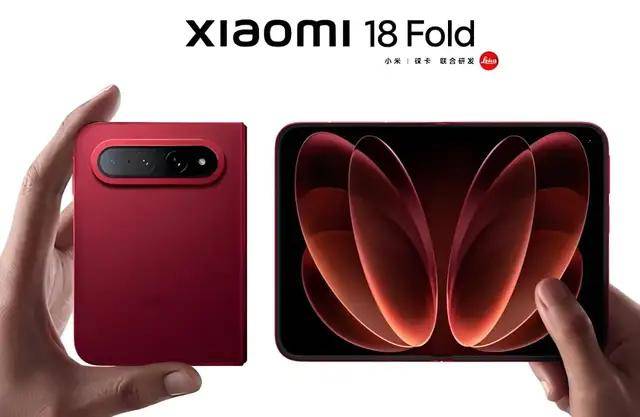
Apple is not alone. If you carefully observe the new folding screen products released in the second half of this year, you will find an interesting commonality: Huawei Pura
This is not a coincidence, but a collective turn in the folding screen industry after years of trial and error.
In the past few years, foldable screens have gone through a tortuous path of exploration. The large foldable phone looks like a tablet when unfolded, but its weight and portability are compromised; the small foldable phone is focused on portability, but is no different from a candy bar when unfolded. Huawei’s Pura
What’s even more noteworthy is that within four days after Apple released the iPhone Duo, sales of Huawei’s Pura
Xiaomi’s choice also confirms this trend. Lei Jun bluntly said at the press conference that Xiaomi has been making folding screens for five or six years and has launched four large folding models and two small folding models. It has been thinking about whether it can combine the advantages of the two. “Our answer is mid-folding.” Xiaomi Mi 18 Fold has an unfolded width of 163.8 mm and adopts the standard paper ratio of √2:1. The “screen ratio” is higher, but the actual content display area is larger.
Huawei was the first to launch Pura X Max with a new widescreen design in May 2026. As other major manufacturers will launch similar products in the coming months, this new category is driving a new round of growth in the folding screen smartphone market.
In other words, wide folding is not a flash of inspiration from one manufacturer, but a phased answer given by the entire industry to the question of “what should a folding screen look like?”
The market is cooling, but the turning point is approaching
The popularity of wide foldables has even more special significance when viewed in the overall context of the folding screen market.
According to Omdia data, global folding screen smartphone shipments will reach 18.2 million units in 2025, with year-on-year growth slowing to 6%, the lowest growth rate in recent years; in the first half of 2026, global shipments will be only 5.1 million units, a year-on-year decrease of 21.6%. In the Chinese market, sales of foldable screen mobile phones fell by 10% year-on-year from January to July 2026, which was the first decline in this category seven years after its birth.
A data worthy of more attention is: Folding screen users expand the inner screen only 3.1 times per day, 76% of consumers have never used the hover function, and a large number of users continue to use the 8-inch large screen as an “enlarged version of WeChat”. The hardware is improving rapidly – the unfolded thickness has been rolled down to less than 5 mm, the creases are almost invisible to the naked eye, and the weight has been reduced to about 220 grams – but after users get it, they still don’t know what to do with this large screen. Hardware upgrades have led to rising costs, but the software ecosystem has remained stagnant. Folding screens have always been criticized for being “flashy”.
However, an inflection point is emerging. Omdia predicts that global shipments of foldable screen mobile phones will exceed 22 million units in 2026, with the year-on-year growth rate rebounding to more than 22%; by 2028, global shipments will reach 36 million units, doubling from 2025. Counterpoint’s forecast is more optimistic: Driven by the release of Samsung Galaxy Z Fold8 series and Apple’s folding screen mobile phones, the growth rate of folding screen mobile phones is expected to accelerate to 37% in 2027, setting a new high since 2022.
The addition of Apple is seen as a key variable in reversing the situation. IDC believes that Apple is not just launching new models or increasing competition, but transforming a market segment that may have shrunk into the fastest-growing area in the entire industry.
Above hardware, the real competition lies in ecology and AI
If wide folding solves the problem of “how big the screen should be”, then the next question is “what should the large screen be used for”.
With Apple joining the fold, future competition for foldable screen phones will no longer be limited to hardware, but will further shift to user ecology, software experience and AI capabilities. Different manufacturers have different advantages – Huawei has the accumulation of multiple generations of folding screen products, a high-end user base and local market advantages, while Apple has a huge high-end user base and a mature ecosystem.
This is where Apple is most promising. Software adaptation has always been an area where users are dissatisfied with foldable screen phones, and Apple’s advantages in software and ecology are expected to bring a smoother folding phone experience. When the native applications of iOS are naturally adapted to the various forms of the folding screen, users do not need to face the embarrassment of “application deformation after expansion”, and the value of the large screen can be truly released.

AI has given new meaning to the large screen. Compared with traditional mobile phones, it can continuously visualize more information and support multiple tasks to run in parallel, thereby releasing the value of AI productivity. In other words, the foldable screen is no longer just a “foldable phone”, but an ideal carrier for AI assistants – when Siri or other AI agents need to display information, process tasks, and interact with users at the same time, a 7.6-inch screen is obviously more comfortable than a 6.1-inch straight screen.
Huawei has already taken the lead in this regard. HarmonyOS 7 installed on Mate XT 2 upgrades Xiaoyi to a system-level intelligent agent that can perceive more than 200 system-level user data and invoke more than 2,100 system capabilities. Xiaomi 18 Fold brings together three major self-research results for the first time: the self-developed Xuanjie O3 chip, ThePaper OS 4 and the Xiaomi MiMo end-side large model. Although Apple’s Apple Intelligence still needs to wait for its launch in mainland China, its ability to collaborate with more than 300,000 applications has demonstrated the potential of ecological integration.
How far is the “popularization” of folding screens?
An unavoidable reality is that price is still the biggest obstacle for folding screens to reach the masses.
Huawei Mate XT 2 starts at 19,999 yuan, Apple iPhone Duo starts at 15,999 yuan, and Xiaomi 18 Fold starts at 10,999 yuan. The price of more than 10,000 yuan determines that it is difficult for folding screens to become as popular as ordinary smartphones in the short term. What’s more subtle is that the cost structure of folding screens is difficult to significantly improve in the short term – the technical threshold is high, there are many customized parts, and the yield rate is a big challenge. Cost pressure on manufacturers always exists.
But looking at it from another perspective, the price of 10,000 yuan just shows that the folding screen is finding its own position: it is not to replace the thousand yuan machine or the mid-range candy bar machine, but to compete for the position of the main machine for high-end users. IDC predicts that global smartphone shipments will fall by 16.7% year-on-year in 2026, and foldable screens are the only bright spot in the mobile phone market, with 22.9 million units expected to be shipped, a year-on-year increase of 12.6%. From the perspective of the industry, foldable screens combine large screens and portability, and are currently the only hardware innovation that can support high customer unit prices of 10,000 yuan.
Currently, foldable screen phones only account for about 2% of the global smartphone market, which means that this category still has vast room for growth. By the end of 2026, global cumulative shipments of foldable screen smartphones will exceed 100 million units – starting from the launch of the first commercial foldable screen in 2019, it took the category eight years to reach this milestone. With the entry of Apple and the popularity of wide-folding formats, the next 100 million units may not take eight years.