Today, with the booming digital economy, the game industry has become an important pillar of cultural consumption. However, behind the prosperous market, a hidden black and gray industrial chain is quietly eroding the healthy ecology of the industry.
Recently, as a verdict of the Shanghai Xuhui District People’s Court came into effect, a professional game account black and gray production gang that integrated “account creation, account maintenance, and account sales” was completely destroyed.
This case not only cut off the black interest chain that infringed on citizens’ personal information and undermined the security of game operations, but also provided a practical sample with great reference value for judicial characterization and sentencing of similar cases.

The e-commerce platform store sells “Honkai Impact: Star Rail” game accounts. Photo provided by interviewee
Abnormal data led to the “account factory”, and 145,000 pieces of information were turned into profit-making tools
The breakthrough in the case came from the abnormal data discovered in the game company’s daily monitoring. Previously, MiHoYo’s Legal Department discovered during an inspection that multiple e-commerce stores intensively sold “initial accounts” for its popular games such as “Genshin Impact” and “Honkai: Star Rail”, with prices ranging from tens to thousands of yuan. After comparing the background data, most of these accounts were registered in batches at the same time, which is completely inconsistent with the behavior of normal players.
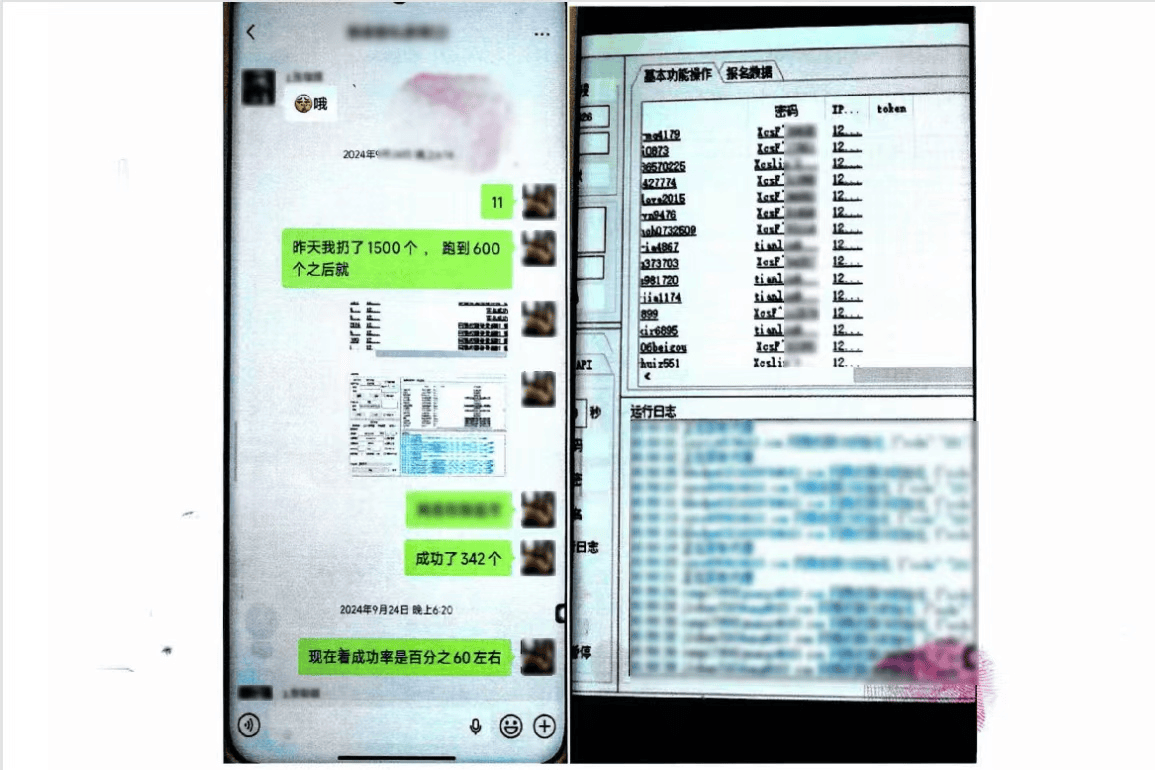
Generated game account and password. Photo provided by interviewee
After fixing the evidence, MiHoYo reported the case to the Shanghai police. As the investigation deepened, a well-organized criminal gang with clear division of labor emerged. According to investigations by judicial authorities, the gang’s leader Zhang and others illegally obtained more than 145,000 pieces of citizens’ personal information including names and ID numbers from overseas websites, social groups and other channels. These private data, which should be strictly protected, are actually used as “raw materials” for false registrations.
On the technical level, gang members commissioned the development of a customized “all-purpose registration machine”. By accessing the proxy IP pool, automatically simulating manual slider verification and other technical means, the software successfully bypassed the game company’s security protection system and achieved unattended batch registration. In a short period of time, the gang used stolen information to register more than 49,000 game accounts, creating an “account factory” of staggering scale.

The scene of the trial. Photo courtesy of Shanghai Xuhui District People’s Court
The closed loop of “starting an account, maintaining an account, and selling an account” seriously damages the industry ecology.
Batch registration is only the first link in the illegal production chain. In order to sell the account at a higher price, gang members use automated scripts and plug-in programs to “grow” “white accounts” 24 hours a day. By swiping virtual currency and extracting rare characters and props, these accounts were quickly “fatted” and then sold at high prices through e-commerce stores and self-built “account selection websites”. The amount involved was as high as millions of yuan.
This kind of industrialized, assembly-line black production operation has caused multiple harms to the game industry. On the one hand, plug-in “account maintenance” seriously destroys the order of fair competition in the game and damages the experience of the majority of normal players; on the other hand, once these accounts registered with adult identity information fall into the hands of minors, it is easy to bypass the national anti-addiction mechanism, allowing minors to break through play time and consumption restrictions, seriously interfering with the implementation of corporate real-name management.
In the face of new cybercrimes with hidden and highly technical means of committing crimes, judicial organs insist on cracking down on the entire chain. The Xuhui District Procuratorate launched a public prosecution in accordance with the law and simultaneously initiated a criminal incidental civil public interest litigation.
The court found that the defendant committed two independent criminal acts: first, he used a registration machine to bypass security protection to register accounts in batches and illegally obtained computer information system data, which was particularly serious; second, he illegally obtained more than 145,000 pieces of personal information of citizens, which was particularly serious. In the end, the court punished the principal criminals Zhang and Yao for several crimes in accordance with the law. They were sentenced to three years and ten months in prison and fined RMB 60,000. The remaining persons involved were also sentenced to corresponding penalties.
It is worth mentioning that the court also ordered the defendant to apologize to the public in media at the provincial level and above, and to permanently delete citizens’ personal information illegally obtained. This judgment not only achieves precise punishment of criminals, but also comprehensively restores damaged social and public interests through civil liability investigation.
Regarding such black and gray products, MiHoYo stated that in the future, it will continue to adhere to the strategy of “technical solidification first, judicial cooperation and follow-up”, deepen the normalized cooperation with law enforcement agencies, and at the same time promote the e-commerce platform to strengthen the review and control of account transaction commodities. As the prosecutor handling the case said, eradicating illegal gaming industry requires the joint efforts of technology, law, platform, and law enforcement. Only by adhering to equal emphasis on criminalization and governance, and severely punishing new crimes that use technical means to disrupt network order in accordance with the law, can we create a fair competition, safe and orderly development environment for the digital cultural industry, and make a clear cyberspace truly benefit every user.