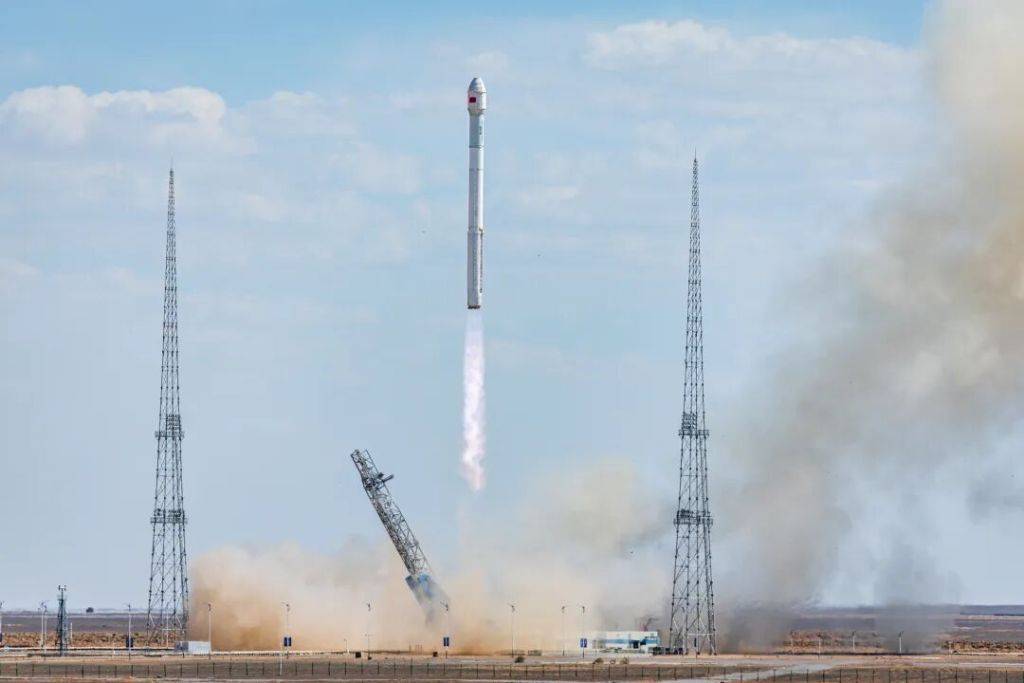
On September 15, the Zhuque-2 improved Yaoqi launch vehicle (ZQ-2E Y7) was ignited and lifted off at the launch station of the Blue Arrow Aerospace liquid oxygen methane launch vehicle in the Dongfeng Commercial Aerospace Innovation Test Zone at 14:26, sending 10 Qianfan Polar Orbit 19 satellites of Shanghai Yuanxin Satellite Technology Co., Ltd. into the predetermined orbit. The flight test mission was a complete success.
This is the ninth flight of the Zhuque-2 series launch vehicle, and it is also theFor the first time, this series of rockets has carried out a large-scale satellite Internet constellation networking mission. This flight is also the first time that my country’s private commercial aerospace enterprise has undertaken the task of forming a large-scale satellite Internet constellation.
“Constellation networking is not a one-time task, but a process of continuous construction and operation.” Ma Haijing, general manager of the Blue Arrow Aerospace Marketing Department, said that market demand is gradually shifting from a single project to a more sustained and large-scale capacity demand, which puts forward higher requirements for rocket companies’ launch frequency, mission organization and continuous supply capabilities.
Ma Haijing said that compared with ordinary single-satellite launches, the networking task is not simply to stack more satellites on the rocket, but involves a complete set of engineering processes such as multi-satellite adaptation, satellite-rocket coordination, batch deployment, orbit control, and final stage passivation deorbiting. The requirements for full-process collaboration and refined management are higher.
This mission achieved the precise deployment of 10 communication satellites at an altitude of 900 kilometers, and completed the passivation and deorbiting process of the rocket’s final stage, taking into account satellite deployment efficiency and space debris control requirements. To this end, Blue Arrow Aerospace has made system preparations around satellite and rocket interfaces, flight procedures, multi-satellite release timing, ground testing and launch processes, and has worked collaboratively with customers.
“What we value more is not solving a single technical problem, but digesting the complexity as early as possible through sufficient ground work, system collaboration and process management.” Ma Haijing said.
The configuration and performance parameters of the Yao-7 rocket are generally consistent with those of the Yao-5 and Yao-6 rockets. The Yao-5 mission verified the model’s designed carrying capacity and high-orbit deployment capability for complex missions; the Yao-6 mission was carried out again 26 days after the launch of the Yao-5, further testing the ability to continuously organize launches. This time, Yaoqi is undertaking the constellation networking task based on previous verification, making full use of rocket capacity and increasing the orbital payload to create conditions for reducing customer launch costs.
While promoting the improved commercial launch of Zhuque-2, Blue Arrow Aerospace is also carrying out work related to the engineering reuse of Zhuque-3.
On August 19, Zhuque-3 successfully completed a flight test mission by reusing the Yao-2 launch vehicle. It became the first time in my country that a sub-stage of a launch vehicle was recovered by the landing leg, and it was also the first time in my country that a sub-stage of a launch vehicle in orbit was recovered on land. This Zhuque-2 Yao-7 mission is only 27 days after the Zhuque-3 Yao-2 flight test.
“The two types of rockets undertake different stages and different mission requirements, and are not a simple substitute relationship.” Ma Haijing said that the improved Zhuque-2 is an important model currently used by the company to undertake regular commercial launch missions, mainly serving the actual needs of current customers; the Zhuque-3 is designed to meet the future needs of greater capacity and higher frequency launches, and the two will develop collaboratively based on customer, payload and mission requirements.
It is reported that the two rockets share some key products and technologies, including the Tianque 12A series and Tianque 15A engines used in the first and second sub-stages respectively. This enables validation data and engineering experience accumulated with one model to be used for improvements in another model, while helping to reduce costs.
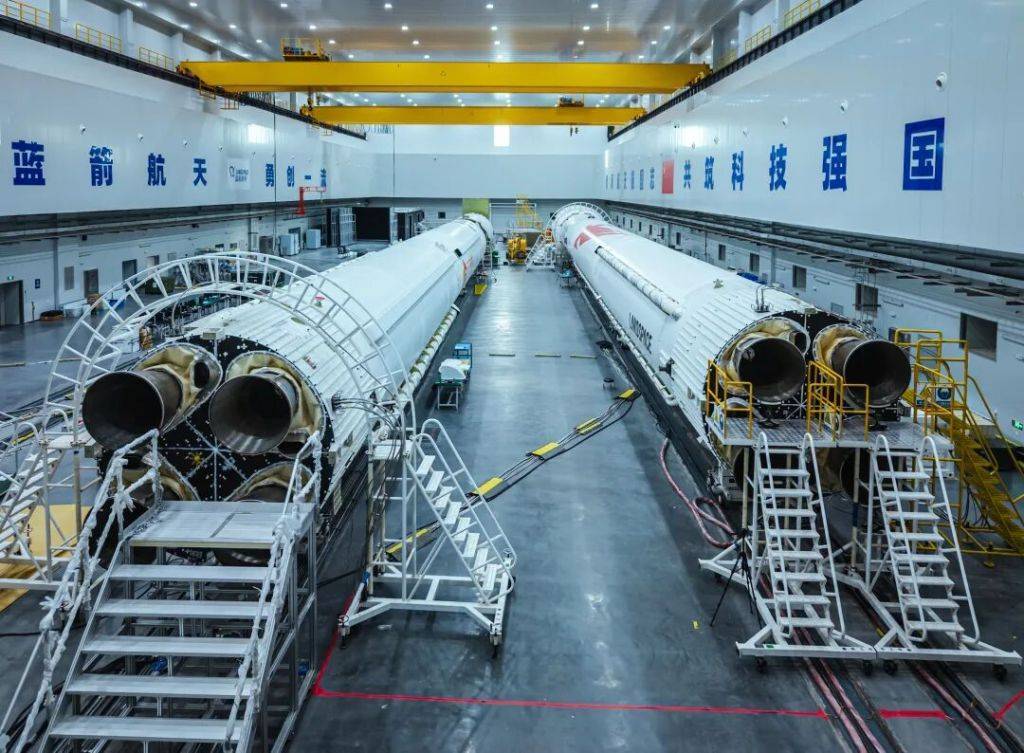
“The scale of commercial aerospace is not determined by a single mission.” Ma Haijing said that it is ultimately reflected in whether products can be continuously produced, whether missions can be stably executed, whether customer needs can be continuously met, and whether companies can establish manufacturing, supply chain and operation systems that match high-frequency launches.
Blue Arrow Aerospace is currently sprinting for the IPO of the Science and Technology Innovation Board, which was accepted by the Shanghai Stock Exchange on December 31, 2025. The sponsor is CICC, and plans to raise 7.5 billion yuan for reusable rocket technology and production capacity improvement projects. The current IPO review status is “inquiry”.
Blue Arrow Aerospace was established in 2015. It is mainly engaged in the research and development, production and provision of commercial space rocket launch services for liquid oxygen methane engines and launch vehicles. It is committed to building a full industrial chain of “research and development, manufacturing, testing and launch” with medium and large reusable liquid oxygen methane launch vehicles as the core, and creating a scientific and technological complex in the aerospace field.
The actual controller of the company, Zhang Changwu, directly holds 6.7277% of the shares, and as the executive partner of Xinghan Information, Yihang Management, Silk Road Aviation, Qiyu Aviation Technology, and Hangyan Management, he controls 7.9548% of the shares held by Xinghan Information, Yihang Management holds 3.6699% of the shares, Silk Road Aviation holds 3.6699% of the shares, Qiyu Hangke holds 1.1559% of the shares, and Hangyan Management holds 0.2942% of the shares, totaling 23.4724%. The company has set up a voting rights differential arrangement, and Zhang Changwu controls a total of 75.2019% of the voting rights.