“China admires it, and the world enjoys it.”
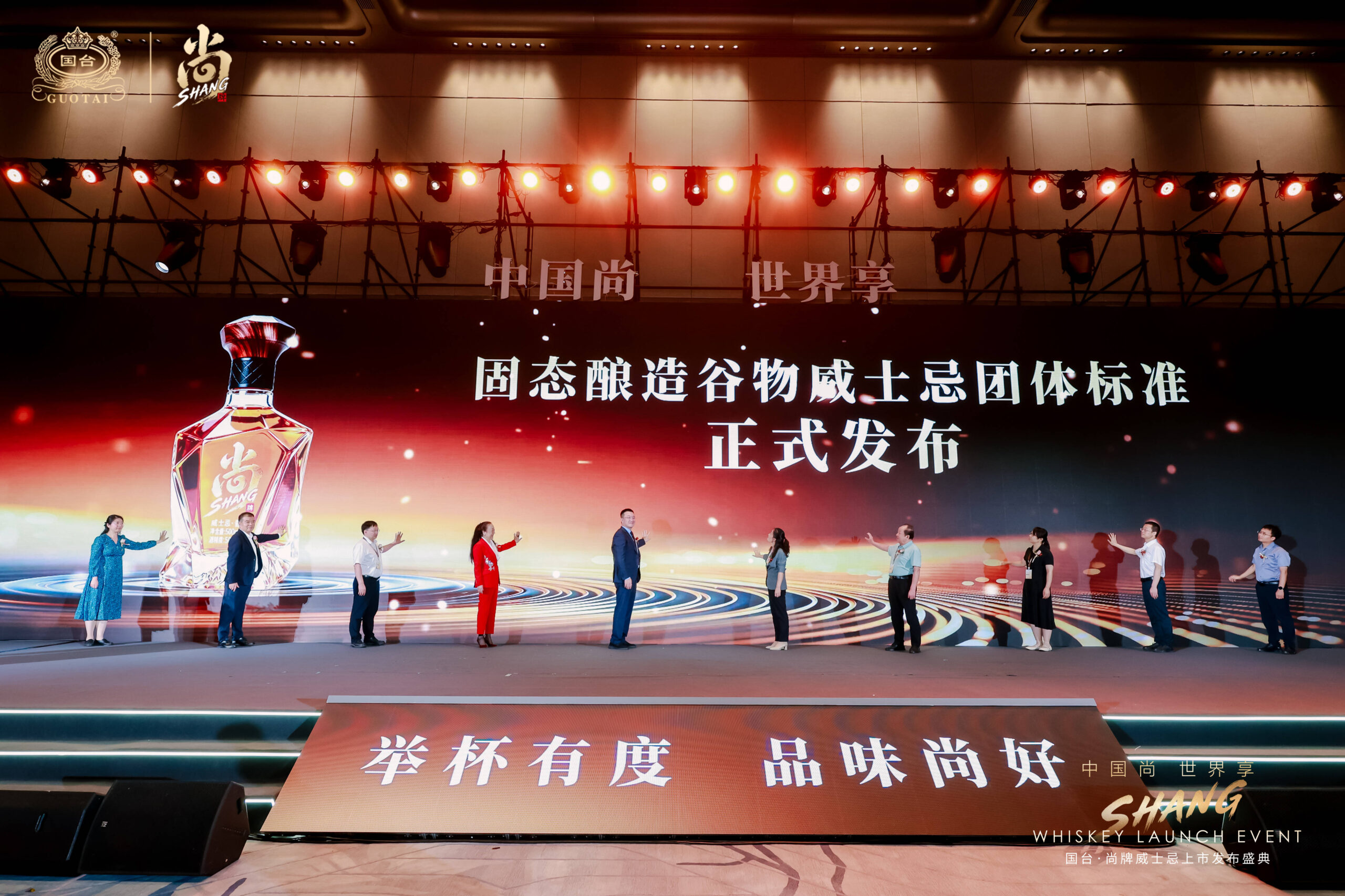
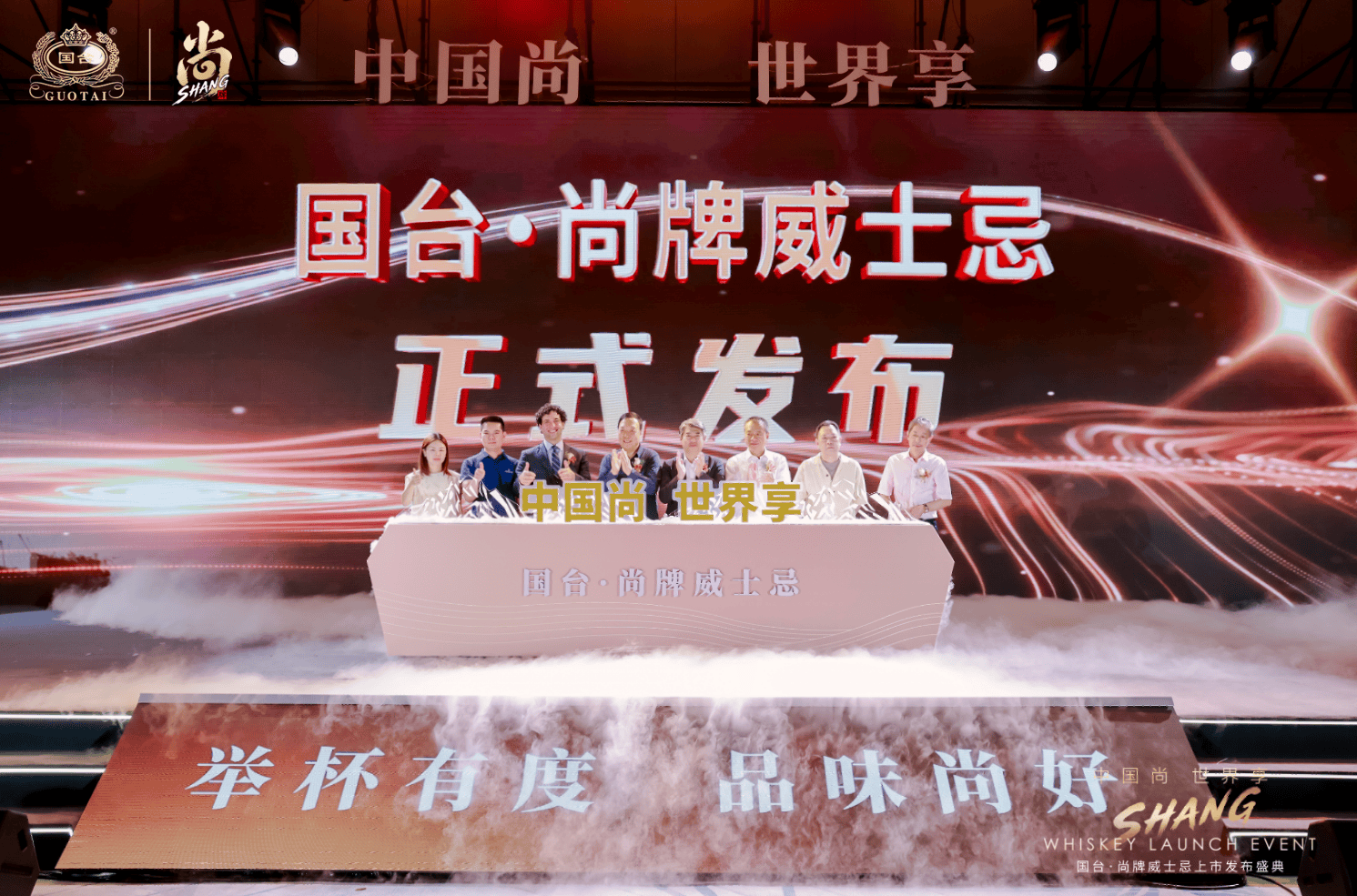
On September 12, Guotai Shangpai whiskey was launched in Guangzhou, and the China Light Industry Federation’s “Solid State Brewing Grain Whiskey” group standard was released simultaneously. A conference pushed Chinese whiskey to an industry node worth recording.
As more and more international spirits categories enter a new stage of localized development in China, an unavoidable question arises: Should Chinese liquor companies follow existing routes, or create a new path with local brewing wisdom?
Regarding whiskey, the answer given by Taiwan is very clear. Shangpai Whiskey uses the “Daqu High Temperature Solid State Brewing Grain Whiskey” with Chinese brewing characteristics as the category entry, deeply integrating the Chinese Daqu High Temperature Solid State Fermentation process with the Western whiskey brewing system, allowing Maotai Town’s sauce-flavored liquor to be matured in pottery jars and Kentucky bourbon oak barrels, embarking on a path of “world’s first, Chinese characteristics”.
Behind this is a complete set of systematic reconstruction from raw materials, fermentation, distillation, aging and storage to standards.
As Yan Kaijing, chairman of the board of directors of Tasly Health Industry Investment Group, chairman of Tasly Biopharmaceutical Industry Group, and chairman of Taiwan Digital Intelligence Wine Group, said: “We did not look for corners in the established territory of the West, but drew a new coastline on the industrial map.”
Chinese whiskey welcomes window period
The world map of whiskey has long been dominated by Western discourse. Production area, barrel aging, and vintage are widely followed standards in the industry, but China has always lacked its own original seat.
Behind this is a visible barrier. Currently, liquor’s overseas revenue accounts for less than 1%, and the penetration rate of international spirits in China is only 2%. Behind the barriers are multiple barriers in cultural context, brewing system, consumption scenarios and business operations. “
So, can China become the next emerging whiskey production region in the world? Can Chinese companies rely on localized innovation to build their own growth curve while pushing China into the core territory of the global spirits industry?
The answer is taking shape.
The current global spirits market has exceeded US$500 billion and is entering a new stage of structural competition from scale expansion. As a core pillar category, whiskey’s global market size has maintained steady growth over the past decade.
The Chinese market is also ushering in a critical window period, with the release of whiskey-related group standards. In June this year, the “Solid State Brewing Grain Whiskey” group standard compiled by the China Light Industry Federation was officially released, and the expert group determined that the standard overall reached the “international advanced level.”
Sun Baoguo, a professor at Beijing Technology and Business University, said that Guotai Shangpai whiskey is a practical example of this standard and a whiskey that truly belongs to the Chinese people. It is not an imitation of Western whiskey, but an innovative transformation of China’s unique Daqu high-temperature solid-state fermentation process into a new expression of whiskey, using Chinese brewing logic to rewrite the flavor coordinates of world whiskey.
At the conference, Liu Jingjing, member of the Standing Committee of the Party Committee of China Light Industry Federation and director of the Quality Standards Department, said that the formulation of this standard has filled in the technical issues that are missing in my country’s solid-state brewing grain whiskey standards and clarified the raw material requirements, sensory requirements and quality requirements of this type of product. It is of great significance for regulating the healthy development of the Chinese specialty whiskey industry and promoting the internationalization of China’s alcohol standards.
Data show that China’s whiskey import volume in 2025 will be approximately 35,800 kiloliters, a year-on-year increase of 23%; during the same period, domestic whiskey production has reached 60,000 kiloliters, surpassing imports for the first time. The total designed production capacity is 120,000 kiloliters, and the planned production capacity is 300,000 kiloliters. There are more than 50 whiskey distilleries under construction and in operation across the country.
Changes on the consumer side are equally profound. Qin Shuyao, president of the China Liquor Distribution Association, pointed out that whiskey is accelerating its integration into China’s mainstream consumer market. Channel forms are becoming increasingly diverse, from traditional tobacco and alcohol stores to boutique bars, from e-commerce platforms to immersive experience spaces, the reach radius of whiskey continues to expand; the consumer group continues to expand, extending from senior enthusiasts to young groups and female consumers born in the 90s and 00s. Younger and diversified drinking needs are driving the further growth of the spirits category.
He Yong, secretary-general of the China Liquor Industry Association, judged: “The future of whiskey depends on China.” He believes that China’s vast land and rich natural ecological diversity, huge market demand potential, strong support from various production areas, high starting point for entering the industry, high standardization level, and high industry enthusiasm have all provided the soil and environment to promote the development of domestic whiskey.
He further pointed out that Guotai’s theme of “Style in China, Enjoyed by the World” is in line with the development pattern of Chinese whiskey in the new era. “Chinese fashion” is an industrial fashion rooted in Chinese customs and adhering to craftsmanship and quality. It is a fashion of the times based on oriental aesthetics and demonstrating cultural confidence. “World Sharing” is a pattern based on the Chinese market and benchmarking against world standards. It is the responsibility of building Chinese brands and participating in global competition. It is the vision of exporting oriental flavors and sharing ingenious wines.
Shangpai’s answer, “solid-state brewing” defines a new category of domestic whiskey
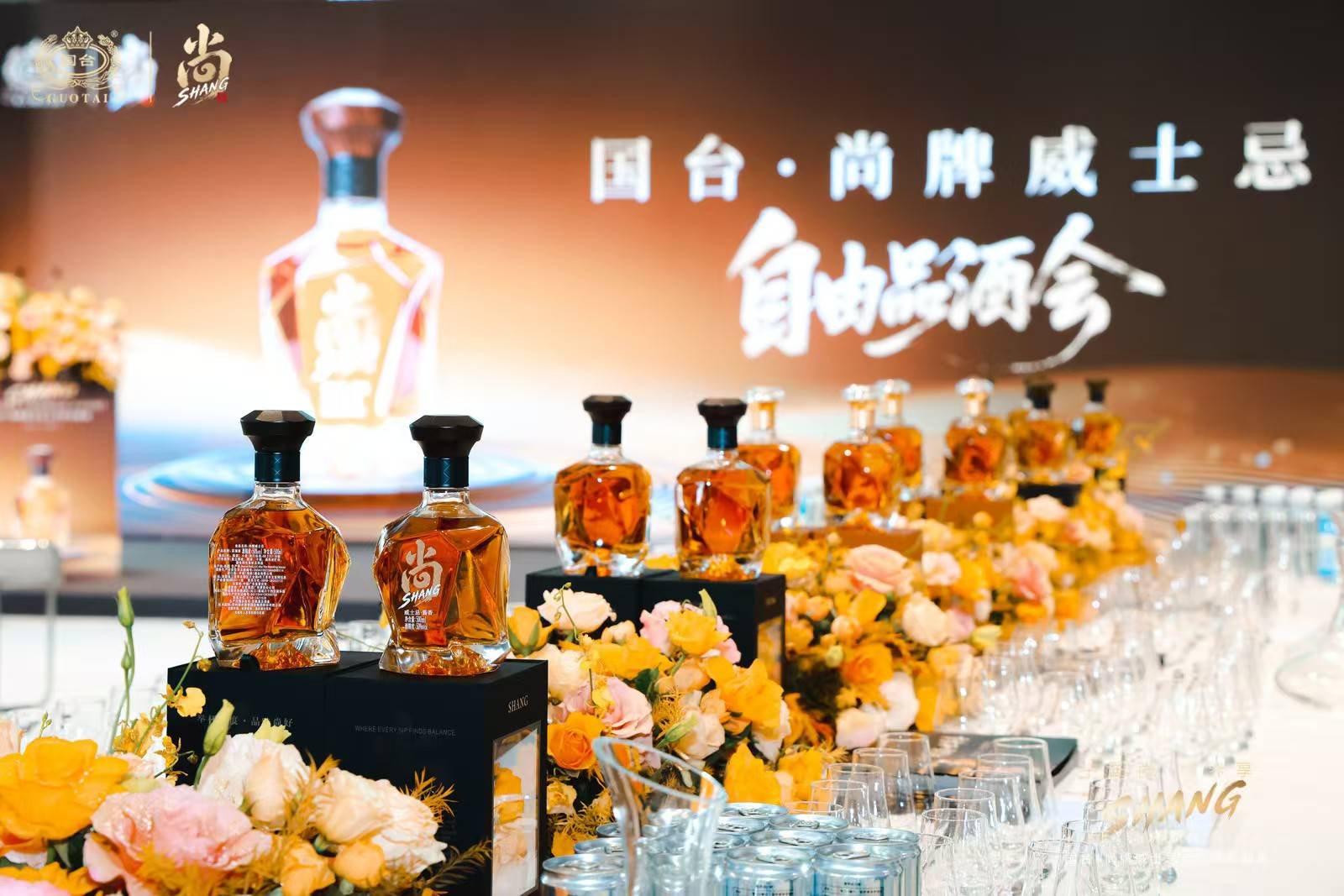
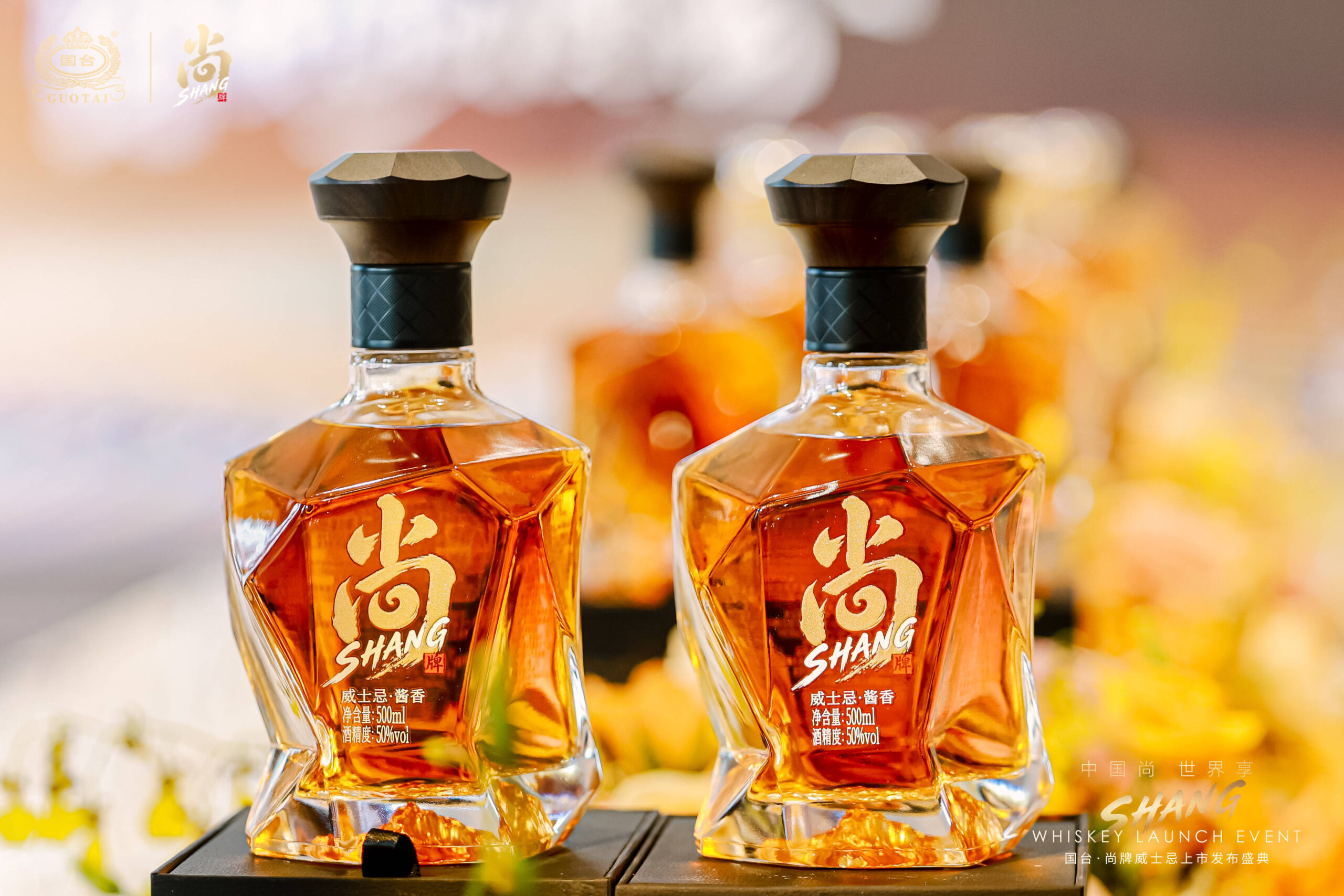
At this press conference, Guotai·Shangpai Whiskey launched three new products, namely 50% vol sauce flavor (429 yuan/bottle), 46% vol sauce wheat flavor (318 yuan/bottle), and aged flavor.
Among them, the sauce-flavored version is the matrix of all products; the sauce-malt flavored version is based on the matrix, incorporating Scottish Highland malt whiskeys of different years and different proportions; and the aged-flavored version is based on the matrix, incorporating oriental herbs such as tangerine peel.
Innovation in craftsmanship is a highlight of Shangpai Whiskey. It created a new category of “solid-state brewed grain whiskey”, deeply integrating China’s Daqu high-temperature solid-state fermentation process with the Western whiskey brewing system.
According to Fan Shuangxi, the professional dean of the National Research Institute of the National Taiwan Digital Intelligence Wine Group and the director of the Liquor Innovation Center, Shangpai whiskey uses Chinese special sorghum and wheat. On the basis of adhering to the core process of high-temperature solid-state brewing of Maotai-flavor liquor in Daqu, China, it uses Maotai-flavor liquor as the base and retains the core flavor and flavor of the Maotai liquor through solid-state distillation. The skeleton of the wine body is subjected to liquid distillation (pot type, tower type) and international patented flavor balancing technology to remove the flavor substances in the sauce-flavored liquor body that are difficult to adapt to whiskey aging, creating a whiskey original suitable for oak barrel aging. It is then aged in pottery jars to precipitate the mellow flavor of sauce aroma. It is then transported to Kentucky, USA, and matured in bourbon oak barrels.
One end is the core production area of Moutai Town in China. The unique climate, water, soil and microbial flora provide an unreplicable brewing environment for Daqu’s high-temperature solid-state fermentation. The other end is Shelbyville, Kentucky, USA, where the world’s top oak barrels cluster, where the liquor is matured in oak barrels and blended into classic whiskey textures such as flowers and fruits, caramel, and cream.
The terroirs on both sides of the Pacific collided, blended, and were reborn over time, eventually becoming Guotai·Shangpai Whiskey.
Daqu high-temperature solid-state fermentation is a core brewing technology that has been accumulated by generations of Chinese brewers and is unique to China. Guotai has made this solid-state fermentation system, which embodies Eastern wisdom, systematically applied in the whiskey category for the first time.
Qin Shuyao believes that Shangpai Whiskey uses the world’s first Daqu high-temperature solid-state brewing process with Chinese characteristics to deeply integrate the brewing wisdom of Chinese liquor and the flavor language of whiskey. It not only creates a new path for the development of Chinese whiskey, but also demonstrates the confidence and responsibility of the Chinese liquor industry from following, to running alongside, and then to leading.
A roundtable forum was held at the conference. Many industry experts, including Wang Xinguo, chairman of the China Liquor Distribution Association, Song Quanhou, secretary-general of the National Technical Committee for Brewing Standardization, Lu Fuping, deputy secretary of the Party Committee and president of Tianjin University of Science and Technology, Bruno Santos, chairman of the International Bartenders Association, Sun Jinyuan, a professor at the School of Food and Health at Beijing Technology and Business University, Song Ning, a national first-level sommelier and a well-known alcohol blogger, all highly affirmed the innovative path of Shangpai Whiskey.
In June this year, the overseas version of “SHANG” was the first to be launched on the market. Upon its launch, it won the Best of Show Award and Platinum Award at the 2025 TAG Global Spirits Competition, the Gold Award at the 2026 Los Angeles Spirits Competition, and other international awards. It can be seen that the innovation of Chinese brewing is not only seen by the industry and the world, but also recognized by the industry and the world.
China’s whiskey industry path is becoming clear
Of course, the launch of Shangpai is not just a product. From process route to flavor logic, from quality standards to market expansion and cultural expression, it presents a clear industrial path.
According to Luo Xiaoling, general manager of Zhongwei Liquor Co., Ltd., in terms of market strategy, Shangpai has proposed a model of “online detonation, offline scene understanding, and digital promotion of transactions”, linking KOP, KOL, KOC, and KOS, using small programs to connect consumers, partners, circle managers, and offline terminals, and supporting six major support systems of advertising communication, tasting activities, terminal construction, personnel promotion, market expenses, and channel operations to strengthen price and market order management.
Under this logic, the international market is giving positive feedback.
Matt Rubin, CEO of Marita Brand Co., Ltd., said that SHANG has attracted great attention from the US market since its launch. The listing news exposure has reached 1.039 billion times. Due to the good market response, the dealer negotiation cycle has been shortened from the usual 3-6 months to 1-2 weeks. At the same time, what surprised him was that the product did not stop at Asians or young people. Native white people from central America also praised this Chinese spirit and even said it was “enough to replace traditional American whiskey.”
It is reported that with good consumer and market feedback, the International Bartenders Association plans to organize 25-30 of the world’s top bartenders to go to Maotai Town in October to learn the solid-state brewing process of Chinese liquor and the production process of Shangpai whiskey. These bartenders are undoubtedly the cultural ambassadors of Chinese brewing to the world.
In the future, National Taiwan will also gradually introduce technologies, equipment and production models that have been proven in the international market into the country, create a solid-state fermentation whiskey industry system with Chinese characteristics and independent intellectual property rights, and explore suitable aging environments in Pu’er, Changli and other places to cultivate whiskey expressions unique to Chinese terroir.
Shangpai Whiskey is embarking on an integration path of category innovation and simultaneous advancement of domestic and foreign markets.
Yan Kaijing said: “Standing at the industry node, we expect Shangpai Whiskey to make three contributions to the industry. The first is to establish a new category coordinate for Chinese whiskey, but to explore a new international path for Chinese liquor, and the third is to build a new independent industry system for Chinese spirits.”