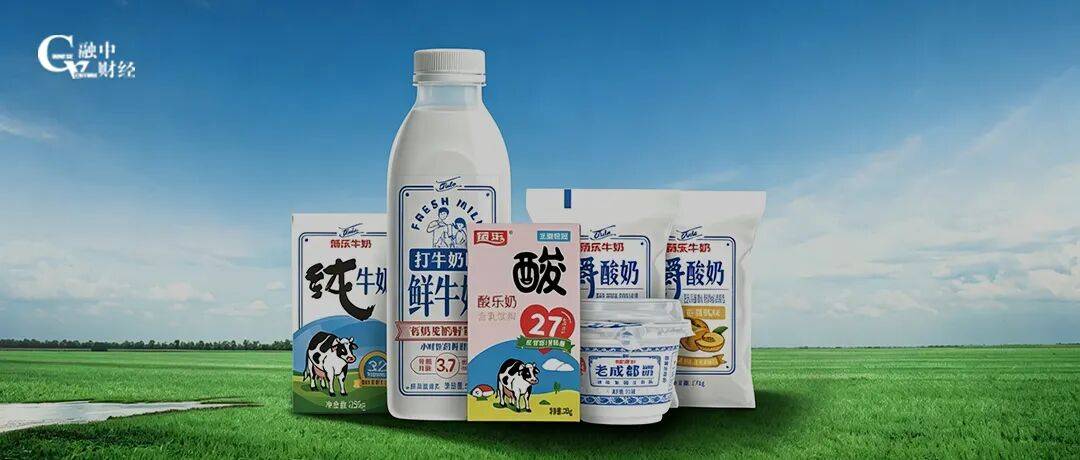
Another local dairy company has landed on the Beijing Stock Exchange.
The childhood memories of Chengdu people have entered the capital market.
On November 17, Sichuan Jule Food Co., Ltd. (hereinafter referred to as “Jule”, 920309.BJ) was listed on the Beijing Stock Exchange, with a high opening price of 48 yuan per share, and a total market value of approximately 5 billion yuan.
However, for many Chengdu consumers, the three words “Sour Milk” are more familiar than Jule’s securities code.
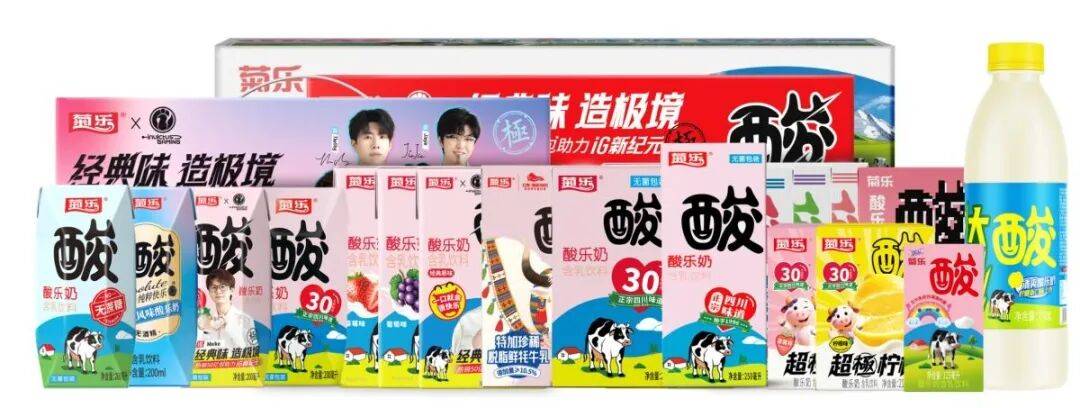
As it stated in its prospectus, “Since the launch of the ‘Sour Milk’ product in 1996, the company has built a product structure with acidic milk-containing beverages as the core. With its precise market positioning and unique sour, sweet and smooth taste, coupled with the quality assurance brought by the use of raw milk for preparation, the ‘Sour Milk’ product has penetrated into the hearts of consumers and has become a star product that has been best-selling for more than 20 years.”
A milk-containing drink that has been sold for 30 years has supported a local dairy company with an annual revenue of nearly 1.7 billion yuan. Now this local dairy company has opened the door to the capital market.
However, it has been a different generation to bring the company to the stage of listing. In September 2025, Tong Enwen, the founder of Jule, passed away at the age of 78. After that, the daughter Tezhu inherited the equity and became the actual controller of Jule, while the son-in-law Gao Zhaohui, who had already entered the company’s operating system, took over as chairman and continued to serve as general manager.
From the daily drinks of Chengdu people, to the intergenerational handover of family businesses, to the Beijing Stock Exchange being re-examined by investors, the listing story of a local dairy company happens to string together several clues of capital that are changing.
A box of “sour milk” supports an IPO
For many Chengdu people, “Ju Le” is an important mark of their childhood.
“Jule” can be seen everywhere on convenience store shelves and community milk houses in Chengdu. And this sense of familiarity has lasted for thirty years.
In 1996, Jule launched pure milk and sour milk, officially entering the field of milk beverages and dairy products processing. Since then, Sour Milk has gradually become the company’s most recognizable product. It should be noted that although consumers are accustomed to talking about it together with milk, the product category of Sour Milk is a milk-containing beverage, not pure milk.
The familiarity contributed by Chengdu consumers has naturally transformed into real money in financial statements.
The prospectus shows that from 2023 to 2025, Jule’s operating income was 1.562 billion yuan, 1.641 billion yuan, and 1.694 billion yuan respectively, and the net profits attributable to the parent company were 196 million yuan, 232 million yuan, and 291 million yuan respectively. In the past two years, revenue has increased by approximately 8.5%, and net profit attributable to the parent company has increased by nearly 50%. Profits have significantly outpaced revenue.
Entering 2026, Jule’s performance growth continues. In the first three quarters of 2026, the company achieved operating income of 1.455 billion yuan, a year-on-year increase of 11.83%; net profit attributable to the parent company was 281 million yuan, a year-on-year increase of 19.60%. For a local enterprise whose main business is traditional dairy products and milk-containing beverages, this is a significant report card.
Behind the profit growth are sales increases and cost changes.
The latest prospectus disclosed that from 2023 to 2025 and the first half of 2026, the company’s comprehensive gross profit margin will gradually increase from 31.05% to 38.09%. The company explained, “Mainly due to the downward cycle of raw milk market prices, the lower feed prices also led to a decrease in the breeding costs of its own pastures. Combined with the price changes of other raw and auxiliary materials, the product costs generally declined during the reporting period.”
This means that analyzing Jule’s profitability depends not only on how much consumers are willing to buy, but also on how the cost of milk sources changes. Lower costs can increase profits, but whether these profits can be retained in the long term still depends on product competitiveness and terminal sales.
What’s even more noteworthy is that Jule’s company’s fundamentals are still supported by the category of an old product.
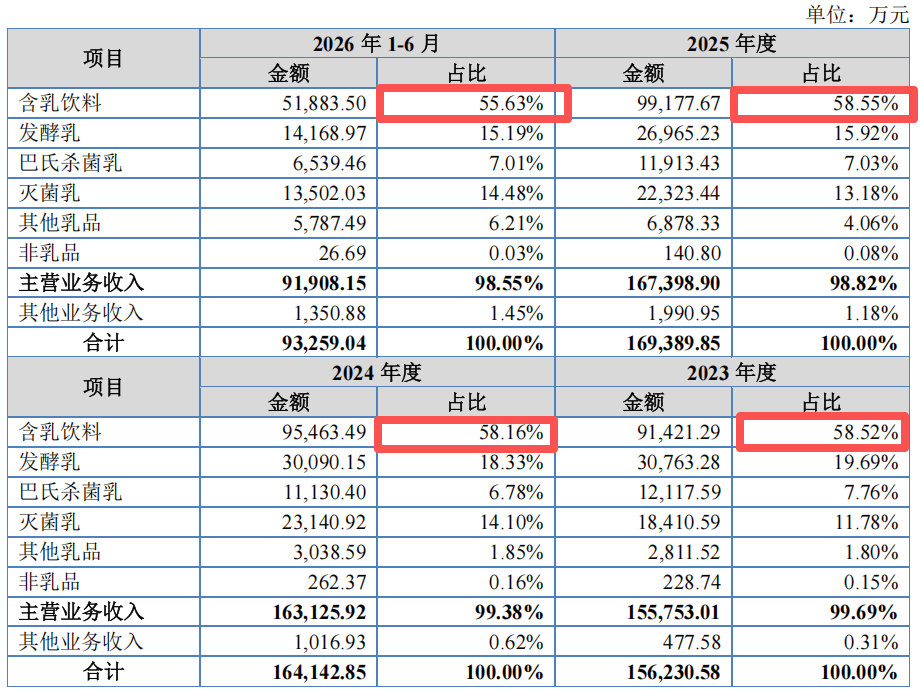
Data shows that in 2025, Jule’s milk-containing beverage revenue will be 992 million yuan, accounting for 58.55% of revenue. The main product is the Sour Milk series. At the same time, the revenue from “fermented milk”, the second largest source of revenue, dropped from 308 million yuan in 2023 to 270 million yuan in 2025, and its proportion in operating revenue also declined.
Regional characteristics are equally distinct.
In 2025, Jule’s operating income from Sichuan will be approximately 1.21 billion yuan, accounting for 72.31%. Although the share of the Sichuan market has declined compared with 2023, it still contributes more than 70% of operating income. As he said, “Sichuan is the birthplace of the Jule brand and the company’s main production base. The company’s revenue from Sichuan Province has always accounted for a high proportion.”
However, in order to get out of Sichuan, Jule had already made plans. In October 2020, the company acquired Heilongjiang Huifeng Dairy and extended its business layout to markets such as Northeast China. The sales areas of Huifeng Dairy mainly include Heilongjiang, Liaoning, Jilin, Shandong and Henan. In 2025, the three northeastern provinces will contribute approximately 146 million yuan in operating income to Jule, accounting for 8.74%. E-commerce is also another path. In 2025, national e-commerce platforms will contribute approximately 172 million yuan in operating income, accounting for 10.28%, which is higher than 5.40% in 2023.
Chengdu people drank it and turned it into a company with a revenue of nearly 1.7 billion yuan. What the capital market has to look at next is whether this business can continue to grow outside of familiar cities.
Son-in-law took over and successfully passed IPO
When Jule walked to the door of listing, there was another regret: Tong Enwen, the founder of Jule Company, could not wait until this day.
This entrepreneur, who was born in 1947, started his career in Chengdu Chemical Pharmaceutical Factory. He entered a pharmaceutical factory in 1966 and served as factory director in 1978. Since then, he has been in charge of Jule-related companies for a long time. His work experience runs through the process of this company from a pharmaceutical factory background to a food business.
The name “Jule” is also related to Tong Enwen’s technical work in his early years.
According to public reports, Tong Enwen led the invention of the “steviol glycoside extraction process” in 1982. Based on this important achievement, the “Jule” brand was officially born. After that, the company gradually entered the food field. It was not until the launch of Yogurt in 1996 that it had the most familiar product to consumers. From the person in charge of the factory to the helm of a local dairy company, Tong Enwen spent decades building a brand into the lives of Sichuan consumers.
But in the capital market, Jule did not go smoothly.
In 2017, the company submitted its listing application for the first time, and then disclosed relevant prospectus documents in 2019, 2020 and 2023, and sprinted to the Shenzhen Stock Exchange several times. In June 2024, the company withdrew its application for issuance and listing, and the Shenzhen Stock Exchange terminated the review. After that, it turned to the New Third Board and was listed in September of that year. The listing direction also shifted to the Beijing Stock Exchange.
A listing process that started in 2017 and continues to this day has spanned nine years. In July 2025, during Jule’s fifth sprint for the IPO, Tong Enwen was temporarily unable to perform his duties as chairman due to physical reasons, and the board of directors recommended his son-in-law Gao Zhaohui to perform his duties on his behalf. On September 6 of the same year, Tong Enwen passed away. In October 2025, Gao Zhaohui officially became the chairman of the company.
The words “son-in-law takes over” tend to focus people’s attention on family relationships. But if you look at his resume, Gao Zhaohui is not a temporary successor who entered the company after the death of the founder.
Gao Zhaohui, born in 1972, was engaged in software technology work in his early years. He worked at Inform Software and IBM as a senior software engineer and software architect. From 2008 to 2011, he worked at the Boston Consulting Group as a consultant and project manager. In May 2011, he joined the predecessor of Jule as director and general manager.
The resume spans several widely disparate industries, from software engineering to management consulting to dairy manufacturing. By the time of this listing, he had worked at Jule for more than fifteen years. In other words, Jule’s management handover started as early as when the founder was still at the helm. The replacement of the chairman in 2025 is an important node in this long-term transition.
At the same time as the change in operating and management positions, there is the inheritance of equity.
The document states, “After the death of Mr. Tong Enwen, the original actual controller of the issuer, Ms. TONG Zhu, as his legal heir, held all the shares of the issuer held by Mr. Tong Enwen during his lifetime through equity inheritance and became the issuer’s actual controller. This matter is not regarded as a change in the issuer’s control.”
The latest prospectus shows that before the issuance, Tongzhu directly held 26.51% of Jule shares. Through direct and indirect shareholdings and related arrangements, it controlled a total of 73.35% of the company’s voting rights.
As a result, Jule formed an arrangement in which her daughter serves as the actual controller and her son-in-law is responsible for daily operations.
Tong Enwen left behind a brand that Chengdu people are familiar with, and also left behind an unfinished long run for listing; Gao Zhaohui, who took over, led Jule across the listing threshold, and at the same time took over a local dairy company that still needs to find new growth.
Investors, re-evaluate the Beijing Stock Exchange
Ju Le, who has been in the capital market for many years, went through many rounds and finally chose the Beijing Stock Exchange.
From the first application in 2017, to the withdrawal of the Shenzhen Stock Exchange listing application in 2024, to listing on the New Third Board and moving to the Beijing Stock Exchange, Jule has been listed on the market for a long time, catching up with the changes in exiting the market. The Beijing Stock Exchange, which was once not considered a priority by some investors, is now becoming a listing option that more and more companies and institutions are seriously studying.
On November 15, 2026, the Beijing Stock Exchange will celebrate its fifth anniversary. As of that time, there were 355 listed companies, with a total market value of about 800 billion yuan; at the beginning of the market, these two numbers were 81 and less than 300 billion yuan respectively.
In the past five years, the company’s team has grown, and investors can look at more projects.
In addition to semiconductor equipment, optical communications, and new materials companies, some consumer companies that have been operating locally for many years and have stable customers and profits have also come to the door of the Beijing Stock Exchange. Jule is one of them. This brand name is unfamiliar to many consumers across the country, but just like Guangming is to Shanghai, Sanyuan is to Beijing, and Yantang is to Guangdong, Jule is also a representative of local dairy companies in Sichuan.
A Yogurt milk has been selling well in Sichuan for 30 years. Behind it is the distribution network and consumption habits accumulated over many years. Such a company may not have the hottest concept, but it has a business that can be checked item by item, how many products it can sell in a year, how much money it can make, how long the dealer has been working with it, whether the market outside the province has improved… For investors, judging the value of a company can also start from these specific questions.
In fact, venture capital institutions have already appeared on the shareholder lists of many Beijing Stock Exchange companies.
According to public reports related to the fifth anniversary of the Beijing Stock Exchange, private equity funds have participated in the directional issuance of about 400 NEEQ-listed companies, investing more than 26 billion yuan; 90% of the companies listed on the Beijing Stock Exchange have received investment from venture capital institutions, with an average of 4 venture capital institutions participating in each company.
Many institutions enter the market much earlier than companies declare for IPOs.
Enterprises first list on the New OTC Market, improve governance and disclose operating conditions, then introduce funds through targeted issuance, and gradually move towards the Beijing Stock Exchange. Regional funds, local state-owned assets and industrial investors who are familiar with local industries and have been tracking companies for a long time often become shareholders in this process.
For these institutions, whether a company can be listed on the market is related to whether years of investment can find an outlet. Whether there are transactions after the listing and whether the valuation can be recognized by the market will determine how much book earnings can ultimately be realized.
The changes in the North Exchange also affect the primary market.
When an exit path becomes clearer, investors have reason to re-examine the companies along the way. Companies that are not large in scale but have a firm foothold in niche industries or regional markets are beginning to gain more attention.
At the same time, new money is coming into the market.
Just one month before Jule’s listing, Guizhou’s leading local dairy company Nanfang Dairy listed on the Beijing Stock Exchange on October 16. They are both local dairy companies, but what is more noteworthy is its strategic placement list. The lineup includes National Social Security Fund 418 Portfolio, CITIC Securities-Social Security Fund 17052 Portfolio, Modern Seed Industry Development Fund, New Supply and Marketing Industry Development Fund and CITIC Securities Investment Co., Ltd., etc. It is worth mentioning that this is also the first time that the National Social Security Fund has participated in the placement of new shares on the Beijing Stock Exchange as a strategic investor. The “national team” has settled on a local dairy company, which is also regarded by the outside world as a signal that the high-quality targets of the Beijing Stock Exchange are more attractive to medium and long-term funds.
For Jule, the Beijing Stock Exchange provides a landing point for this multi-year long run to go public and also opens up financing channels for subsequent expansion. As for where the value of this company can go, it depends on whether Yogurt Milk can continue to be sold and whether new products and markets can catch up.
Related Reading
- Nvidia stock extends $2.7 trillion rout as SEC probe reportedly investigates its accounting2026-11-22
- Original: Three brothers from Hebei started with just 200 yuan and became number one in the world2026-11-21
- Global computing power enters the “post-Huang Renxun era”2026-11-21
- Stock market today: Dow, S&P 500, Nasdaq sink as Anthropic IPO fails to ease AI worries2026-11-21
- Anthropic is on the market, and the big model bubble is not far away2026-11-20