9At the end of the month, Brent crude oil once again stood above the level of100dollar, united statesWTICrude oil lags behind significantly, with the price difference between the two major benchmarks once exceeding12Dollar. At the same time, news that Saudi Arabia had repaired the East-West oil pipeline and resumed shipping in the Red Sea quickly pushed oil prices back down.
The market has repeatedly asked where more oil can be extracted and which route can provide stable delivery.
Before the war, the world was still discussing oversupply of oil and worried that new energy substitution and slowing demand would put oil-producing countries under long-term pressure. After the war broke out, production in the oil fields did not suddenly disappear, but the supply that could reach the refinery on time was significantly reduced. There is such a long distance between underground reserves, oil field production capacity and spot goods in the hands of buyers.
From the perspective of supply and demand structure, oil belongs to a buyer’s market, because the world has quite abundant resources and potential production capacity, but at a specific time and in a specific place, there will still be a shortage of crude oil that can be delivered. The current increase in oil prices includes both real supply losses and repricing of transportation, insurance and delivery risks.
Only by understanding this difference can we understand how the war in the Middle East changed the export opportunities of the United States, the income distribution of Russia, and the energy security logic of the entire world.
通道
Over the past few years, oil prices have gradually shown some“Geographic immunity”. Markets briefly rallied on news of conflict in the Middle East before returning to fundamentals of demand, inventories and production. U.S. shale oil expands supply, and other oil-producing countries increase production capacity.OPEC+Retaining spare production capacity gives the market confidence that even if something goes wrong somewhere, someone will be able to make it up.
This set of judgments has an implicit premise that spare capacity can always enter the market quickly when needed. The Hormuz crisis hits exactly this premise. A large part of the world’s rapidly available spare capacity is concentrated in the Gulf. If a certain oil field ceases production, neighboring countries can increase production; the export channel of the entire region is blocked, and the crude oil that fills the gap may also be trapped in the same waters. The surplus on the books cannot automatically turn into emergency supplies for refineries.
Transportation disruptions can also in turn depress production. Oil tankers cannot move in time, storage tanks gradually fill up, and oil fields can only reduce production. Therefore, even without destroying a large number of oil wells, a war over the strait could cause continued supply losses. The speed of resumption of production depends on whether the storage and transportation system can be re-operation. There is often a long adjustment period between the military ceasefire and the normalization of supply.
The importance of Hormuz also needs to be measured with the correct caliber. The pre-war average daily approx.2000Ten thousand barrels of flow, including crude oil, condensate and petroleum products, cannot all be written as crude oil. Saudi Arabia and the United Arab Emirates have bypass pipelines, but their design capabilities, actual delivery volumes, and additional capacity available in times of crisis vary. The pipeline also needs to serve refineries along the route, and the export port also has loading and storage restrictions. Adding up several capacity figures, it is impossible to get a true replacement capacity.
Saudi Arabia’s East-West oil pipeline is the most striking example of this crisis. It sends eastern crude to Yanbu on the Red Sea coast, providing Saudi Arabia with an export route that avoids Hormuz.9After the attack in March, this route was temporarily interrupted; as repairs and shipments resumed, the market immediately lowered its supply risk expectations. The status of a pipeline is enough to change global traders’ judgment on whether the next batch of crude oil can be delivered.
This also exposed the limitations of the bypass scheme.
Long-distance pipelines rely on pumping stations, electricity, storage tanks and ports for continuous operation. Damage to any key link may affect the entire pipeline. Avoiding the strait reduces reliance on a single chokepoint, but increases the number of fixed facilities that need to be protected. The economic value of the bypass must be calculated together with the cost of its protection.
However, the risks faced by various routes cannot be lumped together.Yanbu is located north of the Bab el-Mandeb Strait, and crude oil can travel north to Europe through the Suez Canal or Egypt’s SUMEDThe pipeline enters the Mediterranean without crossing the Bab el-Mandeb Strait. The Houthis’ threat to the Bab el-Mandeb Strait will directly affect Yanbu’s transportation south to Asia, as well as ships entering the Red Sea from the Indian Ocean. The war is causing the same export port to face buyers from different directions, presenting different security costs.
Iraq is also looking for Mediterranean outlets. The plan to build a new pipeline through Syria has an initial planned capacity of approximately20010,000 barrels, the estimated investment is at least150billion and construction will take approximately four years. It needs to connect north and south oil fields, build new transmission networks, and address cross-border coordination and security issues along the route. Such projects are strategic but difficult to fill quickly in the immediate crisis.
The export direction of oil is undoubtedly constrained by market geography.
Iraq’s important customers are in China and India. Sending crude oil westward to the Mediterranean and then back to Asia will increase the voyage distance and cost. New pipelines may provide insurance and may change the customer structure, but they may not be suitable for undertaking all existing trade. Qatar’s constraints are even more prominent, with its largeLNGThe export system is built around liquefaction plants and sea transportation, and there is no land solution that can replace it in the short term.
Hormuz’s traffic may decline in the future, but its importance is unlikely to fade away quickly with several pipeline plans.
A more profound change is that the market has begun to continue to pay for traffic reliability. When shipping schedules, insurance and security arrangements are full of uncertainty, a barrel of crude oil that can be delivered on time will receive a higher valuation than a barrel of crude oil waiting to be exported.
灰色運力
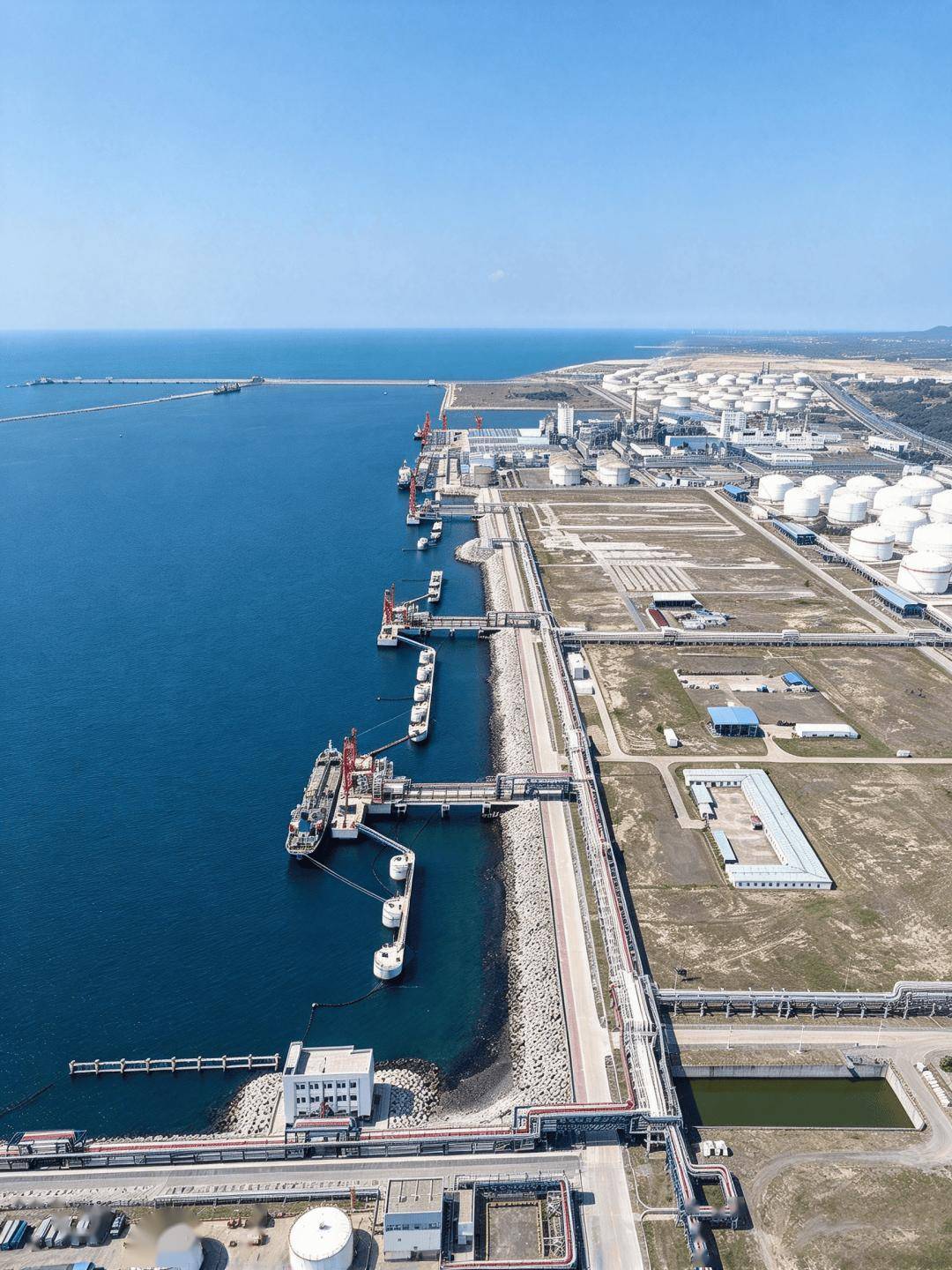
The disruption to transportation did not stop all oil trade. Some shipowners continue to undertake high-risk transportation, exporters organize short-distance connections, buyers adjust delivery locations, and ship-to-ship transshipments increase. The adaptability shown by global oil logistics is an important reason why oil prices have not risen along the most pessimistic scenario.
The Shadow Fleet has a special role in this. Longstanding sanctions have fostered an opaque network of ships transporting crude oil from sanctioned countries such as Russia, Iran and Venezuela through complex ownership structures, non-mainstream insurance and arrangements between different jurisdictions. The way these shipowners take risks is different from that of large formal shipping companies. The latter needs to take into account insurance terms, financing requirements and long-term customers, while the former has already factored in the possibility of sanctions, seizure and denial of entry into its operations.
When the risk of war stops some mainstream shipowners from sailing, it will be easier for these high-risk shipping capacities to take orders. High shipping costs attract them to enter, and existing customers and operational experience reduce the difficulty of organizing transactions. The transport capacity created in the sanctions environment thus provides a portion of the additional supply during the crisis. This is a policy irony worth discussing, but its contribution must still be measured alongside stock releases, alternative procurement and demand adjustments.
Saudi Arabia also needs to pay attention to geography when arranging transshipment near Sohar, Oman. After crude oil is loaded from Gulf ports such as Ras Tanura, it still has to pass through Hormuz before reaching the Gulf of Oman. Transhipment here increases connection and delivery flexibility and separates high-risk legs from subsequent ocean shipping, but does not create a new export route that bypasses the strait.
Furthermore, flexible transport has a clear capacity limit. Reuters9月25Ship-to-ship transfers in the Gulf of Oman are approaching capacity limits due to increased exports from Saudi Arabia, with additional demand pushing up rents for large tankers and causing congestion and delays, a Japanese report said. One more transshipment will take up more ship time, and there will be one more link where weather, equipment and shipping schedules may not match.
Therefore, the world cannot generally say“There are enough oil tankers.” The total number of ships has not changed. Extended voyages, increased waiting times, and repeated loading and unloading may all lower actual shipping capacity. A ship could originally complete two transportations, but now it can only complete one. What the market feels is a shortage of ships. The decline in logistics efficiency can itself create new scarcity.
The existence of gray transport capacity has added a buffer to global supply and pushed some costs to regulatory, environmental and accident liability.It can maintain some trade, but it cannot provide a stable and transparent long-term order. What this crisis has really reminded countries is that fleets, crews, transshipment facilities and insurance capabilities all have strategic value. Buying oil is only half the story of energy security.
美國原油
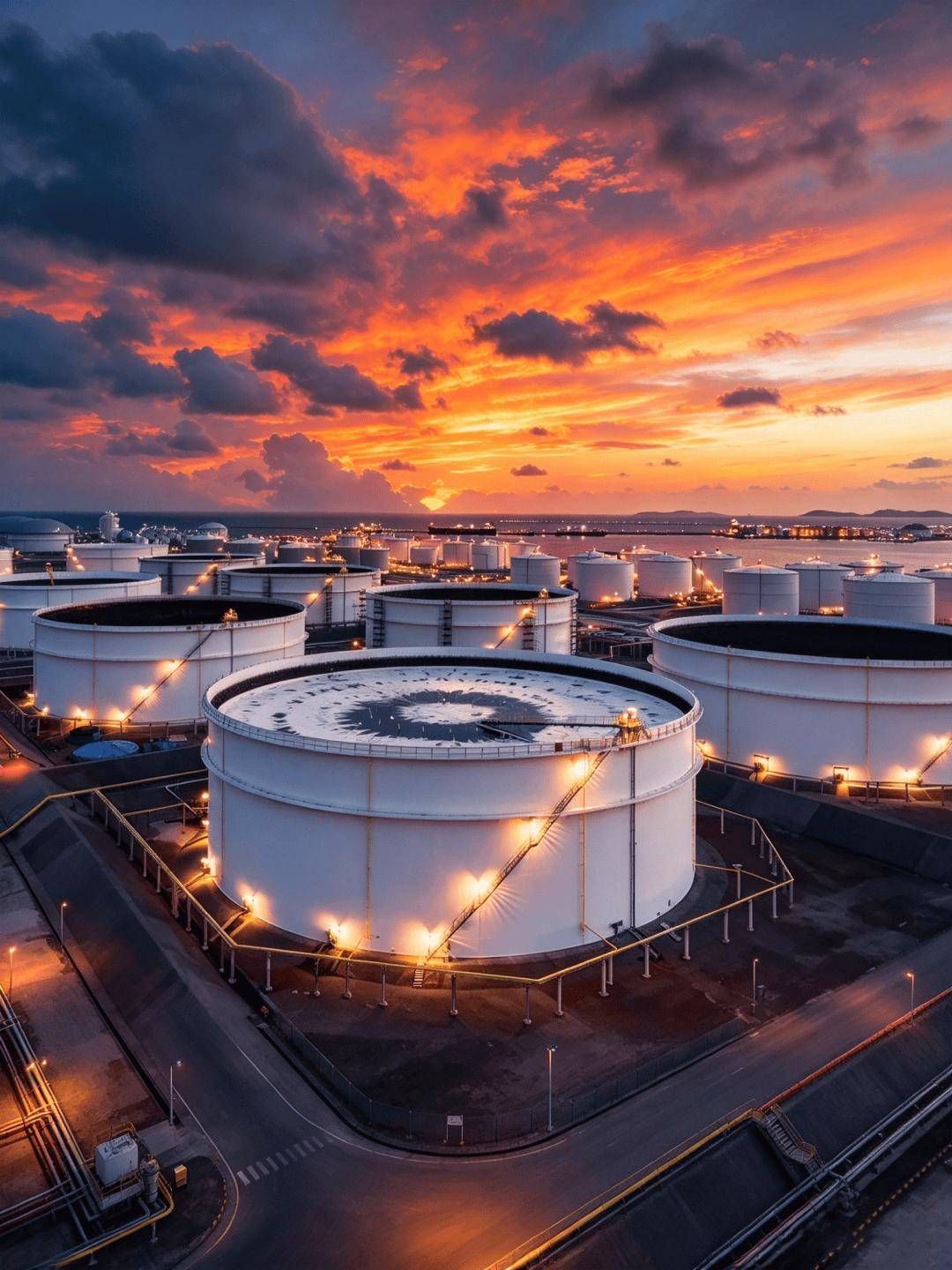
The obstruction of exports from the Middle East has brought new market opportunities to U.S. oil.
Gulf oil-producing countries need to find ways to send crude oil out of dangerous waters, while the United States has export ports facing the Atlantic Ocean and relatively stable routes to Europe. As European refiners rush to replenish supplies, it will naturally increase the position of U.S. crude on their purchasing lists.
This transfer has a continuous context.2022After 2000, Europe reduced its dependence on Russian oil; now, the uncertainty of supply in the Middle East has pushed it to increase purchases from the United States, Norway and other countries. Europe’s search for alternative supplies has focused further towards the Atlantic Ocean. The advantage gained by the United States, in addition to production volume, is its geographical proximity to the European market and relatively reliable delivery.
U.S. export data already reflect this opportunity. As of9In mid-month, average daily exports of U.S. crude oil reached483.1Thousands of barrels. However, the export volume of the United States is not stable enough and is easily affected by shipping schedules and concentrated shipments, with increases and decreases.
Whether the United States can expand its market share in the long term still depends on how long supplies from the Middle East are blocked, and whether it can continue to provide crude oil with appropriate prices and matching quality.
Quality matching is an issue that is easily overlooked in the trend of U.S. crude oil replacing Middle Eastern crude oil. U.S. shale oil is mostly light and low-sulfur, while Gulf exports contain large amounts of medium and heavy sour crude oil. Many refineries have long configured equipment around specific raw materials. If you change the oil, you need to adjust the mixing and processing plan, and the product yield and profit will also change. Therefore, even if the United States increases exports, it will be difficult to fill all the gaps left by the Middle East alone.
Venezuela’s heavy oil resources are just enough to provide more options for refineries in need of medium and heavy feedstocks.
This year, the U.S. Department of the Treasury has relaxed restrictions on U.S. companies’ participation in Venezuelan oil trading and operating activities through relevant licenses, creating opportunities for investment, equipment supply, and export recovery.造了condition. Venezuela’s energy ties with the United States have thus further deepened.
But it will take time for Venezuela to increase production.
The production and transportation of extra-heavy oil relies on diluents, and oil fields also require equipment maintenance, electricity and capital investment. The license opens up commercial channels, and whether the industrial system can continue to recover determines how much crude oil will ultimately enter the market. Put U.S. light oil and Canadian heavy oil together with Venezuelan resources, plus supplies from Brazil and Guyana, and the Western Hemisphere does have a richer alternative mix. The more unstable the Middle East routes are, the higher the strategic value of this combination.
However, the expansion of sales by American oil companies and the benefit of American society from high oil prices are two relatively independent economic phenomena.
Producers and exporters can get more orders, but American consumers have to face rising gasoline and diesel prices, and transportation, agriculture and manufacturing have also increased costs. The same war has allowed some companies to increase their income, and also caused more families and companies to increase their expenditures.
The reason for this phenomenon is that the United States is deeply involved in the global oil trade. It exports large amounts of light crude oil and imports other raw materials suitable for processing in domestic refineries; refined oil products also flow in the international market. As overseas buyers are willing to pay higher prices, U.S. domestic supply will be affected. The shale revolution has enhanced U.S. supply capabilities, but it has been unable to isolate gas station prices from world markets.
It also explains the contradictions facing the White House. Increased exports will benefit energy companies and trade revenue; rising domestic oil prices will bring inflation and electoral pressure. If the government restricts the export of refined oil products, it may affect refinery profits and processing capacity, thereby changing domestic crude oil demand. brent vs.WTIThe widening of the price difference includes the market’s expectation that the United States may restrict diesel exports, and cannot all be attributed to the transportation safety premium.
Using strategic reserves shows that the United States also needs to pay the price for the crisis.9月29Today, the U.S. Department of Energy announced that it will provide the most400010,000 barrels of strategic reserve crude oil, fulfilling the previous commitment to coordinate the release. Companies are competing for orders overseas, while the government is releasing inventories domestically to ease price pressures. These are the two sides of the United States in this oil crisis.
Therefore, the war in the Middle East did improve the market position of U.S. oil and the value of supplies throughout the Western Hemisphere. But this dividend is distributed very unevenly, with exporters gaining opportunities, consumers bearing the costs, and governments consuming emergency resources.
The United States can sell more oil, but still has to pay for insecurity in distant straits. Energy independence does not mean price independence.

Russia cannot be ignored
Even though it is deeply troubled by oil and gas export sanctions, Russia is still a global oil giant that cannot be ignored.
Supply disruptions in the Middle East would have given Russia an opportunity to increase revenue. Gulf crude oil delivery is difficult, and buyers are turning to other suppliers. Russia can both win orders and benefit from rising international oil prices. However, how much money can be earned from a barrel of oil in the end depends on the additional costs of transportation, insurance and sanctions. The smooth shipment and delivery is also critical.
Exports from western Russia face these constraints. Shipments to Asia from Baltic and Black Sea ports require longer voyages and slower ship turnover; attacks in Ukraine on refineries, storage tanks and ports have added to supply uncertainty. After the refinery shuts down, some crude oil needs to be diverted to export, but export facilities may not be able to catch it in time. The gains from rising international oil prices may be partly eaten up by logistics costs and sales losses.
Conditions in the Far East are relatively favorable. The Port of Kozmino is close to the East Asian market, and the China-Russia onshore pipeline also provides a relatively stable delivery channel. These routes gain higher value as Asian refiners rush to find supplies beyond Hormuz.9月俄羅斯ESPOStronger crude oil prices reflect buyers’ willingness to pay more for feedstock that is closer and more reliable in delivery.
This difference cannot be directly applied to fiscal data.8The net budgetary revenue from Russian oil extraction in 2020 was approximately3262billion rubles, down year-on-year22%, but about each barrel59The dollar figure belongs to the tax calculation caliber and cannot be compared with9Direct comparison of monthly spot quotes. It shows that Russia’s fiscal revenue has not improved simultaneously with international oil prices, which is not enough to prove that its crude oil exports are not profitable.
It can be seen that Russia’s equally abundant oil resources are receiving different valuations due to different export routes. Supplies from the west carry longer voyages and higher risks, while supplies from the Far East are sought after because of their proximity to tight Asian markets. Crude oil quality and contract conditions certainly also affect prices, but the crisis has significantly increased the weight of location in pricing.
Russia therefore has stronger incentives to expand eastbound exports, although pipeline and port capacity limit the speed of adjustment. For China, the strategic value of the Sino-Russian land energy channel is also clearer.It cannot replace all seaborne imports, but it can provide a part of stable supply when the strait is blocked. Oil security ultimately comes down to delivery. There is always a road that needs to be guaranteed between having resources and being able to deliver them to buyers.
結尾
The world’s oil markets are rediscovering a simple fact. Abundant resources can alleviate long-term anxiety; reliable delivery can solve immediate shortages. Inventory release, alternative supply and high-risk shipping capacity jointly limit oil price increases, but they all have capacity, time and cost boundaries. Restoring some exports does not mean restoring buyers’ confidence in future deliveries.
The inspiration for China is to continue to diversify its sources. In addition to sourcing from more countries, it is also necessary to calculate the risks associated with different routes, build reliable fleets, reserves and insurance capabilities, and bring the security of overseas refineries, ports and pipelines into one account. To be truly effective, redundancy should be able to be picked up in time by another route when one route is interrupted.
Oil fields determine how many resources a country has, and channels determine when these resources can be realized. The war in the Middle East has not made reserves meaningless, but it has made the world understand that energy competition also includes the ability to organize transportation, protect facilities and ensure delivery.
Related Reading
- Baby formula is in trouble, dairy companies are eyeing cats and dogs2026-10-08
- “Gold bracelets are out of stock”! The gold market is sold out2026-10-08
- Michael Dell defends Trump Accounts’ shift to individual company stocks2026-10-08
- The Fed was unanimous about raising rates in September. Things have since changed.2026-10-08
- Fuel industry warns truck stops against selling ‘red dye’ diesel after Trump lifts restrictions2026-10-08