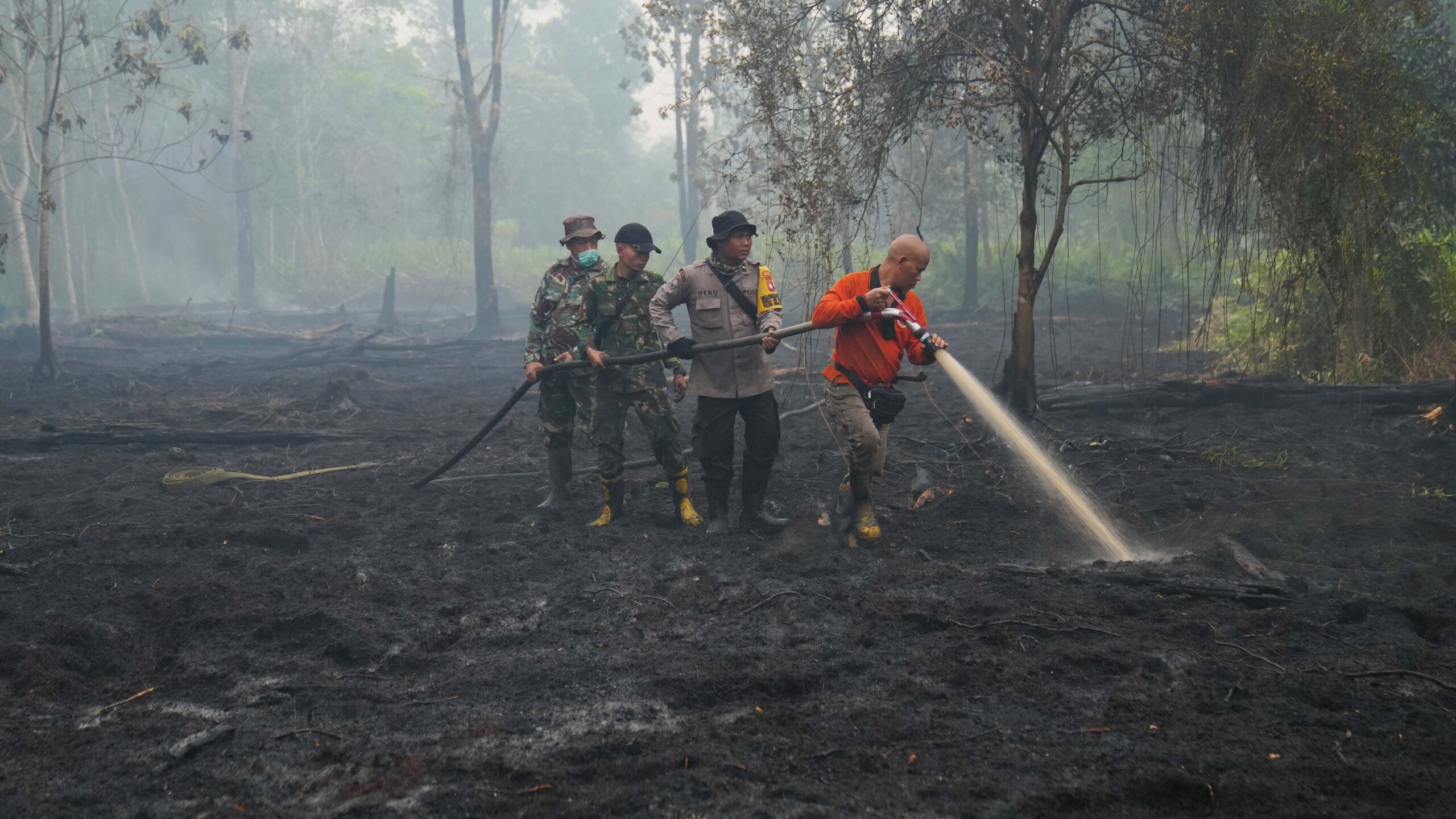
BENGALURU, India (AP) — This year’s powerful El Nino and the record global heat it’s driving, along with severe droughts, wildfires and shrinking water supplies, could lead to nearly half a million more deaths worldwide by the end of February, according to a research report released Wednesday.
The grim warning by the University of Chicago-based Climate Impact Lab says that as many as 451,000 more heat-related deaths between June and the end of February could be attributed to El Nino, compared with heat deaths expected in a typical year.
The heaviest toll, the group says, is expected in poorer countries, already struggling with food insecurity and high energy costs, partly due to climate change and the fallout of the war in Iran.
Michael Greenstone, a co-founder of the group and the study’s co-author, said the heat danger will likely persist beyond February — even though this El Nino is expected to end by then. The fallout of the weather phenomenon could be felt well into next summer, he added.
The research, he said, shows that heat is most dangerous in places that are already hot and relatively poor.
“If you’re already in a hot place, the extra couple of degrees are going to be much more dangerous,” he said. Wealthier places, he added, generally have greater access to air conditioning, reliable water supplies and functioning health systems.
The study combined seasonal temperature forecasts with localized estimates of how high temperatures affect mortality across more than 24,000 regions worldwide.
Researchers estimated the additional heat-related deaths by comparing deaths expected under El Nino-driven high temperatures with deaths expected if temperatures remained similar to what they have been in the last three decades. The projected fatalities are for the entire El Nino period, from June 2026 until the end of February 2027.
The report says the Global South will see more heat-related deaths
The study by Greenstone and his colleagues also warns that the Global South — a term that isn’t geographical but a reference to developing countries in general — will bear the heaviest burden of the excessive heat.
The researchers behind the report found that the Sahel region in Africa — countries along the semiarid southern fringe of the Sahara Desert — is expected to be the hardest-hit, with about 66,800 additional deaths caused by El Nino-driven heat.
Other major hot spots include South and Southeast Asia and parts of Latin America, according to the report. The researchers project about 19,400 additional heat-related deaths across the Philippines, Vietnam, Thailand and Cambodia, as well as 19,300 in Indonesia, 15,800 in India and 13,300 in Brazil.
Heat warnings and cooling centers could prevent thousands of deaths
With such staggering numbers, there are recommended measures that governments can take, the report says. They include heat-warning systems, cooling centers, hydration stations, protections for outdoor workers, expanded hospital capacity and targeted outreach to elderly people and other vulnerable groups.
The authors also call for what they describe as anticipatory financing, so governments can move resources before dangerous heat peaks.
Abhiyant Tiwari, a heat expert at NRDC India who was not involved in the study, said the report’s projections should serve as a call to action rather than be another reason for alarm.
But while it’s one thing to have well thought-out plans — as India does — implementing these plans and raising needed funds remains a challenge, he said.
“The real measure of our preparedness is not how many heat warnings we issue, but how effectively we protect people and reduce preventable deaths,” Tiwari added.
Climate change is amplifying El Nino’s record heat
El Nino is a natural climate pattern, but this year’s unusually strong event is occurring on a planet already warmed by human-caused climate change, increasing the risks from extreme heat.
The Climate Impact Lab said global land temperatures during this El Nino could be higher by about 1.2 Celsius (2.1 Fahrenheit), producing 44% more extremely hot days than in a typical year. The report said those temperature increases may mirror conditions that climate change could make common some 20 years from now.
That’s why this El Nino could offer a preview of what’s ahead as the planet continues to warm, the report said. It’s also an opportunity for decision-makers “to see exactly where emergency actions can be taken now to save tens of thousands of lives,” the authors say.
___
The Associated Press’ climate and environmental coverage receives financial support from multiple private foundations. AP is solely responsible for all content. Find AP’s standards for working with philanthropies, a list of supporters and funded coverage areas at AP.org.
Related Reading
- This year’s El Nino-driven heat could cause nearly half a million more deaths, group says2026-09-23
- Autumnal equinox marks the start of fall, but heat could stick around2026-09-22
- Scientists discover the first new cat species in more than 100 years2026-09-18
- NASA spacecraft discovers moon crater bigger than Roman Colosseum2026-09-18