“The relationship between Afghanistan and the United States should not be judged by the wars of the past 20 years, but by focusing on future cooperation. Our economic policy is open.”
At the end of August, around the fifth anniversary of the Taliban’s return to power in Afghanistan, the regime’s Foreign Minister Amir Khan Mottaki accepted a media interview and publicly expressed his goodwill to the Trump administration, saying that Afghanistan “absolutely” welcomes U.S. investment in areas including mining, infrastructure, agriculture, and trade. However, the United States rejected the Taliban’s “invitation” to cooperate in early September.
Under the weight of sanctions and diplomatic isolation, the Afghan Taliban government is turning its attention to the rich mineral resources hidden underground in an attempt to find a new way out for the weakening economy.
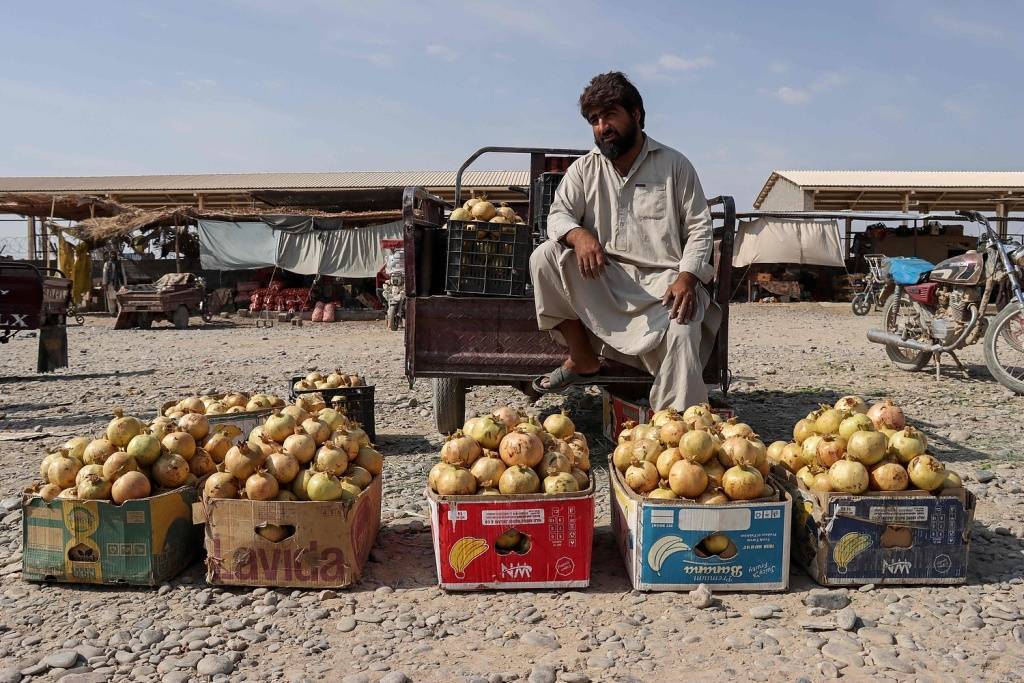
On September 15, 2026 local time,阿富汗Farah City, one阿富汗Vendors sell pomegranates and wait for customers at the wholesale market. Visual China Map
Since this year, Afghanistan has reached mineral cooperation intentions with Iran, Kazakhstan, Saudi Arabia and other countries. Official data shows that its mineral development industry has attracted about 10 billion Afghanis (approximately 1.04 billion yuan) in domestic investment and more than 7 billion US dollars in foreign direct investment, providing about 150,000 jobs.
The Taliban’s mining ambitions also face practical shortcomings. Gul Masoud Thabit, who served as Afghanistan’s Deputy Minister of Finance from 2008 to 2010, pointed out to The Paper (www.thepaper.cn) that Afghanistan had neglected the systematic development of local minerals in the past due to its over-reliance on foreign aid and had not established a mineral processing industry chain.
Chinese businessmen who inspect or deal in gems in Afghanistan told The Paper that the local gem market is a mixture of genuine and fake gems, and the deep processing capabilities such as cutting, identification and grading are insufficient. In addition, although gemstone resources are relatively abundant, they still face obstacles in entering the Chinese market on a large scale due to factors such as supply, logistics, export control and customs clearance costs.
In Sabit’s view, if Afghanistan’s mining industry is to achieve sustainable development, the key lies in policy design. “When formulating policies, the government should encourage or require companies to carry out processing and smelting in Afghanistan, so that resource development can drive areas such as transportation, equipment maintenance and service industries that can increase employment.” He said, “The government should also establish a reliable legal system, property rights protection system, investment policy and capital entry and exit mechanism to attract more international mainstream investors such as neighboring countries and large Chinese enterprises.”
“Of 100 orders, 99 will be stranded in Afghanistan”
The US government has previously estimated that the total value of Afghanistan’s mineral resources is at least US$1 trillion. The country is not only rich in strategic resources such as copper, gold, zinc, chromite, cobalt, lithium and rare earths, but also contains gemstone resources such as emeralds, rubies, sapphires, garnets and lapis lazuli.
More than 1,400 mineral deposits have been discovered in 34 provinces of Afghanistan. According to estimates by Albania and some institutions, the Mes Aynak copper mine in Logar Province contains more than 12 million tons of copper, with a global market value of more than 50 billion US dollars. The Hajigak Iron Mine, located at the junction of the central provinces of Bamiyan, Parwan and Wardak, contains up to 2 billion tons of high-quality ore. Afghanistan also has extremely rich lithium reserves, mainly distributed in Ghazni, Nuristan and Helmand provinces. The country has currently built 47 oil wells, most of which are concentrated in the Sarpul, Shibilgan and Amu Darya basins.
Hamayoon Afghan, spokesman for the Ministry of Mines and Petroleum of Afghanistan, revealed in 2025 that in Panjshir Province, the main emerald producing area, the government has issued a total of 560 mining licenses to domestic and foreign investors. The ministry not only approved ruby mining in Panjshir and Kabul provinces, but also plans to further liberalize gem mining licenses in three other provinces.
Chinese businessman Zheng Rong came to Afghanistan four years ago. He was initially interested in the rich emerald resources in Panjshir Province, but he soon ran into practical obstacles: due to strict control and production capacity constraints in mining areas, it was difficult to form a stable and sustainable supply of emeralds. As a result, he turned to tourmaline, lapis lazuli and aquamarine, which have lower thresholds and are more widely sold in the Chinese market.
“The biggest pain point is not the lack of goods, but the inability to ship out the goods.” Zheng Rong told The Paper that due to the lack of stable and cost-controllable direct logistics channels, he has never dared to promote local products on a large scale. “If we suddenly receive 100 orders, 99 of them may still be stranded in Afghanistan.” Commercial express delivery costs remain high, and coupled with strict export controls, cumbersome customs clearance procedures and layers of tariffs, profit margins have been greatly compressed.
According to a 2025 report from the New York Times, the Taliban authorities have begun collecting taxes from the emerald trade. During the previous government period, the emerald trade was almost controlled by warlords and traders with political backgrounds, and tax collection and administration were disorganized and ineffective. As the Taliban government promoted weekly emerald auctions, authorities began to regulate and tax all transactions. Dealers who buy emeralds at auction must pay a 10% tax before they can get the gems.
Before the border conflict broke out between Afghanistan and Pakistan, Chinese businessman Chen Lin was active in the gem market in Peshawar, Pakistan. Since a large number of Afghan gem traders were deported back to their country after the war, she once considered shifting the focus of her business to Afghanistan.
After more than a month of on-the-spot investigation, Chen Lin found that the local market was a mixed bag: it was not uncommon for genuine products to be mixed with fake ones, and there was even chaos in which imitation products imported from Yiwu were transferred to Afghanistan and then packaged as local natural rough stones for resale. In her opinion, Afghanistan’s native gemstone cutting, identification or grading and other deep processing capabilities are extremely weak. Even if rough stones are found, their quality may not meet the standards of the Chinese market or customers.
In Afghanistan, a large number of newly approved mines have not been put into operation, and the mines that have been mined are generally subject to bottlenecks such as weak infrastructure and a shortage of senior engineering and technical personnel. Hamayun Afghanistan admitted that the country is in urgent need of more engineers and technicians. He said that in addition to introducing foreign experts, foreign investors must hire local employees in strict accordance with license requirements and teach Afghans relevant technologies and engineering skills.
Chen Lin also noticed that the local gemstone association in Afghanistan has a positive attitude towards foreign businessmen. It not only accompanies the entire process of inspection and assists in docking sources of goods, but also actively coordinates the application of relevant licenses. “They are eager to leverage China’s processing and distribution network to push Afghan gemstones to the Chinese market, and further use these channels to enter overseas markets such as Dubai, Thailand and Japan.” Chen Lin told The Paper.
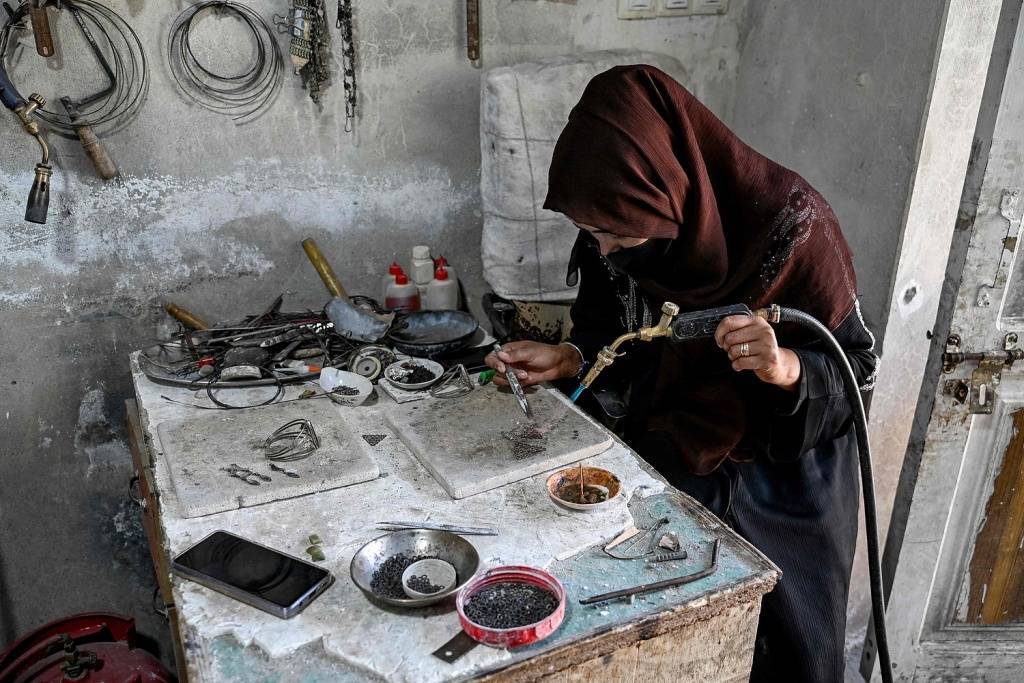
On May 6, 2026 local time,阿富汗Faizabad District, Badakhshan Province, one阿富汗女性在寶石Workshop work. Visual China Map
Want to use minerals as an economic breakthrough
High hopes were placed on the mining industry, closely tied to the gap left by the opium ban. After implementing a strict ban on opium cultivation, Afghanistan directly lost approximately US$1.3 billion (approximately RMB 8.7 billion) in income and 450,000 jobs.
After returning to power in 2021, the Taliban authorities claimed to have awarded at least 205 mining contracts to more than 150 companies, and in September 2023 announced new mining agreements with a total value of more than $6.5 billion. In May 2024, the Taliban-controlled Ministry of Mines and Petroleum (MoMP) stated that the organization had received investments worth more than US$7 billion from Qatar, Turkey, Iran, the United Kingdom, and China, but the specific details of the above-mentioned contracts have not yet been announced.
On September 7 this year, Afghanistan signed an oil development agreement worth US$200 million with Saudi oil and gas company Delta. The agreement involves seven blocks in the Kushk-Tirpul oil and gas basin, spanning an area of approximately 23,300 square kilometers in Herat and Badghis provinces. The Afghan Ministry of Mines and Petroleum stated that the exploration period of the project is set to be eight years, and the contract period is 25 years.
Sami Vahidi, an analyst who once worked at the Afghan Ministry of Energy, said that the project will not only bring huge investment to Afghanistan, but also boost morale for economic development in the short term.
Kazakhstan has also reached an agreement to cooperate with Afghanistan. Some media reported in June that Kazakhstan’s Eurasian Resources Group was considering directly acquiring a chrome mine in Afghanistan or establishing a joint venture with Afghan partners. During the meeting between Kazakhstan Deputy Prime Minister Serek Jumankhalin and Afghan Deputy Prime Minister Mullah Abdul Ghani Baradar, Kazakhstan was interested in importing industrial-grade aquamarine and zinc ore raw materials from Afghanistan.
Thabit believes that Afghanistan should open up mining cooperation to the international community and cannot rely on only a few countries. Considering that Afghanistan has suffered multiple foreign invasions, civil society has relatively low trust in outsiders, and residents in mining areas may be resistant to foreign investment in the development of their country’s minerals. Therefore, it is particularly important to establish community trust and benefit-sharing mechanisms.
“At the institutional level, Afghanistan first needs to establish a clear, credible and enforceable legal framework to better protect investments, enforce contracts and resolve commercial disputes, while restoring international banking, cross-border payments and agent banking services. Infrastructure such as electricity, roads, railways and communications are also critical. Without stable power supply, foreign companies will not be able to produce normally even if they transport mining or processing equipment into Afghanistan,” Thabit said.
Five years after U.S. troops left Afghanistan, the Taliban even extended an invitation to the U.S. to cooperate. In an interview with US media in August, Mottaki called Afghanistan’s mineral resources the starting point for opening a “new chapter in relations between the two countries.”
The timing of the Taliban’s initiative is no accident. With the Trump administration attaching great importance to the resilience of critical minerals and supply chains, the Taliban government is seizing the opportunity to try to shape Afghanistan as a potential mineral source and investment destination. Earlier this year, the White House determined that external dependence on critical mineral supply chains constituted a “national security risk” and used the Defense Production Act to authorize the U.S. Department of Commerce to impose export restrictions on industrial waste and e-waste containing recyclable strategically critical minerals and materials.
Michael Kugelman, a senior fellow for South Asia at the Atlantic Council, believes that the Afghan Taliban’s efforts to attract the Trump administration with mineral resources are a “suitable entry point.” In the view of the Trump administration, as long as cooperation helps advance actual economic interests, differences in values may not be a decisive obstacle to contact between the two sides.
However, the U.S. State Department responded to the media by saying that the White House has no plans to contact the Taliban on the development of critical minerals. A spokesman stressed that U.S. investment in Afghanistan meant putting money in the hands of the Taliban and “could contribute to further oppression of the Afghan people.”
Historical experience also shows that U.S. mining development in Afghanistan is not satisfactory. As early as 2006, the George W. Bush administration used aerial surveys to map the distribution of minerals in Afghanistan. During the Obama administration, the Pentagon also set up a special task force to support the country’s mining industry. According to a report released by the now-defunct Office of the Special Inspector General for Afghanistan Reconstruction (SIGAR), the United States invested nearly $1 billion in Afghanistan’s mining sector between 2004 and 2021, but ultimately failed to achieve any “substantial progress.”
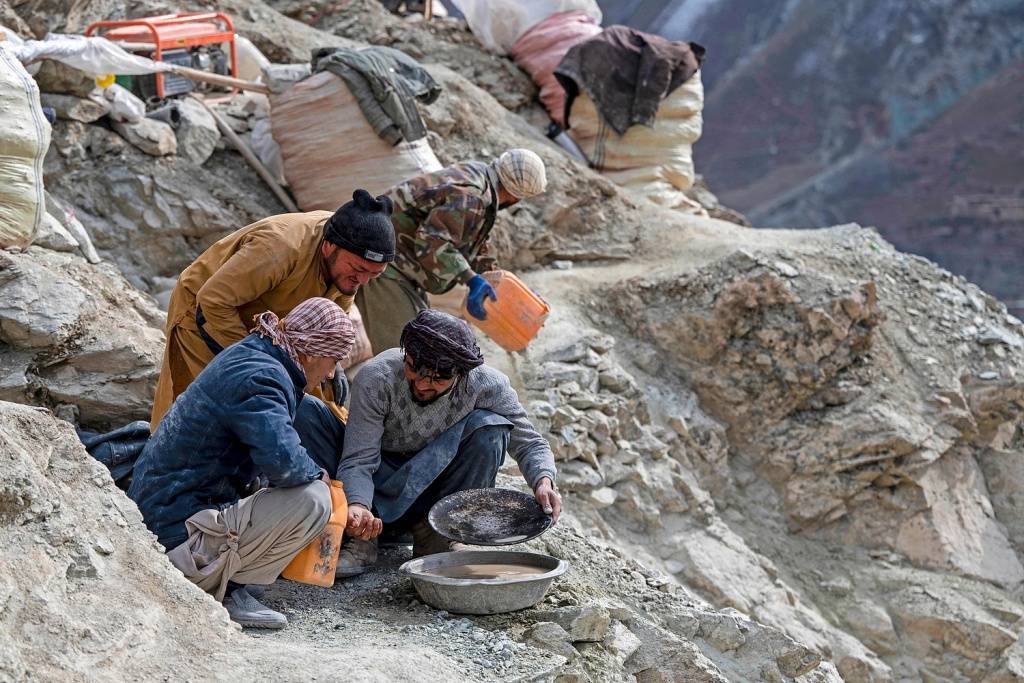
On February 24, 2024 local time,阿富汗Badakhshan,阿富汗A man uses water to pan for gold using traditional methods from ore mined in the Yaftal Sufla region. These unemployed workers hope to improve their lives through gold mining. Visual China Map
Mining prospects subject to multiple constraints
Afghanistan has suffered from decades of war and severely lacks infrastructure such as roads, electricity and corresponding processing capabilities required for the mining industry.
Thabit believes that railway construction is particularly critical, allowing large-scale transportation of minerals, agricultural products, fuel and industrial equipment at a lower cost than long-distance road transportation. If Afghanistan could connect Central Asia, China, Iran and other markets via rail, many of its trade and transportation challenges would be alleviated.
“The complex mountainous terrain, insufficient construction funds, and lack of railway and port facilities will make it more difficult to build transportation corridors in Afghanistan. To this end, Afghanistan should continue to retain and improve low-cost routes through Pakistan, while developing alternative corridors to Iran, Central Asia, and China,” Thabit analyzed.
Afghanistan has accelerated infrastructure construction in recent years. In 2025, the Taliban government approved 562 development and infrastructure projects with a total value of approximately US$2 billion. Xinhua News Agency reported, citing data from Afghanistan’s National Procurement Committee, that since August 2021, the number of large-scale projects implemented nationwide in Afghanistan has exceeded 1,200, covering oil and gas transportation, mining, and thermal and wind power construction. Afghan government spokesman Mujahid admitted to Xinhua News Agency that these projects represent economic growth, but since most are still in the construction stage, “it will take time to complete the projects and the results are not obvious yet.”
While affirming the progress made by the Taliban in infrastructure construction, Thabit also pointed out that mining revenue should never be used for the government’s daily operations or security expenses, but should all be included in the investment budget or development budget.
Sabit also emphasized that the key to mining development is to get rid of the single raw ore export model, build mineral processing centers in the country and complete preliminary or even in-depth processing links, and export products with higher added value. This approach would not only increase export revenue but also create more technical and industrial jobs.
In June this year, at the inauguration ceremony of a chromite processing plant in Logar Province, Abu Bakr Amini, director of the Metal Ore Project Implementation Department of the Ministry of Mines and Petroleum of Afghanistan, called on companies to pay attention to mineral processing and start the construction and operation of mineral processing plants.
Abdul Latif Khalid, Director of the Inspection Department of the Ministry of Mines and Petroleum, added that the biggest challenge facing Afghanistan’s mining industry is unprofessional mining operations. This model not only reduces the quality of the ore, but also shortens the mineable life of the deposits.
At the same time, mining operations in Afghanistan frequently cause problems such as land occupation, environmental pollution, and the government’s lack of transparency, which have become the trigger for public resistance.
Gold mining has increased dramatically in the northern provinces of Badakhshan and Takhar in recent years. Some residents said that mining operations have had a great negative impact on the environment. Local pistachio forests and pastures have been destroyed, and dredging and diversion projects have changed the course of the Amu Darya River, the main river in the area.
In January this year, a conflict broke out between residents of Chaab in Takhar Province and employees of a gold mining contracting company, resulting in four people being killed and five others injured. Local residents said the clashes began after the company began digging on agricultural and residential land, and the protests eventually turned violent.
Sabit believes that when foreign companies develop minerals, they should include the public in the process of profit distribution. Otherwise, residents will not only be unable to obtain economic benefits, but will have to bear the costs of pollution and ecological damage. Resistance may be reduced if people have access to jobs, infrastructure and public services.
Also criticized is the transparency of the flow of mining profits. In July 2024, Haidayatullah Badri, who was sanctioned by the United Nations, was appointed Minister of Mines and Petroleum, and the ministry has since significantly reduced public reporting on mining sales. More than 95% of disclosed revenue in 2024 came primarily from the first seven months, while publicly reported revenue in the last five months was only about $1 million.
The lack of transparency has raised concerns about whether mining profits are used for livelihood projects or whether they are captured by Taliban elite networks. Observers in Afghanistan describe the existence of a “mining mafia” within the Taliban that collects taxes, mining royalties, license fees and various direct payments from miners, transporters, exporters and local traders. In some areas, mining companies have no choice but to comply with the Taliban’s demands if they want to continue operating.
Related Reading
- Someone has poisoned 28 Lake Tahoe trees. Now there’s a $147,000 reward.2026-09-19
- Why do mosquitoes bite people harder in autumn?2026-09-19
- When knowledge is at your fingertips, how can you win in the AI era?2026-09-19
- Photovoltaic giants collectively increase prices, but the window for large orders is closing2026-09-19
- As one data center bill stalls, more proposals to protect consumers from rising energy costs are brought forward in Congress2026-09-19