■A surprise soldier emerged from the fourth crossing of Chishui, a good story is told at Maotai Ferry
On both sides of the Chishui River, the residential buildings along the river are clean and bright.
From January to March 1935, Mao Zedong commanded the Red Army to cross the Chishui River four times, leaving the Kuomintang troops in the “encirclement and suppression” campaign far behind. The fourth crossing of Chishui was the most thrilling and exciting military operation of the Central Red Army in the Long March.
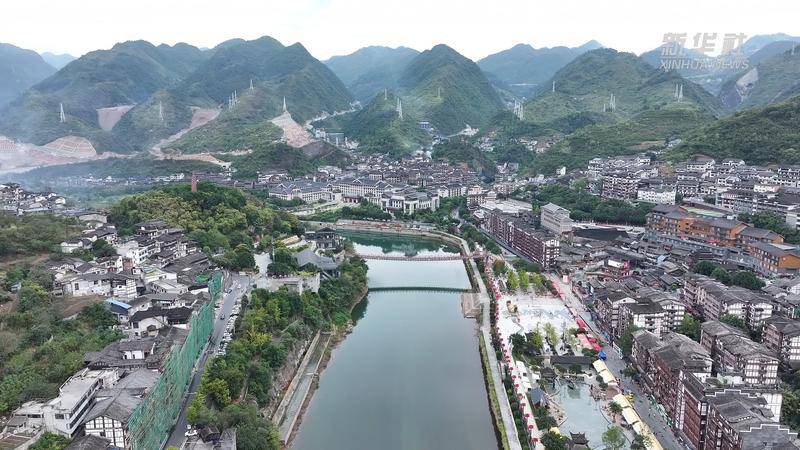
Maotai Ferry witnessed the Central Red Army crossing Chishui three times and marching westward into southern Sichuan.

The surging Chishui River is not only a heroic river, but also a “wine river”. Maotai Town on the banks of the Chishui River is overflowing with the aroma of wine, and the aroma contains mellow red historical heritage.
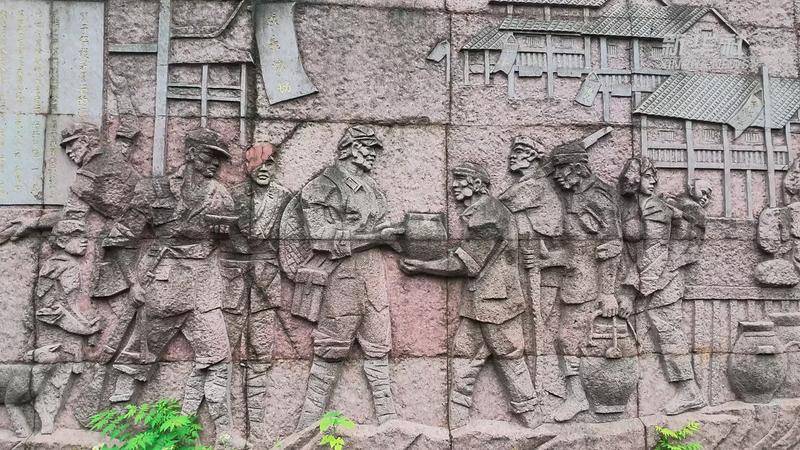
■The majestic pass is like iron and can be crossed from the beginning; the Cangshan is like the sea reflecting the original intention
The west wind is strong, and the wild geese in the sky are calling Shuang Chenyue.
Loushanguan Pass is known as the “throat of northern Guizhou”. The terrain is dangerous and it can be said that “one man can guard the pass and ten thousand people cannot open it”. In January 1935, the Central Red Army advanced into Zunyi and captured Loushanguan, ensuring the smooth convening of the Zunyi Conference. In February, on the way to the fourth crossing of Chishui, the Red Army conquered Loushanguan again and won the first major victory on the Long March. This victory greatly boosted the morale of the Red Army and dealt a heavy blow to the enemy’s arrogance.
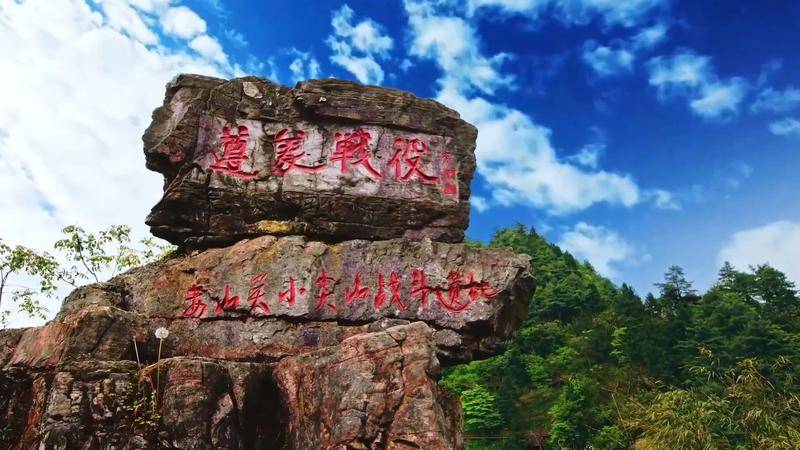
After the Red Army captured Loushanguan, Mao Zedong wrote “Recalling Qin’e·Loushanguan”. This poem fell among the thousands of peaks and ridges of Loushanguan, and has also become the sound of books on campus today.
This year marks the 90th anniversary of the victory of the Chinese Workers’ and Peasants’ Red Army’s Long March. The flames of war at Loushanguan have long since dissipated, but the sentiment of “Now we are moving forward and crossing over again” still echoes in the hearts of every generation.
■Jiajin Mountain to remember the eternal monument
In June 1935, the Central Red Army on the Long March had just come from the bloody charge from the Dadu River when they faced a severe natural test in Baoxing, Sichuan – climbing over the Jiajin Mountain. As the first snow-capped mountain that the Central Red Army crossed, this mountain that is frozen all year round is called the “Holy Mountain” by the locals. It is a natural danger on the way north, and it also created a tragic chapter in the Long March epic of fighting the severe cold with flesh and blood.
“Even if there are thousands of difficulties and dangers, you still have to climb over the mountains.” “Crossing the Snowy Mountains” records this shocking red chapter, and also leaves the spirit of “the Red Army is not afraid of expedition difficulties” in the hearts of generations of students.
Follow the textbooks to walk the Long March, understand the firm revolutionary beliefs of our ancestors, and draw on the strength to forge ahead.
Coordinator: Li Jie, Li Jialin, Wang Bingdi
Director: Tian Tian
Reporters: Lin Ning, Yang Yanbin, Wu Siyang, Yang Jin, Ke Hanruo
Packaging: Xia Yong
Related Reading
- The box office of 2026 National Day movies is 1.165 billion yuan! Nearly 800 million moviegoers were watched throughout the year2026-10-09
- The “touchstone” battle: Zheng Qinwen hits the semi-finals of China Open2026-10-09
- Three years after the Palestinian-Israeli conflict: The ceasefire has not stopped the fighting and reconstruction has no timetable2026-10-09
- Why was the Nobel Prize for Literature awarded to Anne?2026-10-09
- Undercover visits to release chaos: Good deeds turn into business? Why can’t I control this bucket of “released fish”?2026-10-09