CCTV news:The Zunyi Conference was a life-or-death turning point in the history of the Chinese Communist Party. The seeds of this great ideological breakthrough were sown as early as the Hunan Channel. On December 12, 1934, the leaders of the Central Committee of the Communist Party of China held an emergency meeting at the passage and adopted Mao Zedong’s correct idea of transferring troops to the west. After the meeting, the Central Revolutionary Military Commission issued an “extremely urgent” telegram to all legions and columns, deploying the entire army to march towards Guizhou, where the enemy was weak. The Red Army was able to survive from this desperate situation and was known in history as a channel to transfer troops.
Today, in the Memorial Hall of the Soldiers Transferred in the Channel, two mottled lanterns tell people about this past. One lamp, from the conference table of Gongcheng Academy, once lit up all night during the night of life-and-death decisions; the other lamp, from the mountain road of Taro Dong Village, once illuminated the way home for a Dong youth on a cold night. The two lanterns witnessed the critical moment of the passage of troops and vividly explained the original intention of the Communist Party of China to seek truth from facts and take root in the people.
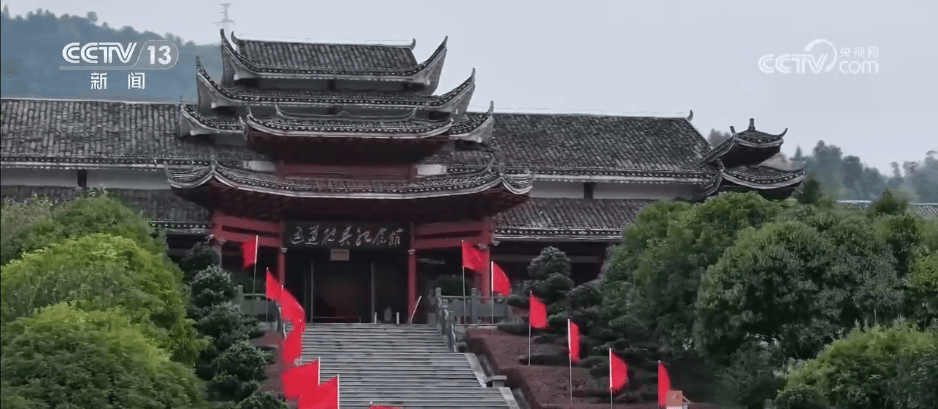
Gongcheng Academy in Hunan Passage played a vital role in the history of the Long March. In December 1934, the Central Red Army experienced the Battle of Xiangjiang and arrived at the passage, and was surrounded by enemy forces. In this conference room in the academy, the leaders of the Central Committee of the Communist Party of China sat around a lantern and held an emergency meeting to decide the direction of the Red Army’s advance.
According to the memorial hall, the lantern on the conference table was originally used by teachers at Gongcheng Academy for daily lighting. It was borrowed when the Central Committee of the Communist Party of China held an emergency meeting. In the Battle of Xiangjiang River, the number of the Central Red Army dropped sharply from more than 86,000 people at the time of departure to more than 30,000 people. The enemy mobilized five or six times as many troops as the Red Army and laid out tight pocket formations on the only way north to western Hunan.
On December 12, 1934, in this room at Gongcheng Academy, the debate continued late into the night, and the idea of marching westward to Guizhou was finally supported by most of the participants. As soon as the meeting ended, the Central Revolutionary Military Commission immediately issued the highest-level telegram of “extreme urgency”, and more than 30,000 Red Army troops quietly turned around, leaving hundreds of thousands of Kuomintang troops behind in western Hunan.
In December 1934, the Central Red Army passed through the ancient Dong village of Tuantou. Affected by the Kuomintang’s false propaganda, local people hid in the mountains one after another. Only Yang Zai, a young Dong man, was able to stay in the village. He hid in the dark and observed: In the cold winter months, the Red Army did not enter people’s houses or take needles and threads from the masses, but used firewood and rice, and even left behind silver coins of considerable market value. Yang Zaineng was deeply moved and offered to serve as a guide, braving the night and leading the Red Army over the steep mountain roads, all the way to Yatun Fort, pointing the way to Guizhou. It was late at night when the mission ended, and there was no moonlight on the mountain road. The leader of the Red Army was worried that he was walking in the dark, so he thrust a lantern into his hand and repeatedly told him to “walk carefully.” A lantern illuminated Yang Zaineng’s way home, and also lit up an ordinary Dong people’s trust in this team. In the decades that followed, this lantern became the most precious heirloom of the Yang family.
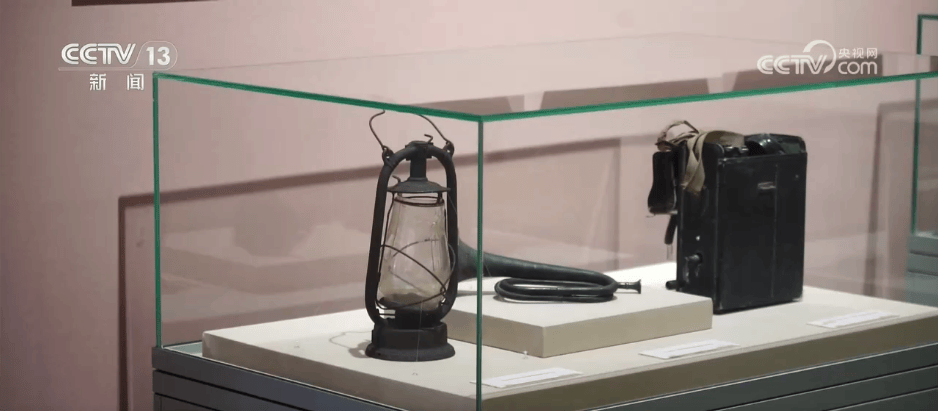
A lamp records the party’s strategic decision to seek truth from facts in a crisis; a lamp records the people’s simple answers after understanding the truth. The same ideological line started under the lanterns of Gongcheng Academy, walked into the mountains of Dong Township, all the way to Liping and Zunyi, and also entered the hearts of the people. Today, the historical site has become a living classroom. On-site teaching courses are regularly held at the Channel Soldiers Memorial Hall, which restores the scene of the Channel Meeting in real scenes, and tells everyone the Long March spirit of seeking truth from facts and daring to take responsibility for the Channel Soldiers.
The spirit of seeking truth from facts also takes root in the mountains and forests of today’s passage. The land that the Red Army used to transfer troops now relies on ecological resources to develop the cultivation of Uncaria, a unique Chinese medicinal material in my country. It covers an area of nearly 60,000 acres, has an annual output value of about 200 million yuan, and has created jobs for more than 30,000 people.
Related Reading
- Norway announces that it plans to temporarily ban the use of AI glasses in specific places2026-10-06
- Video丨National Day movie box office exceeded 800 million! “Movies + Cultural Tourism + Food” activates new momentum for holiday consumption2026-10-06
- Sun Yingsha returns to world number one in table tennis women’s singles2026-10-06
- Karoline Leavitt joins Fox News as contributor after leaving White House press secretary role2026-10-06
- Norway plans to temporarily ban the use of AI glasses in certain places2026-10-06