As the most important left-wing ruling country in Latin America, Brazil will hold a general election on October 4, local time. The 160 million voters will not only vote for the new president and state governors, but also elect all 513 seats in the House of Representatives and two-thirds of the seats in the Federal Senate.
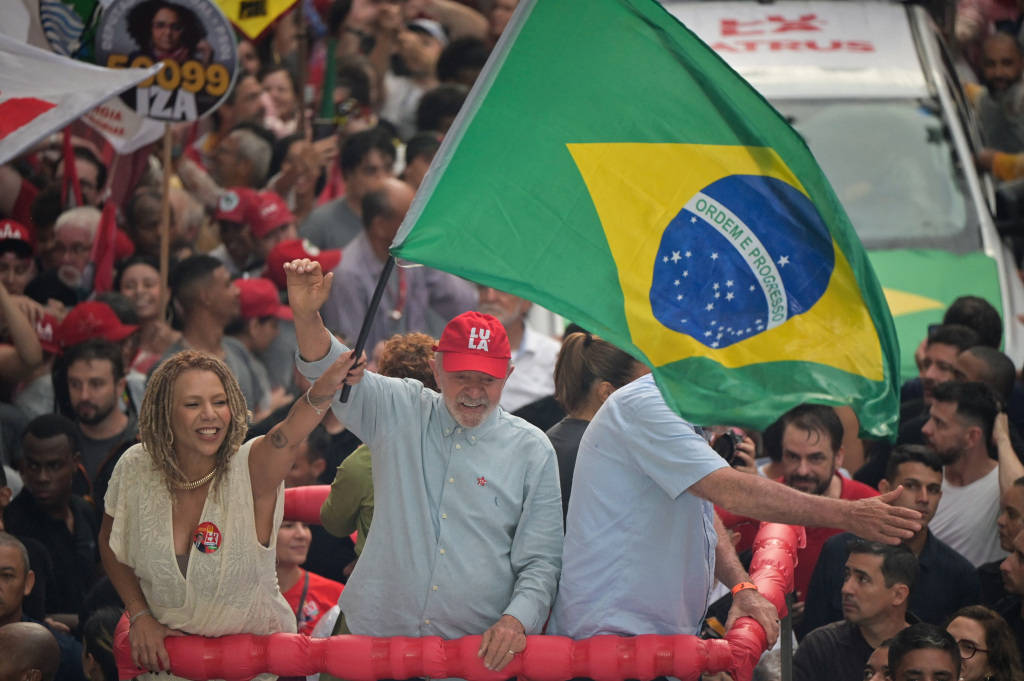
On October 2, in Belo Horizonte, Brazil, Lula (center, front row), the current president of Brazil and presidential candidate of the Brazilian Workers’ Party, participated in a campaign. Xinhua News Agency Picture
In the first round of voting in the presidential election, current President Lula, who is seeking a fourth term, will face the 45-year-old federal senator Flavio Bolsonaro, the son of former President Bolsonaro. According to Brazilian electoral law, if no one obtains more than half of the valid votes in the first round of voting, the two candidates with the highest votes will enter the second round of runoff elections on October 25.
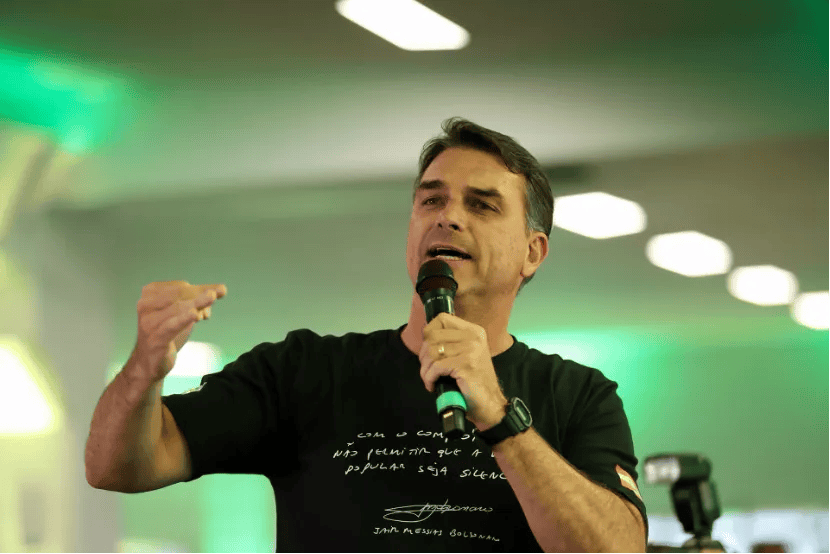
On September 19, Bolsonaro Jr. was on the campaign trail. Visual China data map
Li Chen, a lecturer at the Latin American Studies Center of Southwest University of Science and Technology and a postdoctoral fellow at the Legal Science Center of the Federal University of Santa Catarina (UFSC) in Brazil, told The Paper (www.thepaper.cn) that judging from various key indicators, it is expected that this presidential election will be difficult to settle in the first round.
“Neither Lula nor Flavio has established an absolute advantage in winning more than half of the votes in the first round. Their combined support accounts for three-quarters. Third-party candidates continue to split votes. The judicial turmoil surrounding the Federal Supreme Court may become a ‘black swan’ event affecting swing voters at any time. Lula may rank first in the first round of voting and second in the second round.” Li Chen said.
Li Chen believes that winning the election is just a “ticket”, and the real test lies in post-election negotiations and distribution of benefits. Faced with a Senate that may move further to the right, a highly fragmented House of Representatives, and right-wing and centrist forces that hold real power in local states, even if Lula is successfully re-elected, the new government must transfer more cabinet ministerial positions and financial resources to major local parties in order to maintain a fragile governing alliance. Therefore, whether a compromise can be reached among the extremely divided Congress and local interest networks is the fundamental factor that determines whether the new government can achieve stable governance.
The election is tight, Lula narrowly leads Bolsonaro’s son
Lula, who was born as a worker, is the founder of the left-wing Labor Party and an iconic figure in Brazilian politics for decades. During his first two terms in office, from 2003 to 2010, he earned a reputation for fighting hunger, deepening social welfare reforms, advancing higher education, and enhancing the country’s international prestige. Although Lula was imprisoned on corruption charges in 2018, in 2021 the Supreme Court determined that the relevant court had no jurisdiction and the judgment was invalid. He subsequently narrowly defeated Jair Bolsonaro in the 2022 election and started his third presidential term.
Li Chen pointed out that Lula’s base is mainly concentrated in the northeastern region where the economy is underdeveloped and low-income people are concentrated. Among university intellectuals and other progressive groups, Lula also enjoys a high reputation.
Lula’s main challenger, Flávio, was a four-term Rio de Janeiro state congressman and advocated a tough law and order agenda such as relaxing gun control and supporting strong law enforcement in slums. As the spokesperson of the right-wing camp, Flavio’s core campaign platform contains two pillars: First, he continues his father’s hard line, advocating expanding police autonomy and cracking down on organized crime; second, he proposes a $579 billion “Brazil Rescue Plan” (SOS Brasil) debt fund to strengthen fiscal discipline by renegotiating debt with states.
“Flavio’s main supporters include business people, large-scale farmers and the high-income middle class, and he also attracts voters who are highly concerned about social security. In addition, military groups and young voters who are influenced by nationalism and have radical stances are also his staunch supporters. The current Brazilian political arena presents a highly polarized opposition between the left and right, and both parties are trying their best to consolidate their respective camps.” Li Chen analyzed.
Flavio’s father, Jair Bolsonaro, faces criminal charges for allegedly attempting a coup after losing the 2022 presidential election. On September 11, 2025, the Brazilian Federal Supreme Court announced that he was guilty of planning a coup and was sentenced to 27 years and 3 months in prison. In March this year, Brazil’s Federal Supreme Court issued a release order to implement his temporary home detention decision.
During the election campaign, Flavio repeatedly used his father’s image to try to win the support of conservative voters. Some commentators believe that, unlike his father and several brothers who are active in politics, Flavio does not have a strong aggressive or aggressive political style. Brian Winter, editor-in-chief of Americas Quarterly, pointed out in the article that it is this relatively moderate political image that may help him win over middle voters.
Authoritative polls show the two are evenly matched. A poll released by Datafolha, Brazil’s largest polling agency, on October 1 showed that in the possible second round of the showdown, Lula only narrowly defeated Flavio by a narrow margin of 48% to 45%. A poll released on September 28 by the financial institution BTG Pactual and the polling agency Nexus showed that in the first round of voting, Lula will lead Flavio (37%) with 42% of the vote. In the mock runoff (second round of voting), Lula will lead Flavio (44%) with 46% of the vote. The AtlasIntel/Bloomberg poll released on September 29 showed that in the second round, Lula received 47.6% of the vote and Flavio 47.7%.
Li Chen believes that poor performance in governance is not the main reason for Lula’s current grim election situation. “Lula has run for president many times, and a considerable number of voters have developed ‘political fatigue.’ His advanced age and past surgical history have also raised public concerns about Lula’s ability to fully perform his duties. In addition, the Lula government has not gained a clear upper hand in the recent diplomatic frictions with the United States, which has also weakened the confidence of middle voters to a certain extent.” Li Chen analyzed.
Lula’s diplomatic line puts more emphasis on “strategic independence”: strengthening ties with China, BRICS countries and Europe, and opposing placing Latin America in a subordinate position in the geopolitical competition between major powers. The U.S. government has repeatedly expressed concerns about Brazil’s relations with China, key minerals and trade policies in recent years. The two sides are not in full-scale confrontation, but political mutual trust has declined significantly.
On October 2, local time, the U.S. Embassy and Consulate in Brazil suspended consular services due to security concerns, but did not specify the reason for the threat. Lula’s camp later linked the move to election interference, but the U.S. State Department did not directly link the suspension of consular services to the Brazilian election.
At the same time, the ongoing corruption scandal has also added variables to the election. Recently, both the left and right camps have been involved in the conflict of interest transfer with Daniel Voccaro, the former head of Brazil’s Banco Master, who has been arrested on suspicion of serious financial fraud and money laundering.
In the right-wing camp, the financial exchanges between Flavio and Voccaro have attracted investigation attention, involving the financing of his father’s biopic. Flavio admitted that he had accepted relevant funds, but denied any illegal behavior; in the left-wing camp, the case not only affected core allies such as Lula’s former leader in the Senate, but also directly triggered a crisis of trust in the judicial system. The wife of Federal Supreme Court Justice Alexandre de Morais, who is presiding over the Bolsonaro case, was revealed to have signed a huge legal advisory contract with the bank, triggering strong questions from both the government and the opposition about judicial conflicts of interest.
The double dilemma of economy and security
During Lula’s current term, Brazil’s gross domestic product (GDP) has grown at an average annual rate of about 3%, exceeding outside expectations. By the end of 2025, the national unemployment rate dropped to 5.1%, a record low. However, the eye-catching data has not fully translated into public optimism. Rising debt, continued high interest rates, and high living costs still trigger widespread anxiety in society.
According to the International Monetary Fund (IMF) forecast, Brazil’s economic growth rate in 2026 will be approximately 2.4%, and inflation will rise to 5.6% by the end of the year. This means that although Lula can promote the results of employment and poverty reduction to the middle and low-income groups, it is difficult to outline a picture of a strong economic take-off, and his economic card has relatively limited appeal to middle voters.
Li Chen pointed out that at the external economic level, Brazil is also facing external pressure from the United States to impose additional tariffs and economic and trade investigations. Although Flavio claims to be able to lobby the White House for exemption from tariffs with his personal connections, the credibility of this promise is questionable in the face of Trump’s indiscriminate trade protection policies. Lula chose to stick to the bottom line of national sovereignty and adopt a tough counterattack.
In addition, “the new presidential term from 2027 to 2030 coincides with the critical stage of tax reform. During the transition period between the old and new systems, institutional frictions will inevitably occur, the economic situation is fragile, and the policy error tolerance rate is extremely low. Lula prefers steady advancement and supports necessary tax increases, while Flavio promotes radical tax cuts, showing a classic left-right governance line disagreement.” Li Chen said.
The Brazilian tax system is one of the most complex in the world, and its tax burden ranks high in the world. Currently, Brazil is advancing the most profound round of tax reform in the past 30 years. The manufacturing industry is seen as the biggest beneficiary of the reform. People in the business community generally believe that by having a more modern tax system, Brazil will move closer to developed economies.
Since the launch of legislation in 2023, Brazil has decided to gradually integrate the original five indirect taxes, namely Industrial Product Tax (IPI), Social Integration Tax (PIS), Social Security Financial Contribution Fee (COFINS), Goods and Services Circulation Tax (ICMS) and Service Tax (ISS) into two value-added tax systems, namely the “Goods and Services Contribution Fee” (CBS) at the federal level and the “Goods and Services Tax” (IBS) at the state and municipal levels, in addition to the Selective Tax (IS).
Li Chen pointed out that the newly established CBS has adopted a new collection mechanism. Companies no longer need to wait until revenue is achieved before paying taxes. At the same time, state-level ICMS tax rates will also be gradually reduced. This reform will have a profound reshaping of corporate financial compliance, invoice management and electronic filing systems throughout Brazil.
In addition to the economy and people’s livelihood, public safety has become the number one issue that voters are most concerned about. A survey by the polling agency Quaest showed that as many as 33% of voters ranked violent crime as their primary concern, far exceeding the second-ranked economic issue (15%).
According to Brazil’s “Economic Value” report, although many official comprehensive crime indicators have declined in recent years, the rapid expansion of organized crime networks, frequent mobile phone thefts in cities, and the surge in crimes against women have exacerbated public insecurity. Data show that in the first quarter of this year alone, 1,071 attempted femicide cases were recorded across Brazil (only 135 cases in the same period in 2016), and completed cases also climbed to 399 from 217 ten years ago.
At the same time, the police’s violent law enforcement and abuse of power have also intensified the confrontation between the police and the public. The “2026 Brazilian Public Security Yearbook” shows that Brazilian police law enforcement actions in 2025 resulted in a total of 6,602 deaths, a year-on-year increase of 5.4%, the highest in history. The death rate for blacks is 3.5 per 100,000 people, compared with 1 for whites.
From the slums of Rio de Janeiro to the hinterland of the Amazon rainforest, two local gang organizations, the “First Capital Command” (PCC) and the “Red Command” (CV), have long controlled drug trafficking, smuggling and extortion networks. In response, Flavio slammed Lula’s government for “transferring national sovereignty” to gangs during the Rio campaign, and publicly supported the Trump administration’s designation of Brazil’s major criminal gangs as “foreign terrorist organizations.”
Li Chen believes that there are endogenous contradictions in the respective public security management policies of the left and right wings. “The left advocates boosting the economy and expanding social welfare through expansionary fiscal and public investment, but blindly increasing taxes without creating stable financial resources will inevitably increase the burden on enterprises and ordinary workers and dampen economic vitality. Although the right advocates tax cuts, it also promises to strengthen public security, but it will crack down on transnational and Organized crime is highly dependent on huge public financial investments. In the context of tax cuts, the public security budget will be unsustainable and may even force the government to renege on its commitments and increase taxes in disguise. This inherent conflict between policy goals and means can easily turn the campaign promises of both parties into empty promises,” he said.
Fragmented Congress, judicial shock and local competition
The general election on October 4 will also completely restructure the legislature, with voters voting to reelect all 513 seats in the House of Representatives and 54 seats in the Senate. Excluding the Senate seats up for election this year, the terms of the remaining 27 senators will last until 2031.
Brazil’s House of Representatives elections adopt a state-based “proportional representation system in large constituencies” rather than a “simple majority system” based on a single constituency. This electoral system has given rise to a fragmented congressional structure: in 1994, the House of Representatives election accommodated 16 political parties, which increased to 28 in 2014, and even reached 30 in 2018.
“The Senate election highlights the personal characteristics of candidates and is essentially a matter of ‘selection.’ The House of Representatives adopts an open-list proportional representation system, and seats are strongly bound to political parties, which is essentially a matter of ‘party selection.’ Currently, the 513 seats in the House of Representatives are divided among more than a dozen political parties, and no single party can control more than one-fifth of the power.” Li Chen analyzed.
In this fragmented ecosystem, Centrão (Centrão), a cross-party alliance composed of centrist and center-right parties, has long held a key voice in Congress. The alliance lacks a unified ideology and its core appeal is to secure national budget and governing resources for its member parties. In order to promote major legislation, successive presidents have had to form temporary governing alliances with “center forces” at the expense of relinquishing cabinet ministerial positions, state-owned enterprise executive positions, and control of congressional budget amendments.
Li Chen further said that under the background that the outcome of the first round of the Senate is determined, and the presidential election is likely to be dragged into the second round, “middle forces” will often use legislative support as a bargaining chip to demand higher political returns from the two presidential candidates during the three-week window after the first round of Congress is settled.
“The advantage of this system is that it forms a flexible check and balance on the presidential executive power, forcing the elected to seek cross-camp compromises, which objectively hedges against the extreme divisions that may be caused by the ‘Lula Doctrine’ or the ‘Bolsonaro Doctrine’; but its disadvantages are also obvious – once the alliance maintained by the sharing of interests breaks down, it will inevitably trigger frequent cabinet reorganizations and administrative turmoil, seriously damaging the continuity of public policies.” Li Chen analyzed.
What deserves more attention is that this Senate reelection will directly determine the balance of power of Brazil’s Federal Supreme Court. Since the next president is expected to have the power to nominate up to 4 of the 11 justices during his term, the Senate, which has the power to confirm the appointment of judges (requiring 41 votes) and the power to impeach judges, will become the core battleground in this election.
Currently, Brazil’s Federal Supreme Court is mired in the most serious credibility and institutional crisis in recent years. Datafolha’s poll shows that as many as 47% of the people are dissatisfied with the performance of the justices, setting the worst record since 2019.
In the Master Bank financial fraud trial, conservative Justice Andre Mendoza, appointed by Bolsonaro, was accused by his colleagues of selectively disclosing the facts of the case and deliberately delaying the progress of the investigation involving Flavio. De Moraes, who is considered a member of Lula’s camp, was also besieged by the right-wing camp because of his wife’s involvement in the case. Flavio even publicly called for the impeachment of De Moraes during the campaign and shouted the polarizing slogan “A vote for Lula is a vote for De Moraes.”
The Associated Press reported that many judges were suspected of corruption, overturning each other’s rulings, and even public political liquidations, completely shattering the illusion of Brazilian judicial neutrality. Li Chen emphasized that the Brazilian Supreme Court has been deeply involved in electoral politics. “Under the pressure of accountability from many parties including the Bar Association, the business community and retired judges, the Supreme Court is facing an unprecedented crisis of trust. Currently, the top judicial officials are trying to regain the sound principle of ‘avoiding biased rulings during elections’ to prevent the judicial system from sliding into a state of total disorder,” he analyzed.
Brazil’s 26 states and 1 federal administrative district will also elect governors and deputy governors on the same day. As a federal country, Brazilian state governments have a high degree of political and financial discretion. Governors can coordinate or hinder the federal government’s reform agenda through their local political networks and members of Congress.
Taking into account political polarization and the regional distribution of votes between the two candidates, the final outcome of the election will most likely be decided by a small number of independent voters in the economically developed and densely populated southeastern states. Among them, the right-wing state of Minas Gerais is particularly critical. Since Brazil’s return to constitutional democracy in the 1980s, no presidential candidate has ultimately won an election while losing the state.
Related Reading
- When “Bear Shivering Hair” enters the lives of young people2026-10-04
- “The Incredible Hulk” is helpless, but Paramount and Warner still merge2026-10-04
- Orders surged by more than 300%, and “pet” has a new outlet! This business has an explosion of demand →2026-10-04
- Bi Kun will serve as the flag bearer of the Chinese delegation at the closing ceremony of the Asian Games2026-10-04
- DA did not review witness statements and other evidence Cornell police collected in alleged gang rape of student2026-10-04