At the peak of travel, Mr. Chen, a citizen, wanted to buy a ticket for a popular scenic spot. When searching on a certain platform, he found a store selling discount tickets, and the price was significantly lower than the official selling price.
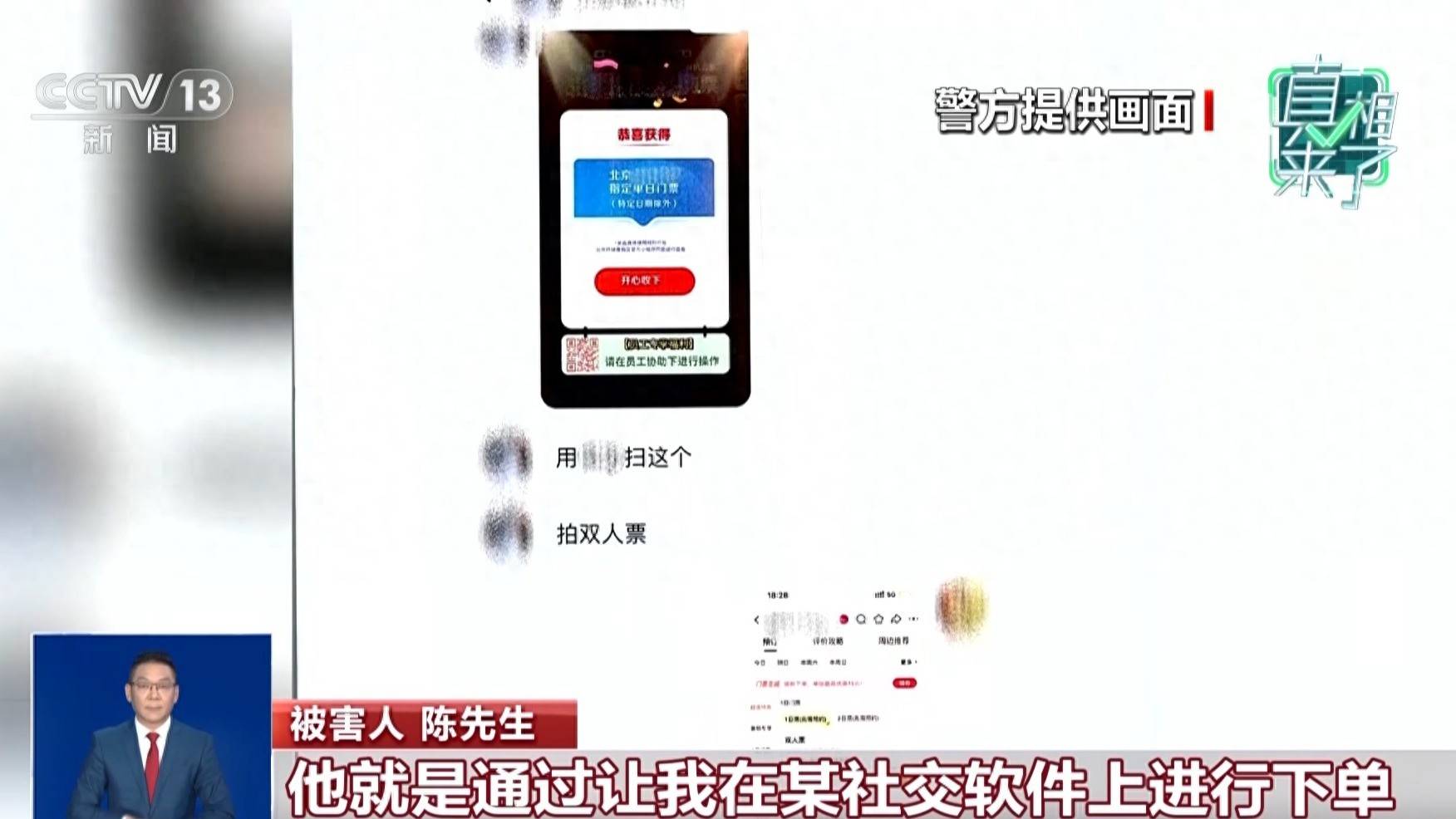
Victim Mr. Chen:I searched on the platform and found a store where I could buy cheap tickets. He asked me to place an order on a certain social software. He said that it was because I made a mistake when I wrote the note, so he couldn’t issue me a ticket and asked me to place another order.
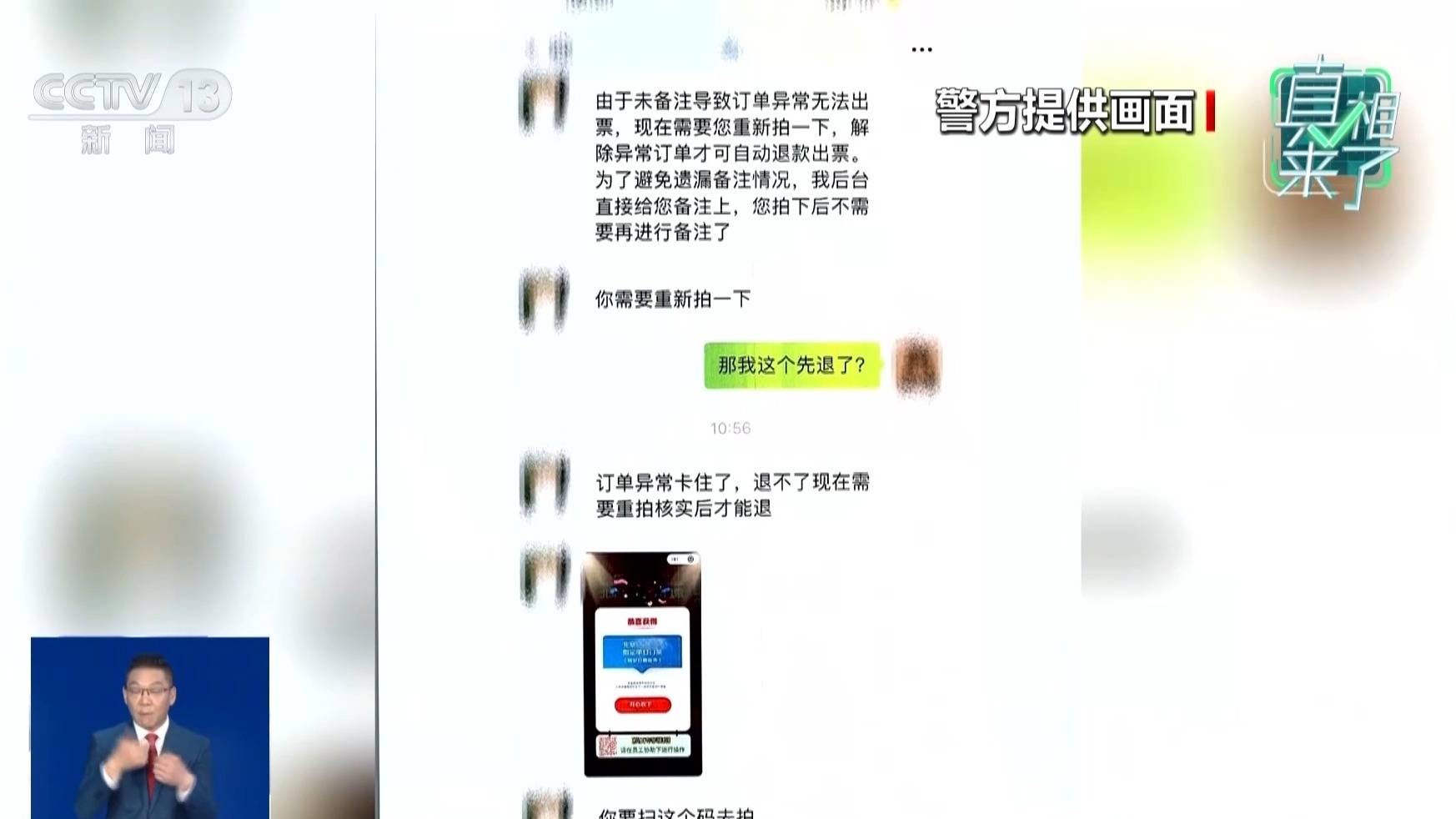
After paying the first order, Mr. Chen sent the payment voucher to the other party, but the other party said that the ticket was still unable to be issued and asked him to contact the “customer service staff” on a certain social software. After Mr. Chen contacted the “customer service staff”, the other party said that he needed to place another order in the same way, and the previously paid ticket price could not be refunded until the order was successfully placed.
Victim Mr. Chen:At the same time, he asked me to buy a shopping card on a certain shopping platform. After that, I have been waiting for his refund and ticket issuance, but there has been no news.
After not receiving the refund for a long time, Mr. Chen realized that he had been cheated.
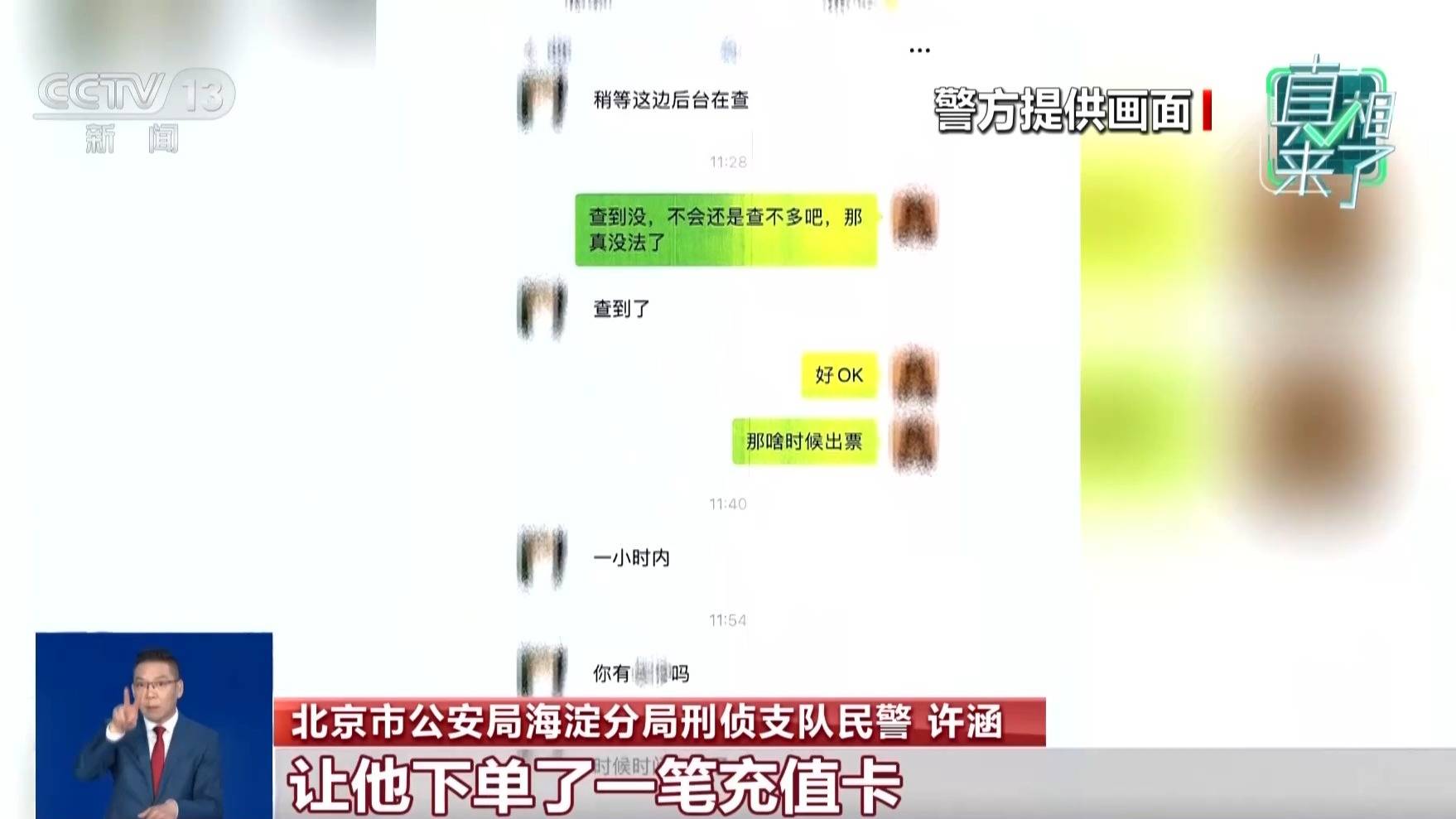
Police from the Criminal Investigation Detachment of Haidian Branch of Beijing Municipal Public Security Bureau許涵:The fraudster asked the victim to place two consecutive orders for park tickets worth 2,000 yuan through platform A, and then transferred them to platform B. On the grounds of lifting the freeze, he continued to make two transfers, also amounting to more than 2,000 yuan. Later, he jumped to platform C and asked him to place an order for a recharge card worth more than 1,000 yuan. The victim suffered a total loss of more than 5,000 yuan.
After transferring money through three platforms, Mr. Chen lost more than 5,000 yuan. Currently, the case is still under further investigation.
There is an order = the ticket has been issued?
What’s the plot behind “low-price tickets”?
Recently, the Haidian Branch of the Beijing Municipal Public Security Bureau received a call from Mr. Wang, a citizen, saying that he was defrauded for purchasing low-price air tickets. However, what puzzled him was that during the booking process, he clearly called the customer service number of the official platform to inquire, and indeed found his “ticket information”, but he was still deceived. What is the problem?
Victim Mr. Wang:I wanted to buy a plane ticket and go traveling. I saw a merchant on a second-hand trading platform who said there would be discounts on air tickets. After sending him the flight I wanted to buy, he sent me a payment order.
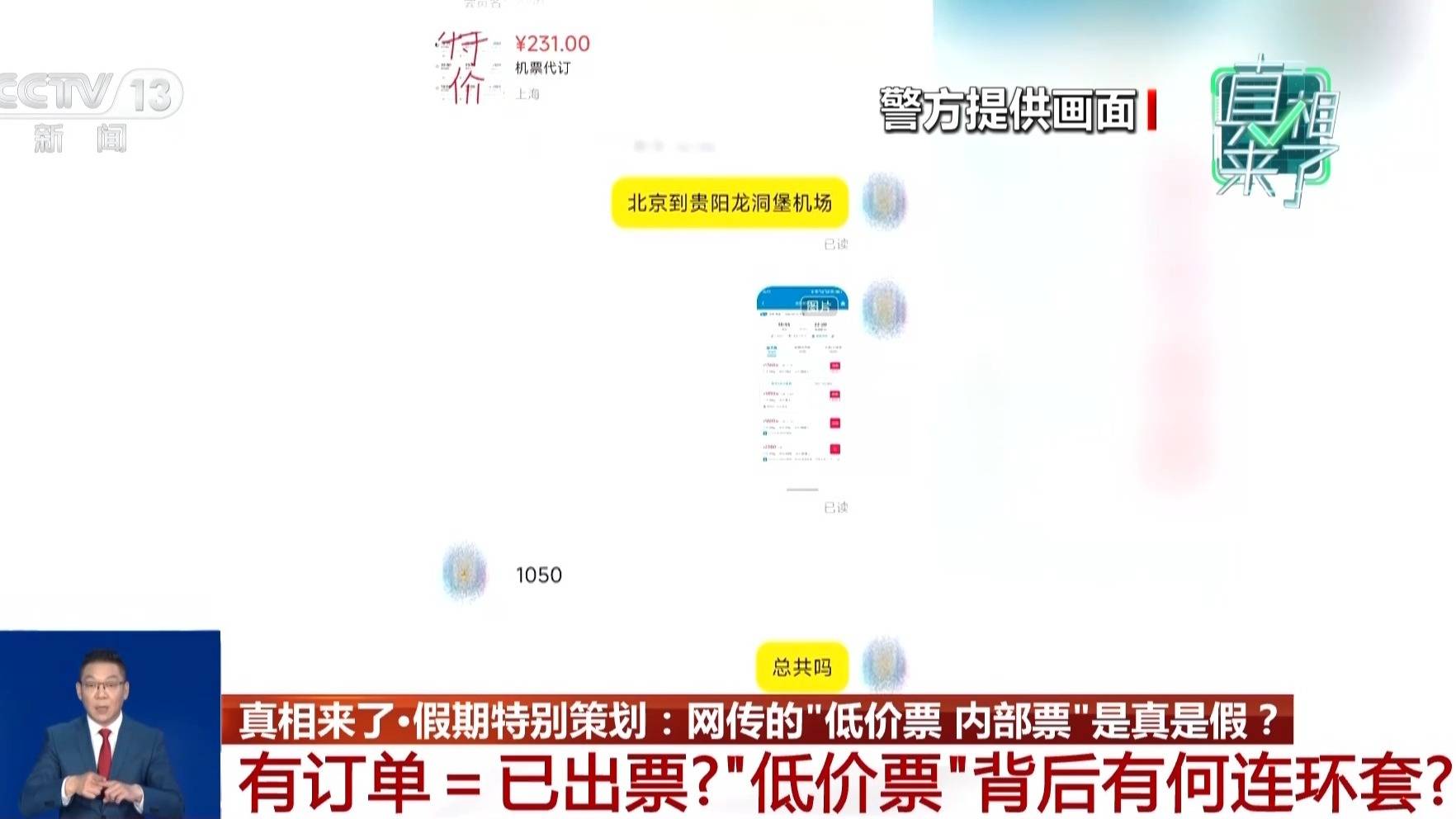
Seeing that the ticket order sent by the other party did have a discount, and considering his own travel needs, Mr. Wang quickly paid the order as a deposit for ordering the discounted ticket.
Yang Fan, Squadron Leader of the Criminal Investigation Detachment of Haidian Branch of Beijing Municipal Public Security Bureau:After the other party sent Mr. Wang’s personal information, including his name, ID number, phone number, and the flight information he wanted to take, he told Mr. Wang that we had completed the booking for you, and you can call the airline’s customer service number to inquire about the corresponding order. At this time, Mr. Wang called the airline’s customer service and found that his order had actually been queried.
After checking with the airline, Mr. Wang was convinced. However, subsequent police investigations found thatAlthough the order is real, it has been in the “unpaid” status. The fraudsters just used Mr. Wang’s information to book seats and place orders in advance, creating the illusion that “tickets have been booked.”
Yang Fan, Squadron Leader of the Criminal Investigation Detachment of Haidian Branch of Beijing Municipal Public Security Bureau:Later, the other party asked Mr. Wang to use the third-party payment software on his mobile phone to scan the code to pay the corresponding balance due to the need to pay the corresponding balance. However, after the payment, the other party had problems with the amount just paid, and Mr. Wang was required to continue paying for the order, so that the extra money paid before could be refunded.
Seeing that Mr. Wang had taken the bait, the fraudster continued to ask him to download the designated communication software on the grounds that “the transaction had not yet been successful” and guided Mr. Wang to enable screen sharing. Through screen sharing, the fraudsters obtained the payment information of the third-party payment software on Mr. Wang’s mobile phone, and then induced Mr. Wang to bind his bank card and transfer money to the account provided by the other party again.
Yang Fan, Squadron Leader of the Criminal Investigation Detachment of Haidian Branch of Beijing Municipal Public Security Bureau:In fact, by this time, the money paid by Mr. Wang had far exceeded the ticket price he wanted to buy at that time. But the reason given by the other party is that only by following this step by step can the amount that cannot be returned due to previous wrong operations be refunded. In the end, Mr. Wang discovered that the amount of money was far more than he expected. He felt that there was something wrong with the other party, so he called the police for help.
After investigation, Mr. Wang lost a total of more than 290,000 yuan. At present, the case is still under further processing.
Dismantling this type of holiday ticket fraud
完整套路
Combining two typical cases, the complete routine of holiday ticket fraud has been sorted out. The routine of this type of holiday ticket fraud is highly fixed: scammers rely on second-hand platforms to release so-called ultra-low-price “special tickets, internal tickets, employee tickets, missed tickets,” etc., taking advantage of people’s desire to save money and fear of not being able to grab tickets.First charge a small deposit to gain trust, and then induce continuous transfers on the grounds that the operation failed, the order is frozen, and the need to unlock and refund is required.。
Practical pit avoidance tips
Keep the three safety bottom lines
Yang Fan, Squadron Leader of the Criminal Investigation Detachment of Haidian Branch of Beijing Municipal Public Security Bureau:After payment, if there is a payment failure, they will attract citizens and friends to make continuous transfers by saying that only in this way can the previously paid money be returned to the original route, and the truly complete booking information can be sent to the victim.
In order to further control the victim’s mobile phone, fraudsters often ask the victim to download niche communication software or screen sharing software.
Police from the Criminal Investigation Detachment of Haidian Branch of Beijing Municipal Public Security Bureau許涵:Screen sharing is a common tactic used in scams these days. The scammer will ask the victim to download an unfamiliar app, click it, and then share the screen with the scammer. In the next step, how the victim operates his mobile phone, and the mobile phone will receive the verification code from the bank, will be seen by the scammer, which is equivalent to handing over control of his mobile phone payment software to the fraudster.
The police remind that in the face of such scams, citizens and friends should plan their itinerary and travel arrangements in advance. These three minimalist rules for purchasing tickets to avoid pitfalls are simple, easy to remember, and straightforward to use.
- 一是Only use official channels, refuse to buy tickets internally at low prices on second-hand platforms;
- 二是Keep the operating red line, if you encounter private transfers, cross-platform transactions, purchase of shopping cards, or screen sharing, they are all scams and should be stopped immediately;
- 三是Keep personal information safe, do not disclose payment verification codes and passwords, do not click on unfamiliar links, and do not install unfamiliar software.
The police also reminded that once you encounter ticket fraud, you should save chat records and transfer vouchers as soon as possible, call the police immediately and contact the payment platform to stop payment and loss, so as to recover losses to the greatest extent. When traveling during the holidays, do not take advantage of small gains or take chances. Only by purchasing tickets through formal channels can you have a safe and secure journey.
These online information related to the holidays are all false!
In addition to low-price tickets and internal ticket fraud schemes, what other false information involves cultural tourism?
It is reported online that you can buy low-discount air tickets with employee passwords
靠譜嗎?
According to online rumors, low-discount air tickets can be purchased with employee passwords. Just search for a string of numbers on some online travel platforms or mini-programs to find the “benefit price” of air tickets. Is this operation reliable?
China Air Transport Association Distinguished Expert Lin Zhijie:The price of air tickets is uniformly announced by airlines. Whether it is the official website, official app, OTA (online travel platform) or offline agent, theoretically the price is basically unified. Sometimes OTAs may have some small subsidies, but if there are discounts of tens or even hundreds of dollars, the ticket is very suspicious.
A B&B AI “photo” appeared in many places
靠譜嗎?
During the peak travel period, a number of pictures of B&Bs with the tag “Newly Opened, Available for Holidays” appeared on social platforms and were comparable to “Utopia”. However, netizens discovered that the same B&B picture was in Qingcheng Mountain today, Anji tomorrow, and Changbai Mountain the day after tomorrow. I took the picture and asked the merchant if I could book a room. The answer I got was surprisingly unanimous, “It’s booked.” Then the conversation changed and they started to recommend other houses. What the hell is going on?
The reporter searched for such planting notes on social media and business travel platforms and found that some room type pictures had obvious traces of AI generation. Most of the pictures are of luxurious single-family villas next to the stream, with various advanced recreational facilities, and many people playing in the water. If you look carefully, the lighting is not natural and the characters’ movements are stiff. The reporter used the “AI content identification” function in the National Anti-Fraud Center App to detect and found that the results all indicated that these photos contained traces of AI generation.
Zhao Jingwu, associate professor at Beihang University Law School:Legally, it is more appropriately characterized as false advertising. The AI-generated image to promote the B&B is obviously different from the actual situation. Although the environment is allowed to be beautified through filters and other methods on the promotional image, the boundaries of the beautification cannot be significantly different from the actual situation. Article 28 of the “Advertising Law of the People’s Republic of China” defines false advertising, which specifically includes the non-existence of goods or services, fictitious effects of receiving services, etc. AI-generated pictures to promote B&Bs, and telling reservations that there is no room are typical false advertising. Merchants use the excuse of not having a house to attract consumers and then promote other B&Bs. This is a typical consumer fraud.
Related Reading
- Car owners talk about the “awkward journey” of high-speed charging: Some people went to 4 service areas and queued for 3 hours to charge. Some people queued for 4.5 hours to charge and still had limited charging.2026-10-03
- UAE refuses permission for Israel to send flights to pick up people in Dubai2026-10-03
- The context continues and the chapters are updated with each passing day—2026-10-02
- The National Day box office exceeded 300 million! “Movie+” new gameplay, cultural consumption heats up2026-10-02
- From north to south, from all corners of the country, the most beautiful thing is China Red2026-10-02