What does a team look like that has never lost a game? The Chinese diving team is right in front of us.
On September 30, the diving event of the Aichi Nagoya Asian Games concluded at the Tokyo Aquatic Center. Lian Junjie won the gold medal in the men’s 10-meter platform final with 501.25 points. This was the 10th gold medal for the Chinese diving team in this Asian Games and the 100th Asian Games gold medal since it first participated in the Asian Games in 1974.
Starting with four gold medals in Tehran and reaching the 100-gold milestone in Nagoya, the Chinese diving team has never lost an Asian Games gold medal in the past 52 years and 14 Asian Games.
The thrill and confidence of winning every battle
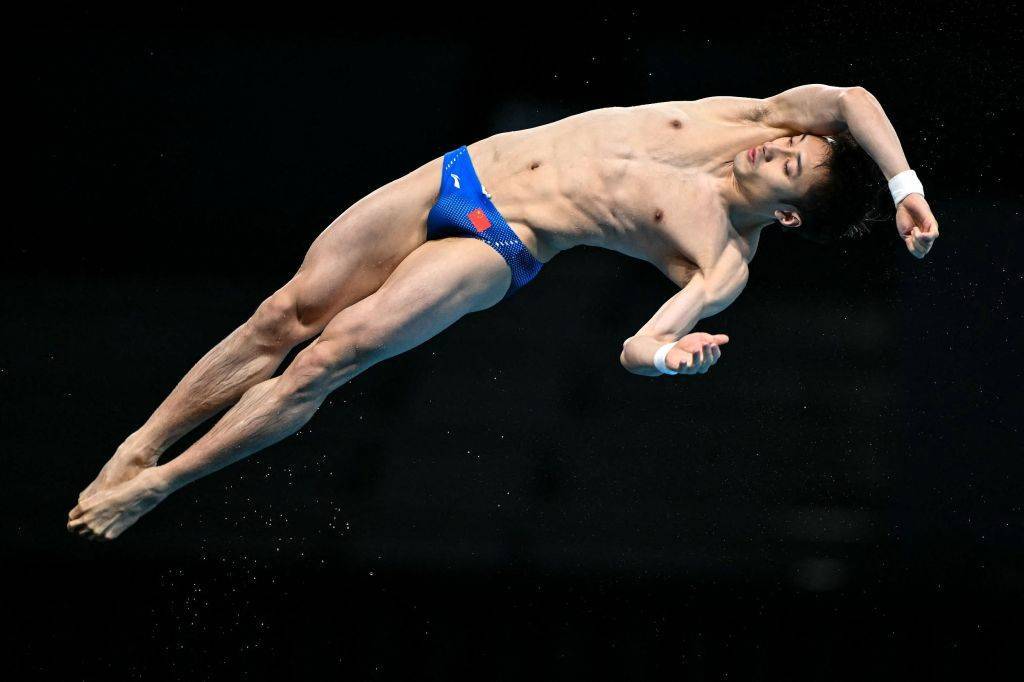
The process of the men’s 10-meter platform final was far more thrilling than people expected.
The 15-year-old Zhao Renjie’s first three jumps were almost perfect, and his total score was more than 30 points ahead of the second Japanese player Rikuto Tamai. However, he made consecutive mistakes on the fourth and fifth jumps, and his ranking dropped to fourth. When his teammates missed, Olympic champion Lian Junjie withstood the pressure. He performed well in the last three jumps, scoring 91.80 points consecutively on his fourth and fifth jumps, and finally won the gold medal with a slight advantage of 4.05 points ahead of Rikuto Tamai.
“I am very happy. The competition in the men’s 10-meter platform has always been fierce, and it is not easy to hold on to this gold medal.” Lian Junjie said after the game. When asked about the significance of his 100th gold, he said frankly: “Before the jump, I focused on myself. I didn’t realize that this was my 100th gold. I started to get nervous after the game.”
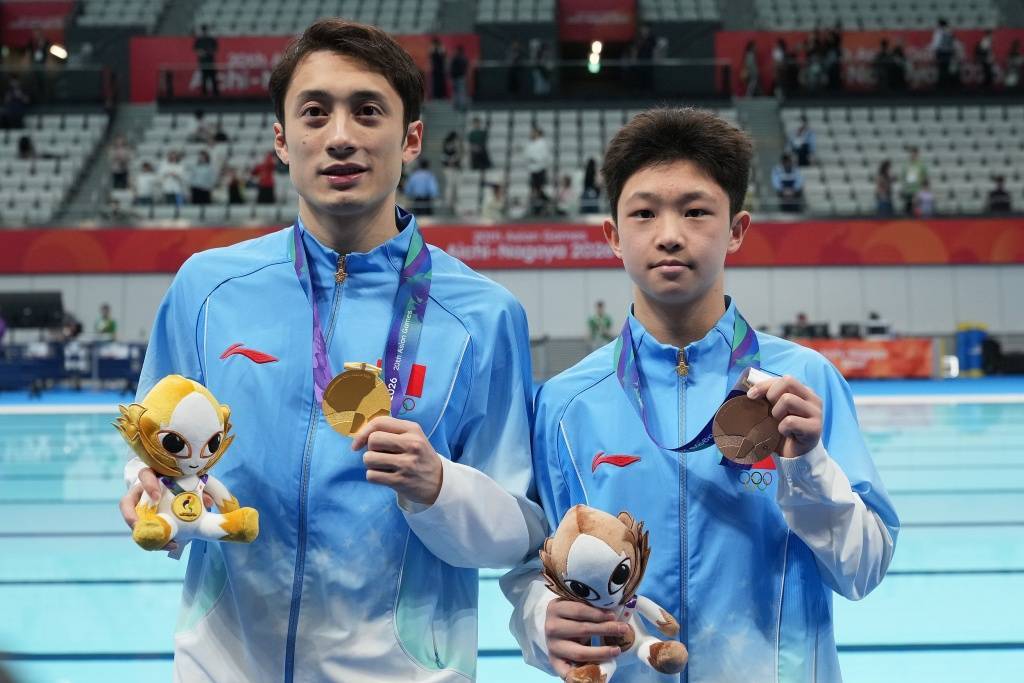
If there is still some suspense in the men’s 10-meter platform final, then the other women’s 3-meter springboard final that day was a complete display of China’s diving strength. Even though the Japanese player Sayaka Mikami played at home almost perfectly, she only won a bronze medal with 332.35 points; Chen Yiwen successfully defended the title with 358.05 points, and Chen Jia won the silver medal with 347.45 points. Except for the three athletes who stood on the podium, the rest of the team members did not even score more than 300 points.
Chen Yiwen also won the women’s doubles 3-meter springboard gold medal with Chen Jia in this Asian Games. They have won 4 gold medals in the two Asian Games, maintaining a perfect record of winning the championship immediately after participating. The 27-year-old laughed after the game and said that the outside world called her a “veteran.” “Age does bring me more challenges, especially in terms of energy.”
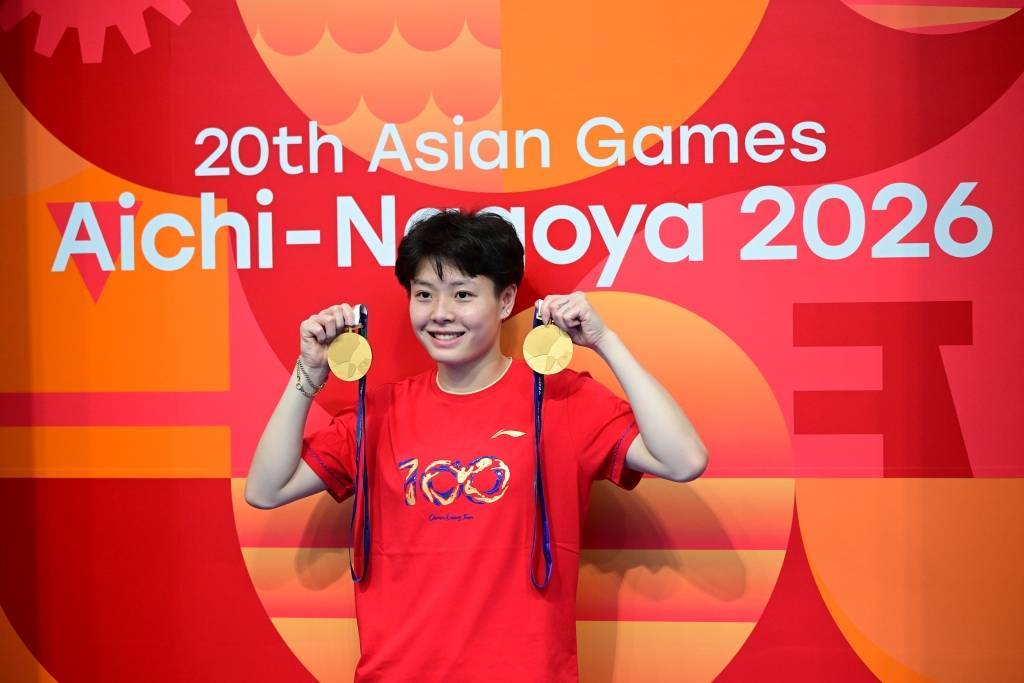
The Chinese diving team ended up with 10 gold medals, 4 silver medals and 2 bronze medals, winning all Asian Games diving gold medals for the 14th consecutive time. After the game, the team members wore red T-shirts with the words “100 Gold” printed on them and took a group photo by the pool.
In the history of the Asian Games, China is not without its “hundred-gold” teams. Swimming, track and field, gymnastics, weightlifting and other teams have all won 100 Asian Games gold medals. However, teams like the diving team that have never lost a gold medal are extremely rare.
The place where genius is born, behind it is the inheritance
How to describe the strength of the Chinese diving team? Perhaps the truest assessment comes from an opponent.
“My original goal was a gold medal, but realistically speaking, I think I can only get a bronze medal. So I am very happy to get a better ranking in the local competition.” Rikuto Tamai, who once pushed the Chinese team into danger, said after the game, “Chinese divers are very strong, so I treat this competition as the Olympics rather than the Asian Games.”
But China’s diving fortune did not come overnight.
At the 1974 Asian Games in Tehran, 15-year-old Li Kongzheng won the men’s platform gold medal as a “man ahead of the difficulty scale”, while Zhong Shaozhen won the women’s platform and springboard gold medals. Subsequently, Gao Min, Guo Jingjing, Wu Minxia, Chen Ruolin and other familiar names were successively written into the honor book of Chinese diving.
It is worth mentioning that in early 2006, Chen Ruolin, who was only 13 years old, made her debut in the Asian Games and won one gold and one silver. Since that Asian Games, she has partnered with many teammates and won the women’s synchronized 10-meter platform gold medal in three Asian Games. At this Asian Games, Chen Ruolin once again appeared on the court as a coach. Lian Junjie, one of the gold medalists in the men’s synchronized 10-meter platform, was one of her team members. As early as the 2023 Hangzhou Asian Games, she served as Quan Hongchan’s head coach and helped her disciple win the women’s 10-meter platform gold medal.
Behind these seemingly places where geniuses are born are the continuous struggles of Chinese divers from generation to generation.
Before helping China win the 100th Asian Games diving gold, Lian Junjie also experienced the trough of failing to qualify for the Olympics, missing the gold medal, and even suffered a fractured right shoulder that forced him to stop training. During the long recovery period, he refinished his movements while healing his injuries. According to him: “This project is too grueling. If you want to persevere, you need a lot of patience.”
Chen Yuxi, who previously won the women’s 10-meter platform championship at the Asian Games, also said: “I persevered all the way. Each stage has its own difficulties. These difficulties push me forward. After coming to the competition field this time, I found that I really like and love the competition, and enjoy the feeling of standing on the 10-meter platform competition field.”
There is never a destined score on the platform, anything is possible. Because of this, Baijin is not just a number, but also the strength of Chinese diving.
Related Reading
- Video丨”Sui Sui Duck” and “Pin Hao Building” are popular in the industry. This holiday, go to the museum to chase the “top”2026-10-02
- U.S. official: Do not rule out the possibility of U.S. troops returning to Iraq2026-10-02
- UAE investigating motive for flydubai cockpit clash! The passenger plane plummeted thousands of meters2026-10-02
- The railways will welcome peak passenger flow on the first day of the National Day holiday. Please keep this travel tip in mind2026-10-02
- Ex-frat leader at Arizona university gets jail time after pledge died of alcohol poisoning2026-10-02