In the offline business halls of the three major operators, many consumers have encountered the promotions of “getting a mobile phone for free” and “getting a broadband gift as a gift”. It seems that you can get a mobile phone for free by signing up for a package, but in fact you have signed a loan contract, and the monthly phone bill includes the repayment amount. This type of installment business has long been the focus of consumer complaints.
It is reported that starting from September 24, the financial installment purchase business of the three major operators will be suspended, and no new business of getting a mobile phone for 0 yuan will be allowed. Why is the “zero yuan purchase” completely stopped at this time? What should users who have already applied for it do?
Complaints about installment purchases are frequent, and the chaos of routines has not been eliminated for a long time.
In recent years, complaints about installment purchases have never stopped. Three years ago, Mr. Wu in Zhuzhou, Hunan Province encountered a salesman who came to his door and promised to give him a mobile phone within three years of being online. A few days later, Mr. Wu received a text message saying “Loan successful.” The contract showed that he had an additional consumer loan of 1,950 yuan for 36 installments in his name.
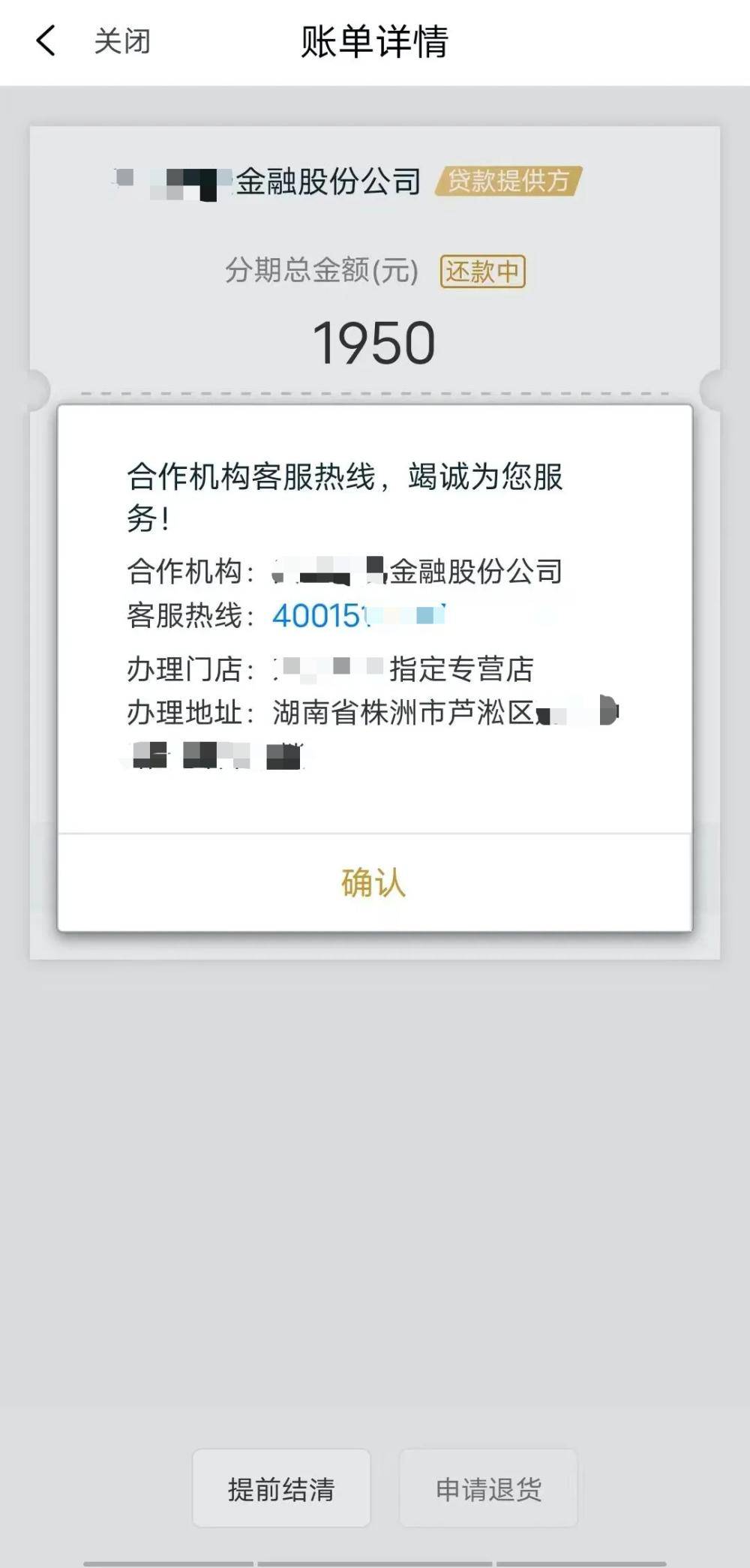
Mr. Wu’s loan information
Three years later, similar situations are still occurring.
Mr. Xia from Shenyang, Liaoning Province complained to Black Cat last week that he applied for the “broadband and mobile phone delivery” service, and later discovered that there was an installment loan in his payment account, with 36 installments of 49.9 yuan each. This money was hidden in his monthly phone bill of 139 yuan.
Mr. Wang’s experience in Ningbo, Zhejiang was even more bizarre. The salesman came in on the pretext of coming to test the Internet speed, changed his broadband operator, and also bought him a whole-house Wi-Fi equipment worth more than 1,500 yuan, divided into 36 installments.
These complaints all have something in common: Users thought they were doing communications business, but they signed a loan contract; they thought they were paying phone bills, but they were actually repaying the loan. Once the mobile phone is out of service due to arrears, the loan will become overdue and personal credit will be damaged.
Shenyang Telecom: The new business is currently optimizing and upgrading the system, and will temporarily stop accepting new applications. If you want to apply for a mobile phone contract now, you can learn about other preferential phone purchase activities in the business hall.
Beijing Unicom: In terms of installments, this product is being upgraded, and the specific resumption time is pending notification.
Mobile “Hebao Credit Purchase”: The version has been upgraded and cannot be processed at the moment. We will have to wait for further notice when it will be available.
Hunan Mobile Company once issued the “Announcement on the Suspension of the Hebao Installment Purchase Activities” on its official website, stating that starting from 24:00 on September 23, Hebao Installment Purchase-related products will be officially discontinued and new purchases will no longer be supported. Existing users who have already handled the purchase will not be affected.
In other words, starting from September 24, China Mobile’s “Hebao Credit Purchase”, China Telecom’s “Orange Installment”, and China Unicom’s “Wo Installment” have all fully suspended new installment purchases, and the recovery time has not yet been determined.
The model gradually took shape, and phone bill arrears evolved into financial credit risks.
It is worth noting that on September 30, the “Measures for the Administration of Online Marketing of Financial Products” jointly issued by the People’s Bank of China, the Ministry of Industry and Information Technology and other departments will be officially implemented, clearly requiring that the marketing of financial products must not contain false or misleading content. At this point in time, is it a coincidence or necessity that the operator has stopped the “package package, free mobile phone + installment” model?
Telecommunications analyst Fu Liang recalled that the telecommunications market entered the early stage of the 3G era and smartphones ushered in a wave of popularity. In order to compete for users, operators have adopted a large-scale marketing model of “pre-deposited phone bills and free mobile phones”, requiring users to pay a certain amount of phone bills in order to receive a free mobile phone.
For example, for a mobile phone worth 5,000 yuan, the user may need to pay a one-time payment of more than 7,000 to 8,000 yuan. This fee includes the price of the mobile phone and three years of phone bills, and the overall profit margin is about 30%. However, operators later discovered that the one-time payment threshold was too high and many users found it difficult to accept it. In this context, a new model emerged: users do not need to pay the full amount in advance, but only need to pay the monthly phone bill with a credit commitment to participate in the activities. This model can indeed help drive related consumption while taking into account the interests of all parties.
This kind of business innovation, which was regarded as lowering the threshold and promoting mobile phone consumption in the early stages of development, gradually changed its shape during the implementation process. In the past, users who paid their phone bills a few days late might just be out of service; with this type of credit purchase model, late payment or even default payment would affect credit and become a financial default. In addition, driven by channel interests, some offline salespeople have repeatedly behaved in “selectively concealing risks.”
Fu Liang believes that the three major operators have stopped the financial installment purchase business this time. In addition to regulating related business behaviors, the deeper background is that the communications market has entered the stock era, and the operational logic of relying on subsidized mobile phone hardware to snatch users is no longer sustainable.
Offline business halls shrink + number portability is implemented, long-term contract customer lock-in model fails
In the operator’s financial report, the terminal business is basically at zero profit or even loss. The core goal of operators is to sell communication services, not mobile phone terminals. Nowadays, it is increasingly difficult for operators to acquire new users. This year, the assessment indicators for the growth of new users have been significantly lowered. Enterprises are no longer willing to pay money to attract new users through terminal business. Coupled with compliance considerations, it is not difficult to understand why operators choose to stop this business.
According to Pan Helin, a member of the Information and Communication Economy Expert Committee of the Ministry of Industry and Information Technology, the most direct reason why the three major operators have completely suspended this business is that this model has long been reduced to a typical “negative asset” – the gain outweighs the loss in the economic account, and it is full of risks in terms of law and reputation:
The market performance of the installment purchase business is poor. Users are not willing to be tied to operator packages for a long time, and the overall scale of the business is relatively small. Installment purchase business involves high compliance risks. Some business offices will use exaggerated publicity to carry out promotions. After handling the application, many users find that the actual situation is inconsistent with the publicity. For example, they need to bear high installment interest, and this business has become a negative asset for the operator. Successful business promotion will damage the brand’s reputation, while poor promotion may lead to compliance penalties due to false publicity. It can be said that the gain outweighs the loss.
Pan Helin introduced that under the background of the continuous development of digital technology, the functions of offline physical business halls continue to shrink. At the same time, the regular implementation of the “number portability” policy has completely broken the operational barriers of operators relying on long-term contracts to deeply lock in users.
Related Reading
- A persistent nor’easter batters US Northeast, causing coastal flooding, outages and at least 1 death2026-09-27
- The recycling price of expired mooncakes is 800 yuan per ton, and the five-nut mooncakes are turned into fragrant pastries. The feed factory purchases and processes them into pig, cattle and sheep feed, and promises not to re-enter the market for sale.2026-09-27
- Saudi Arabia says Strait of Hormuz must return to “pre-war status”2026-09-27
- Highlights of today’s Asian Games: Sun Yingsha and Wang Manyu are expected to meet in the women’s singles final; BMX hits the first gold medal in history2026-09-27
- What Is a ‘Pocket Rescission’? Inside Trump’s Move to Cancel $810 Million in Federal Funding2026-09-27