At noon, the scorching sunshine shrouds the Upper River District in eastern Gambia, and the temperature can reach over 40 degrees Celsius. The dirt road was whitened by the sun, and heat waves rolled against the ground. Fatou, a community volunteer, carried a medicine box on his back, walked through the village with almost no shade, and knocked on the door of a courtyard.
As a community volunteer in the Seasonal Malaria Chemoprevention (SMC) project, she and her companions need to visit door-to-door during the peak period of malaria transmission in the rainy season to provide preventive anti-malarial drugs to children aged 3 months to 59 months.
The child frowned as soon as he took a sip and buried his face in his mother’s arms. Fatou patiently comforted him until he saw the child swallow the medicine with his own eyes, then handed over a candy as a reward.
Before leaving, the accompanying volunteers wrote “7/10” and the letter “R” next to the gate: There are 10 eligible children in this compound, 7 of them have taken the first dose of medicine, and the other 3 need to be visited again. As long as “7” has not turned into “10”, their work is not over.
Just as Fatou and his colleagues were trying to deliver preventive medicine to every eligible child in The Gambia, thousands of kilometers away, a malaria transmission chain caused by the cross-border movement of mosquito vectors was emerging in Frankfurt, Germany.
In the summer of 2026, 8 cases of falciparum malaria were discovered in and around Frankfurt International Airport. As of mid-September, 3 of them died. The first confirmed cases were airport staff, and later cases appeared among residents near the airport. None of these patients had recently traveled to malaria-endemic areas.
Germany’s Robert Koch Institute and the European Center for Disease Prevention and Control believe that one or more infectious Anopheles mosquitoes carrying Plasmodium falciparum may be hidden in the passenger cabin, cargo hold, luggage or air cargo, arrive in Frankfurt on an international flight, and bite people locally. This rare infection scenario is known as “airport malaria”.
From Gambian villages to Frankfurt Airport, the two places are far apart and face completely different stages of malaria prevention and control. These two seemingly unrelated pictures jointly present the reality faced by global malaria prevention and control: the risk of transmission does not stay within fixed geographical boundaries, and malaria endemic areas are only one international flight away from non-endemic areas.
The Gambia has struggled with malaria for centuries. From the rainy season when hospitals were crowded with children with high fever and convulsions, to the gradual rollout of insecticidal bed nets, rapid testing, standardized treatment, intermittent preventive treatment for pregnant women, and seasonal chemoprevention for children, it was not until recent decades that the turning point of this “long epidemic” finally arrived: the annual malaria cases reported in this small West African country dropped from nearly 250,000 in 2015 to about 48,000 in 2025, a decrease of about 81% in ten years.
Today, The Gambia is moving from broadly controlling the disease burden to detecting, investigating and blocking every chain of transmission, reaching the “last mile” of malaria elimination.
But the closer we get to the end, the harder the journey becomes: the fewer the cases, the more precise the surveillance, and the higher the cost of case-by-case investigation and treatment; climate change is reshaping the time and geographical scope of malaria transmission; open land borders and global transportation networks make it difficult for one country to block imported transmission alone. At the same time, Gambia still has a shortfall of more than US$100 million in its national malaria strategic budget from 2026 to 2030.
How can The Gambia complete the last mile of malaria elimination?

After SMC staff completes the door-to-door service, they leave a mark at the door of the household.
Send the medicine to the last child
Driving eastward along the Gambia River for more than six hours from the Western Capital Region on the Atlantic Ocean, there are fewer and fewer asphalt roads, and the khaki roads have been cut into puddles of varying sizes by rain. The further inland, the simpler the houses and roads become, and it is difficult to find complete, smooth roads in some remote villages.
September is the rainy season in The Gambia. The first round of seasonal malaria chemoprevention operations in 2026 is underway in the easternmost Shanghe District. About 90% of malaria cases in The Gambia occur during the rainy season, when stagnant water, high temperatures, inconvenient transportation and insufficient infrastructure make every home visit more difficult.
Fatou and his companions carried medicines, registration forms and mobile terminals and visited households from house to house to check the age and health status of the children, and then explained to the parents the effects of the medicines, how to take them and possible adverse reactions.
This intervention is mainly targeted at children aged 3 months to 59 months. Rather than treating children after they become ill, the drugs provide protection in advance when malaria transmission peaks and are repeated periodically during the transmission season.
Children under the age of five have immature immune systems and are more likely to develop severe infections after infection. Giving preventive drugs before infection can reduce the risk of infection, development of severe illness and even death during the rainy season.
Preliminary data from the Shanghe District Health Department show that when the local cooperation project was first implemented last year, the coverage rate was about 71%; in 2026, the coverage rate of this round of operations has exceeded 94%, which is higher than the 90% target set by the country. About 156 community volunteers participated in dosing and data registration, and about 28 supervisors inspected the quality of implementation.
Giving medicine is the most patience-testing part. Some children refused to open their mouths, and some drank and spit them out. Volunteers need to recheck doses, reassure children and convince concerned parents. The medicine sometimes causes short-term discomfort such as fatigue, mild fever or diarrhea. Once a child reacts after taking the medicine, the news quickly spreads throughout the village.
“We will tell parents that the medication may cause temporary discomfort, but the benefits of preventing malaria far outweigh the risks,” Fatou said. She has four children, none of whom have contracted malaria. She believes this is the result of a combination of bed nets, preventive medication, timely testing and community awareness.
If the child is not home when the first visit is made, the team must leave a mark and visit again. The rainy season coincides with the busy farming season, so some children will go to the fields with their parents, while others may go to neighboring villages. Each round of operations is usually only a few days long, and staff have a limited time limit to complete registration, administer first doses and track children who have missed doses.
At the entrance of a village, women and children gathered in a circle, playing drums, singing and dancing. Project staff incorporated knowledge about taking medicine on time, using mosquito nets correctly, and cleaning up stagnant water into songs. The audience may not remember the formal preaching, but they may remember the lyrics through repeated singing.
These drug-delivery operations that go deep into villages form the end of The Gambia’s malaria defense line. But to understand why this country places so much importance on every visit during the rainy season, one has to go back to the hospital wards of decades ago.

Use song and dance performances to convey anti-malaria messages at village events and gatherings
From crowded hospital beds during the rainy season to a sharp drop in cases
The Gambia is located on the west coast of Africa, with a population of less than 3 million, making it the smallest country on the African continent. The land is distributed in a narrow and long shape along the Gambia River, like a ribbon embedded in the hinterland of Senegal. The Gambia is almost entirely surrounded by Senegal, except for the Atlantic Ocean to the west. Rivers, mangroves, wetlands and monsoon water have shaped the country and provided conditions for mosquitoes to breed.
The Gambia is known as the “Land of Smiles”. However, behind the gentle smile, there is also a heavy history buried.
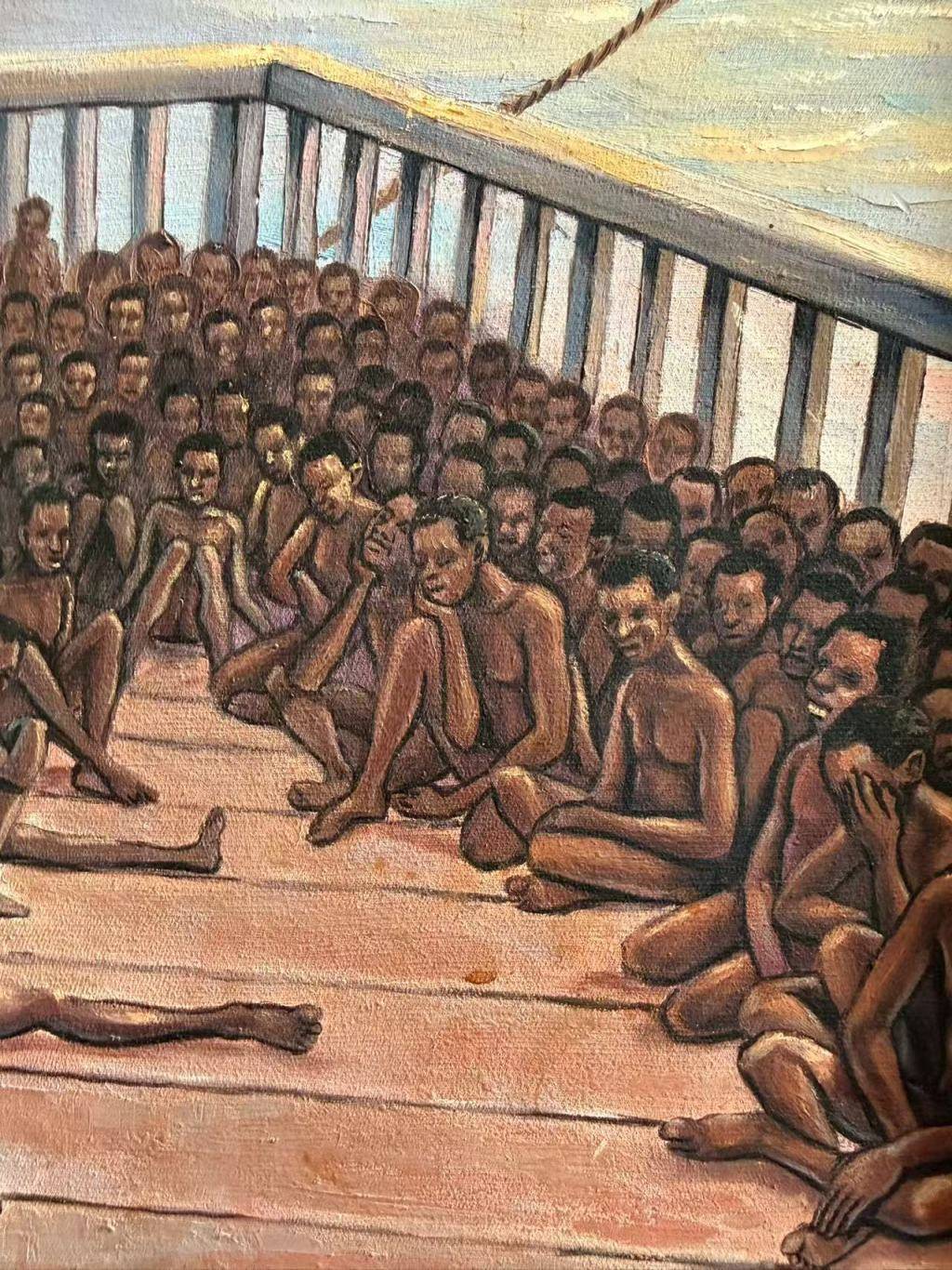
欧洲殖民者贩卖黑奴的图画。 Photo by Wen Rujun
Quinta Kinte Island at the mouth of the Gambia River was formerly known as James Island. Hundreds of years ago, a large number of trafficked black slaves were imprisoned here, waiting to cross the Atlantic amidst violence, hunger, crowding and disease. Malaria also bred here and claimed lives.
Today, the slave ships have long disappeared, but malaria has long lingered in the Gambia River Basin. Anopheles gambiae, one of the most important malaria vectors in Africa, is named after it was first studied and named in The Gambia, but it is widely distributed in many African countries.

James Island first retains the dungeon where black slaves were held. Photo by Wen Rujun
Wandifa Samateh, manager of the Gambia’s National Malaria Control Project, recalled that from the 1970s to the early 1990s, during the rainy season, medical institutions were often crowded with children with malaria. Three or four critically ill children may share a hospital bed. Some children are confused, have symptoms such as convulsions and vomiting, and even start convulsions while waiting in line at the outpatient clinic.
In 1999, Samat was working in a medical institution. If he is assigned to the injection room, he may have to continuously inject chloroquine into a large number of malaria patients from 8 a.m. to 2 p.m. Each box contains 36 pills, and five boxes may be used in one working period.
Today, it is rare to see multiple children with severe malaria crammed into one hospital bed. But Samat emphasized that this does not mean malaria has disappeared. The Gambia has only emerged from the high-burden phase of the past and has not yet truly cut off transmission.
Balla Gibba, deputy manager of the Gambia National Malaria Control Program, said that ordinary residents clearly felt that the turning point when malaria became preventable and controllable occurred around 2015 to 2016.
This change coincided with the introduction of seasonal malaria chemoprophylaxis around 2014. Prior to this, The Gambia had successively promoted insecticidal bed nets, indoor residual spraying, malaria testing and artemisinin combination therapy. With the expansion of coverage of multiple tools, improvement of residents’ awareness, and continued community publicity, the effects of comprehensive intervention have gradually emerged.
Fatoumata Komma, Partnership Coordinator at the Gambia Ministry of Health, last contracted malaria in 2006. She was seriously ill at the time, collapsed at one point, and experienced sleep disturbance for about two months during her recovery. After about 20 years, she never contracted malaria again.
“This reflects the progress made by the national malaria program and its partners,” Coma said.
The case curve is not a straight line. From 2015 to 2025, the number of malaria cases in The Gambia fluctuated. The rebound in cases in 2022 may be related to residents’ delayed testing and treatment during the new crown epidemic, as well as the unusually heavy rainfall and flooding that year.
Jiba emphasized that there is currently no systematic study that can simply attribute the change in cases in a certain year to a single factor. The nationwide distribution of approximately 1.5 million new insecticidal bed nets in 2025 may be one reason for the subsequent decline in cases, but rainfall, temperature, health-seeking behavior and health service utilization may also play a role.
Reporters learned at Bangdong Maternity and Children’s Hospital and Fajkunda Health Center in Upper River District that many patients who seek treatment for fever are eventually diagnosed with pneumonia, influenza-like illness or other infections instead of malaria. Ramatulie Camara, head of the Fajkunda Health Center, said that since July 2026, no positive cases of malaria have been found in the center.
But Kamala is reluctant to declare victory prematurely. The rainy season is not over yet, and some infected people may still be in the incubation period. Only when the entire transmission season is over can we fully judge the changes in cases.
As cases dropped, the problem became more insidious. Many families already have mosquito nets, but they may not insist on using them every night. When cases fall to a certain level, it is no longer enough to expand tool coverage; the country must move further to look for every infection hidden in the community.
From controlling the population to tracking every infection
When cases are high, prevention and control focus on expanding coverage of bed nets, preventive medication, testing and treatment; when cases fall to lower levels, strategies shift to detecting, investigating and treating every infection.
The Gambia divides the country into extremely low, low and moderate transmission areas based on the incidence rates in each region: areas with less than 10 cases per 1,000 people are extremely low transmission areas, 11 to 30 cases are low transmission areas, and more than 31 cases need to continue to focus on reducing the disease burden. This set of standards combines the characteristics of The Gambia’s small land area and obvious regional differences, and aims to allocate limited resources more accurately.
At present, the eastern region, where there are relatively many cases, still focuses on seasonal malaria chemical prevention, bed net coverage, diagnosis and treatment; some areas on the north coast, where the level of transmission is low, has begun to track infections case by case.
After a case is diagnosed, the medical institution will report it through a digital platform, and the surveillance team will immediately enter the patient’s community to investigate the source of infection, surrounding infected people, and potential transmission hotspots. This process draws on the “1-3-7” model formed during China’s malaria elimination phase, that is, reporting cases within 1 day, completing case investigation within 3 days, and completing epidemic site investigation and response within 7 days.
Jiba said that “1-3-7” cannot be simply replicated apart from local transmission levels. In areas with a large number of cases, it is difficult for grassroots personnel to investigate case by case; this model is only truly applicable when the cases are reduced to a traceable level. Currently, The Gambia is mainly piloting the test in extremely low-transmission areas such as the eastern North Shore and the western North Shore. About seven areas on the North Shore have carried out basic case monitoring, but due to financial constraints, it has not yet been fully promoted.
The international non-profit organization PATH assisted The Gambia in developing case-based surveillance guidelines and standard operating procedures, developing digital tools and training staff. Once a case enters the platform, relevant personnel can initiate investigation and response without waiting for additional notifications.
Professor Umberto D’Alessandro, a senior scientist at the Gambia Medical Research Council Research Center at the London School of Hygiene and Tropical Medicine, told The Paper that one of the most critical capabilities for The Gambia to move towards the elimination stage is precise monitoring.
“It is necessary to know where the cases occur, find the infected people as soon as possible, and investigate whether there are other infections around them,” he said.
D’Alessandro began working on malaria in The Gambia in 1990. The research center where he works has long provided technical support to the Gambia’s national malaria project, and has also conducted research on insecticidal bed nets, malaria vaccines, and high-sensitivity diagnostics.
He emphasized that vaccines alone cannot achieve malaria elimination. Existing vaccines provide only partial protection and must be used in conjunction with bed nets, seasonal chemoprophylaxis, rapid testing and standardized treatment.
As cases dropped, new technical difficulties emerged. Ordinary rapid diagnostic reagents may miss asymptomatic infections with low parasite densities. In areas with low transmission levels, these people who are not obviously unwell may still become the source of the next round of transmission.
Some Plasmodium falciparum species may also have HRP2 and HRP3 gene deletions, causing false negatives in rapid diagnostic reagents that rely on related antigens. The Gambia had planned to launch a national survey of the gene deletion, but it was postponed as funding was diverted to other priorities.
The Gambia Medical Research Council is also conducting antimalarial drug treatment efficacy and drug sensitivity monitoring. At present, the artemisinin combination therapy used in the country is still effective, and the treatment failure rate is generally low; however, the laboratory has observed that the sensitivity of some malaria parasites to the companion drug lumefantrine has decreased, and has not yet reached the level of clear resistance.
The paradox of the elimination phase thus emerges: the fewer the cases, the more sensitive the technology required to detect remaining infections; the closer transmission is to interruption, the more likely each missed case will be the starting point for a rebound.
Slogan written on the wall of Gambia Community Hospital “I will not stop because I am tired, only when the work is done.”
Climate and borders are reshaping communication risks
Abnormal rainfall and flooding in 2022 have made researchers at the Gambia National Malaria Project further aware of the risks that climate change may bring.
Floods damaged residential buildings and some families had to be temporarily relocated. Bednets can be lost or damaged in disasters, and normal medical care, testing and prevention practices are disrupted. Ponds left behind after heavy rains may also become new breeding grounds for mosquito vectors.
But the impact of climate on malaria is not a simple straight line: “the more rainfall and the higher the temperature, the more cases.” Heavy rainfall may produce large amounts of stagnant water and may also destroy original breeding areas; moderate warming may accelerate the development of mosquitoes and malaria parasites, and excessive temperatures may exceed their suitable range.
A study published this year in the journal Nature used survey data from more than 50,000 Plasmodium blood tests in sub-Saharan Africa between 1900 and 2016 to assess the impact of man-made climate change on malaria risk among children in Africa.
The study found that childhood malaria prevalence peaked when the average monthly temperature reached about 24.9 degrees Celsius; if the temperature was too high or too low, the prevalence dropped. Droughts typically reduce malaria prevalence after one to two months, while floods may increase the risk after two to three months.
This means that climate change is not causing the malaria burden to rise simultaneously across Africa, but is redrawing the risk landscape. In cooler areas such as the Ethiopian highlands, warming may make the environment more suitable for malaria transmission; in parts of West Africa that are already very hot, further warming may exceed the optimal range for mosquito-borne malaria transmission.
But that doesn’t mean climate change brings “good news” to West Africa. The Gambia will continue to be affected by extreme heat, abnormal rainfall, flooding, population migration, housing damage and pressure on the health system. Declining climate suitability does not mean malaria will disappear automatically.
D’Alessandro agreed that climate change is more likely to bring about a redistribution of disease risk rather than a simultaneous increase in cases in all regions. Humidity, rainfall, topography, mosquito vector species, population immunity levels, housing conditions and control measures will all affect the final outcome.
Even if some areas become less suitable for malaria transmission, they may be more conducive to the spread of other vector-borne diseases such as dengue fever. An environment that is “too hot for malaria transmission” does not mean it is more conducive to children’s health.
Therefore, climate change requires prevention and control systems to become more flexible: monitoring systems need to identify where risks are moving; cooler and higher-altitude areas need to strengthen diagnosis and vector surveillance in advance; and original high-burden areas cannot weaken bed nets, preventive drugs, testing and treatment just because models predict that risks may decrease.
The Gambia National Malaria Project had planned to work with the World Health Organization and relevant researchers to combine meteorological information with case data to conduct special research. However, due to funding gaps, the study was not completed as planned. The lack of localized research means that it is difficult for the country to accurately determine what temperature, rainfall and flood conditions are most risky in different regions, and it is also difficult to deploy drugs, mosquito nets, testing equipment and grassroots personnel in advance.
Local medical staff are already feeling the strain of the heat. When the weather is too hot, some residents are reluctant to sleep under mosquito nets all night. In the Shanghe District, the maximum temperature during the dry season may reach 44 to 45 degrees Celsius, and some residents will stay outside until late at night or even sleep outdoors. By the time they enter the bed net, they may have been bitten during periods when mosquitoes are active.
After a heavy rain, the accumulated water formed puddles on the road, and people set up stalls on the street.
If climate change makes the spread of malaria more unpredictable, then The Gambia’s special geographical location determines that it is impossible for this country to eliminate malaria alone.
The Gambia is almost entirely surrounded by Senegal, except for its Atlantic coast. Residents on both sides of the border share the same language and are related by kinship, and people move frequently for trade, farming, family visits, and medical treatment.
“Mosquitoes don’t stop at the border,” said a border health official.
Even if The Gambia reduces domestic transmission to very low levels, the risk of imported infections and their triggering of local transmission will not disappear as long as there are cases on the other side of the border. Determining whether a case was contracted in The Gambia or imported from Senegal will also become more complicated.
The cases at Frankfurt Airport are further evidence that malaria spreads across more than just land borders. Infectious Anopheles mosquitoes may also travel thousands of kilometers on planes, luggage or cargo, bringing the risk to people with no history of travel to malaria areas.
Around 2018, The Gambia and Senegal began to promote cross-border malaria cooperation and launched substantive actions in 2019. The two sides share some monitoring data, simultaneously carry out bed net registration and distribution, coordinate community publicity, and strengthen communication between border health personnel.
At present, the two countries have not yet carried out widespread malaria testing and systematic tracking of cross-border personnel, and mainly rely on information communication between health personnel. The two sides are also discussing the simultaneous implementation of seasonal malaria chemoprevention to avoid weakening the effect of intervention due to frequent movement of border communities.
A long, open country almost surrounded by neighboring countries cannot eliminate malaria through domestic action alone. The last mile of The Gambia must be completed by both sides of the border and must be connected to broader regional monitoring and international collaboration.
The closer we get to the end, the more prominent the funding gap becomes.
The preliminary budget of The Gambia’s national malaria strategy from 2026 to 2030 is approximately US$173 million. There is still a gap of more than US$100 million between existing resources and actual needs, and this budget has not yet fully factored in the possible costs of large-scale application of malaria vaccines.
The Global Fund has long been the largest external funder of malaria projects in The Gambia. The initial allocation is approximately US$70 million over the next three years, but the funding will also support malaria, tuberculosis, HIV and health systems strengthening. Overall funding allocations in the new round are down from the previous cycle, and actual reductions in malaria are likely to be greater.
Insufficient funds have had specific consequences: seasonal malaria chemoprevention in children cannot be carried out in some eligible areas; technically required additional rounds of dosing cannot be implemented; it is difficult to expand prevention targets to school-age children; the “1-3-7” case surveillance cannot cover all eligible areas; gene deletion surveys and climate research have been postponed.
In the Upper River District, social and behavior change communication is cited by program staff as one of the areas where funding has been cut the most. Under normal circumstances, the project uses radio, television, religious leaders, traditional communicators, social media and publicity vehicles to explain to residents the importance of preventive medication, bed net use and timely testing.
When funds are low, some areas rely on free time slots and volunteers provided by broadcasters to maintain publicity. Supplies may still be delivered to villages, but residents may not fully understand why they are used and how to use them correctly.
Behind this lies a dilemma for global health assistance: Should limited funds be given priority to countries with the largest number of cases and deaths, or should countries that are already near the end of the line be helped to completely eliminate the disease?
As cases decline in The Gambia, some international resources are beginning to shift toward countries with higher malaria burdens. This means that a country may receive less support due to progress in prevention and control.
Samat believes that after entering the elimination stage, what is needed is not less resources, but more precise and sustained investment.
Each infection must be traced to its source and investigated for additional infections in the patient’s family and community. Staff need to enter the community to conduct case and environmental investigations, and then implement testing, treatment, vector control and health education based on the results.
This process requires vehicles, fuel, communication equipment, stable networks, laboratory capabilities, digital platforms and dedicated monitoring personnel, and the cost of single case processing may be higher than that of general case management.
“A case is no longer just a patient, but may also represent an undetected chain of transmission,” Giba said.
The Gambia is also trying to increase domestic investment. African countries have pledged in the Abuja Declaration to spend 15% of their government budgets on health, but The Gambia’s current health budget is still about 9% to 10%. Project owners hope that the government will increase investment in health and attract the participation of the domestic private sector, non-traditional donors and new international partners.
The China International Development Cooperation Agency has become one of Gambia’s new non-traditional funders in recent years, supporting seasonal malaria chemoprevention in some areas through the International Federation of Red Cross and Red Crescent Societies and the Gambia Red Cross Society. China also supports the Gambian health system through material donations, professional training and technical exchanges.
Even so, local projects and short-term support are not enough to cover nationwide needs. The Gambia has a small population and economy, making it difficult to fill a funding gap of more than US$100 million alone in a short period of time.
At the same time, the burden of malaria is gradually shifting from children under five to children between five and 15 years old. School-age children have a wider range of activities and require less parental supervision when using mosquito nets at night, but they do not receive the same intensity of preventive protection as young children. The Gambia is researching intermittent preventive treatment for school-age children, but existing resources are struggling to fully cover even children under five and all eligible areas.
If medicines, testing, preventive medication and case monitoring are disrupted by shrinking funding, cases that have fallen could rebound again. The question facing the international community is no longer just whether to pay to reduce cases, but also whether it is willing to continue investing to “not allow success to be reversed.”
Wang Zhebin, a visiting scholar at the London School of Hygiene and Tropical Medicine, has lived in Gambia for nearly a year, studied pharmaceutical supply chains, and participated in related projects of the Gambia Medical Research Council.
“The elimination of malaria ultimately depends on people.” Wang Zhebin said.
In his view, The Gambia does not lack a clear direction of action and also has tools such as bed nets, medicines, rapid diagnostics, digital surveillance and vaccines. The real test is whether enough resources can be obtained to keep these tools running through grassroots personnel.
“The Gambia faces three main challenges: first, insufficient domestic and foreign funding; second, the long and open border with Senegal; and third, socioeconomic conditions such as access to roads, housing and health services,” he said.
But the sense of responsibility shown by frontline workers still makes Wang Zhebin believe that the country has a chance to eliminate malaria. Gambia’s National Malaria Program staff, medical staff and volunteers have demonstrated that cases can fall as long as the prevention and control system continues to function. What the country really needs to answer now is: Can this system continue to be supported as it approaches the end?
In the evening, the drug administration team in the village was still looking for children who had not yet completed their medication. Fatu put away the medicine cup and put the medicine box on his back again. The rainwater was still on the dirt road, so she and her companions walked around the puddles and continued to the next house.
Related Reading
- Florida’s GOP candidate for governor revamps website so it no longer spotlights Trump2026-09-23
- ICE officer who shot man in Austin was issued a body cam but wasn’t wearing it2026-09-23
- Xueshan closes its doors and refuses visitors, and “black climbers” fall into a vicious circle2026-09-23
- Asian Games2026-09-23