On the 14th, the United States and Iran respectively expressed their respective positions on the progress of negotiations between the two sides and incidents such as ships hitting mines in the Strait of Hormuz. However, the two sides’ accounts are quite different. Trump said Iran was “desperate” to reach an agreement, but Iranian officials refuted this; Iran’s Islamic Revolutionary Guard Corps said an oil tanker struck a mine and exploded while trying to cross the strait, and the U.S. Central Command later said the statement was untrue.
In addition, the meeting originally planned by the Gulf countries on the commercial shipping routes in the Strait of Hormuz on the 14th was also postponed, which casts another shadow on the prospects of navigation in the strait.
Will there be negotiations? Mei and Yi each say their own things
Trump says he is willing to negotiate with Iran and demands “escort compensation” from the US
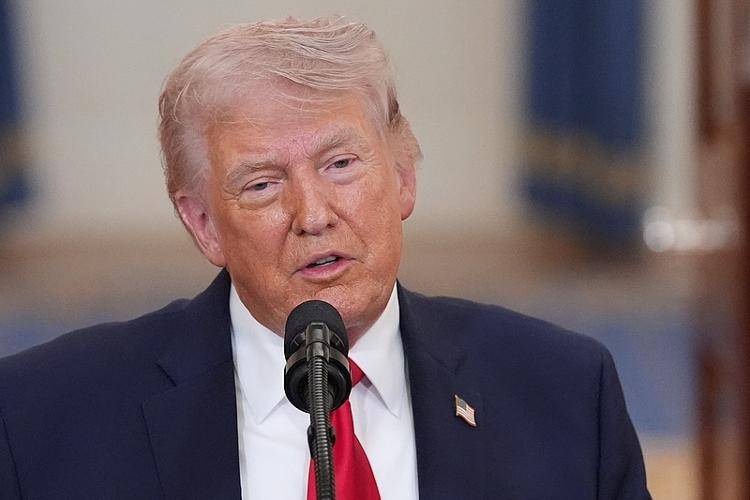
U.S. President Trump posted multiple posts on social media on the 14th to defend his policy on Iran. Trump said he was “open” to negotiations with Iran and said that the United States helps oil transportation in the Strait of Hormuz and that countries should provide “escort compensation” to the United States.
Trump said Iran was “desperate” to reach a deal. He will decide whether the United States chooses to engage with Iran. “We are open to this idea.” Previously, Trump said that the U.S.-Iran war will “end immediately” after the U.S. congressional midterm elections in November, and that resuming negotiations with Iran is “not something we are currently considering.”
Trump also claimed that the United States was helping oil tankers pass through the Strait of Hormuz and that “countries should compensate the United States after the conflict is over.”
Senior Iranian official says there will be no negotiations until Iran’s conditions are met
△Mohsin Rezai (data map)
In the early morning of the 15th local time, Mohsin Rezai, secretary of Iran’s Supreme National Security Council, said not to be disturbed by the “inconsistent signals” from the US President. These signals include both “Iran will not negotiate” and “Iran is ready to negotiate.”
Rezaei said the landscape regarding oil and the situation in the Strait of Hormuz has changed. There is no doubt that Iran will never negotiate until its conditions are met.
Have any ships hit mines in the strait?
The US and Iran have different opinions
Iran says an oil tanker struck a mine and exploded while trying to cross the strait, but the US denies it
On the 14th local time, Iran’s Islamic Revolutionary Guard Corps stated that an oil tanker named “Algaya” hit a mine and exploded when it tried to pass through the “no-navigation zone” in the southern Strait of Hormuz. The Revolutionary Guards said that after the incident, relevant parties tried to control the fire, but failed. The entire tanker has now been engulfed in flames.
Iran stated that it had previously issued warnings about the dangers of “illegal waterways” and emphasized that the Strait of Hormuz is still under Iranian control and is in a “blocked state.”
Later that day, the U.S. Central Command stated that the statement by Iran’s Islamic Revolutionary Guard Corps that “a Panamanian-flagged oil tanker recently hit a mine in the Strait of Hormuz” was untrue. The statement said that two days ago, Iran once again used drones to attack the tanker while it was anchored in the coastal waters of Oman.
Iran says two fishing boats were attacked by drones, many missing
On the 14th, the Deputy Governor of Political and Security Affairs of Iran’s Hormozgan Province stated that two fishing boats near the Port of Korgan in the Persian Gulf were attacked by “enemy drones” that night. After the attack, many fishermen on the boat were missing, and a search and rescue operation has been launched.
Data shows single-day traffic volume in the Strait of Hormuz dropped to single digits
Ship tracking information shows that the number of ships passing through the Strait of Hormuz in a single day during the two days last weekend was only single digits, lower than the daily average of 14 ships in the 10 days. It is reported that within two days last weekend, 4 ships sailed out of the Strait of Hormuz, including ships carrying energy; 10 cargo ships sailed into the Strait of Hormuz.
However, the above figures do not include ships that turned off their automatic identification systems when passing through the Strait of Hormuz.
According to the British Maritime Trade Action Office, a ship was hit by a UFO while passing through the Strait of Hormuz on the 13th. It is unclear how the crew and ship were damaged.
The Strait of Hormuz is a global shipping artery, carrying about a quarter of the world’s maritime oil trade and large amounts of liquefied natural gas and fertilizer transportation. Before the United States and Israel launched a military strike on Iran on February 28, approximately 125 large commercial ships, including oil tankers, natural gas carriers, bulk carriers and container ships, could pass through the Strait of Hormuz every day.
Prospects for navigation in the Strait of Hormuz dim
△巴加埃
On the 14th, Iranian Foreign Ministry spokesperson Bagaei said at a press conference that a regional meeting to discuss the commercial shipping route in the Strait of Hormuz that was originally scheduled to be held in Oman that day was postponed at the request of Saudi Arabia. Previously, Iran had stated that Iran, Iraq and other Persian Gulf coastal countries would exchange views on establishing a safe route for commercial shipping in the Strait of Hormuz at the meeting.
Why was this regional meeting postponed? Will the Gulf countries reach a consensus with Iran on the Strait of Hormuz?
Analysts believe that the fundamental reason for the postponement of this meeting is the game between all parties regarding the future institutional arrangements of the Strait of Hormuz. Currently, on the issue of passage through the strait, the competition for the interests of countries in the region and the pressure from external forces are intensifying.
Regarding the issue of the navigation safety mechanism in the Strait of Hormuz, the positions of the Gulf countries are severely divided: one group advocates promoting the embedding of international legal guarantees into the navigation system through dialogue and negotiation; the other group firmly opposes Iran’s use to achieve legalized control of the strait. Specifically, first of all, Bahrain was the first to publicly express its refusal to participate in the meeting; secondly, Saudi Arabia also made requests to Iran, hoping not to hold the meeting for the time being; thirdly, except for Bahrain and Saudi Arabia, other Gulf countries also remained silent, that is, they did not have a positive attitude towards the meeting itself.
The United States also does not want Gulf countries to reach too much consensus on the issue of passage through the Strait of Hormuz, because this would reduce its operational space for intervention.
Analysis points out that it is currently difficult for Iran to reach a complete consensus with the Gulf countries on the Strait of Hormuz issue. The Trump administration is a major headwind. Some time ago, Trump has repeatedly threatened Oman and asked Oman not to reach relevant arrangements with Iran. The United States may also exert similar pressure on other Gulf countries.
In addition, Iran and the Gulf countries are still working on consultations on the strait issue. Although the meeting was postponed, Saudi Arabia expressed its desire not to hold the meeting for the time being through formal channels, and its attitude was professional and good. This leaves open the possibility that Iran and the Gulf countries will continue to explore solutions to the Strait through negotiations in the future. To a certain extent, this is also a reflection of regional countries seeking strategic independence and getting rid of excessive U.S. influence.
Related reading

2026 National Cyber Security Awareness Week Opens
The opening ceremony of the 2026 National Cyber Security Publicity Week was held in Jinan, Shandong Province on September 14. A series of important results in the field of network security, including the "Artificial Intelligence Security Governance Framework" 3.0, "2026 Artificial Intelligence Technology-Enabled Network Security Application…

Xi Jinping’s reply to all members of “Zhangzhou 110” in Fujian Province
Xinhua News Agency, Beijing, September 15th Xi Jinping’s reply to all members of “Zhangzhou 110” in Fujian Province All members of “Zhangzhou 110” in Fujian Province: Your letter has been received. "Zhangzhou 110" is a bright business card of the public security system, which left a…
Xi Jinping replied to all the members of Fujian Province’s “Zhangzhou 110”
Xi Jinping wrote back to all the members of the "Zhangzhou 110" in Fujian Province, emphasizing their commitment to serving the people and being a loyal guardian of the Party and the people. Recently, Xi Jinping, General Secretary of the CPC Central Committee, State President, and…