“In 2025, the province’s total output value of agriculture, forestry, animal husbandry and fishery will reach 975.14 billion yuan, an increase of 4%, ranking fifth in the country, and its status as a major agricultural province will be further consolidated.” On September 14, at the briefing meeting for the Hubei-themed interview event of the 2026 “Vibrant China Research Trip”, Zhang Guihua, director of the Hubei Provincial Department of Agriculture and Rural Affairs, used a set of real figures to express Hubei’s importance as a major agricultural province.
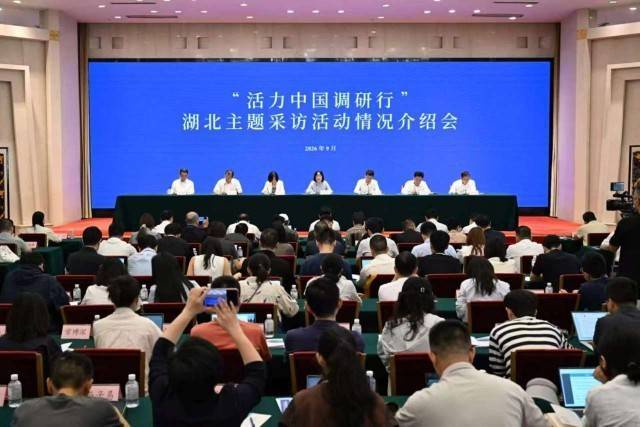
Briefing session on site. Data pictures
“Agriculture is the foundation of the world, and there is no greater service.” Historically, the agricultural proverb “If Huguang is ripe, the world is sufficient” has become famous far and wide. Nowadays, based on its excellent resource endowment, Hubei has compiled the “15th Five-Year Plan” for the modernization of agriculture and rural areas in the province, focusing on accelerating the construction of a strong agricultural province and creating a “land of plenty” in the new era, and has clarified the four major goals of building a national high-quality agricultural product production area, a pioneer area for agricultural industrialization development, an agricultural science and technology innovation leading area, and a model area for livability, industry, and beautiful countryside.
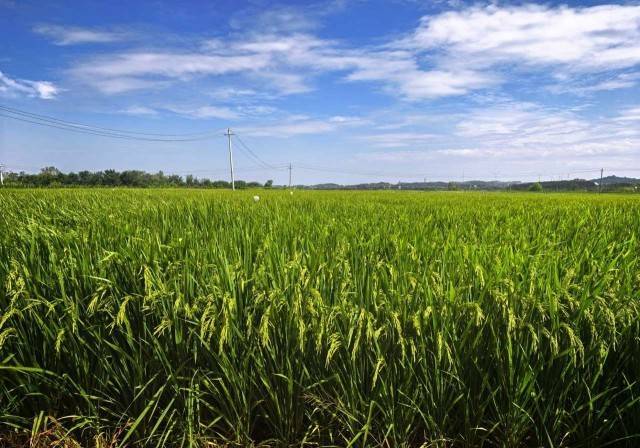
Rice fields in Dongjiao Village, Zaoyang City, Hubei Province. Photo by Wang Jianhong
Hubei has thoroughly implemented the strategy of “hoarding grain in the land and storing grain in technology” and comprehensively strengthened special improvements for the construction of high-standard farmland. A total of 48.08 million acres of high-standard farmland have been built, accounting for 67.3% of the cultivated land area. With the continuous implementation of the seed industry revitalization action, innovative achievements such as Wuchang fish, high-yield and high-protein corn, and “rice hematopoiesis” have emerged. In 2025, the total grain output will reach 55.82 billion kilograms, remaining above 50 billion kilograms for 13 consecutive years.
At the same time, Hubei has built six industrial chains worth more than 100 billion yuan, including high-quality rice and specialty freshwater products. It has polished provincial-level regional public brands such as “shrimp, eel, rice tea, lotus root, mushroom, orange mugwort,” and Wuchang fish. It has created 9 national-level advantageous and characteristic industrial clusters, 96 agricultural industry strong towns, and 15 modern agricultural industrial parks. The revenue of the agricultural product processing industry has reached 1.04 trillion yuan. The development pattern of 10-billion enterprises, 100-billion clusters, and trillion-dollar industries has basically been formed.
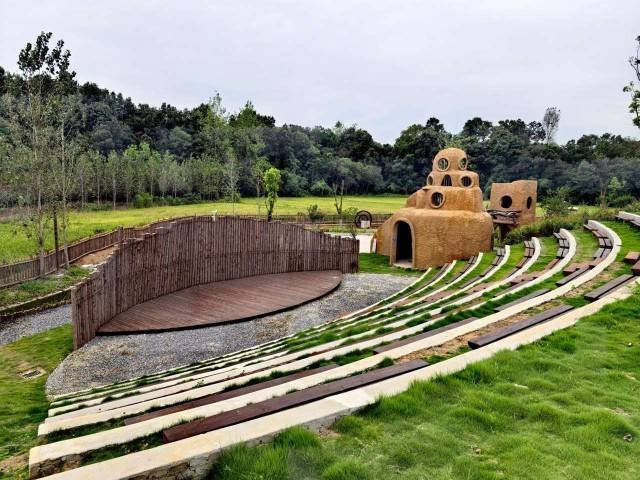
A corner of Cha’an Village, Zaoyang City, Hubei Province. Photo by Wang Jianhong
The green trees border the village, and the green mountains and hills slope outside. Hubei has accelerated the ecological transformation of rural production and life. The use of chemical fertilizers and pesticides has declined for 10 consecutive years, and the comprehensive utilization rates of agricultural film and straw have exceeded 87% and 95% respectively. We have made every effort to improve the water quality in the Honghu Lake Basin, continue to promote the protection of the Yangtze River, and unswervingly implement the ten-year ban on fishing in the Yangtze River. The natural population of Yangtze finless porpoises has recovered to 1,426, of which 317 are in Hubei. The swordfish and catfish have reappeared in the Hubei section of the Yangtze River for the first time in 30 years.
It is reported that in 2025, the per capita disposable income of rural residents in Hubei Province will reach 23,921 yuan, and the income ratio of urban and rural residents will shrink to 2.06.