Interface News Reporter | 樓婍沁
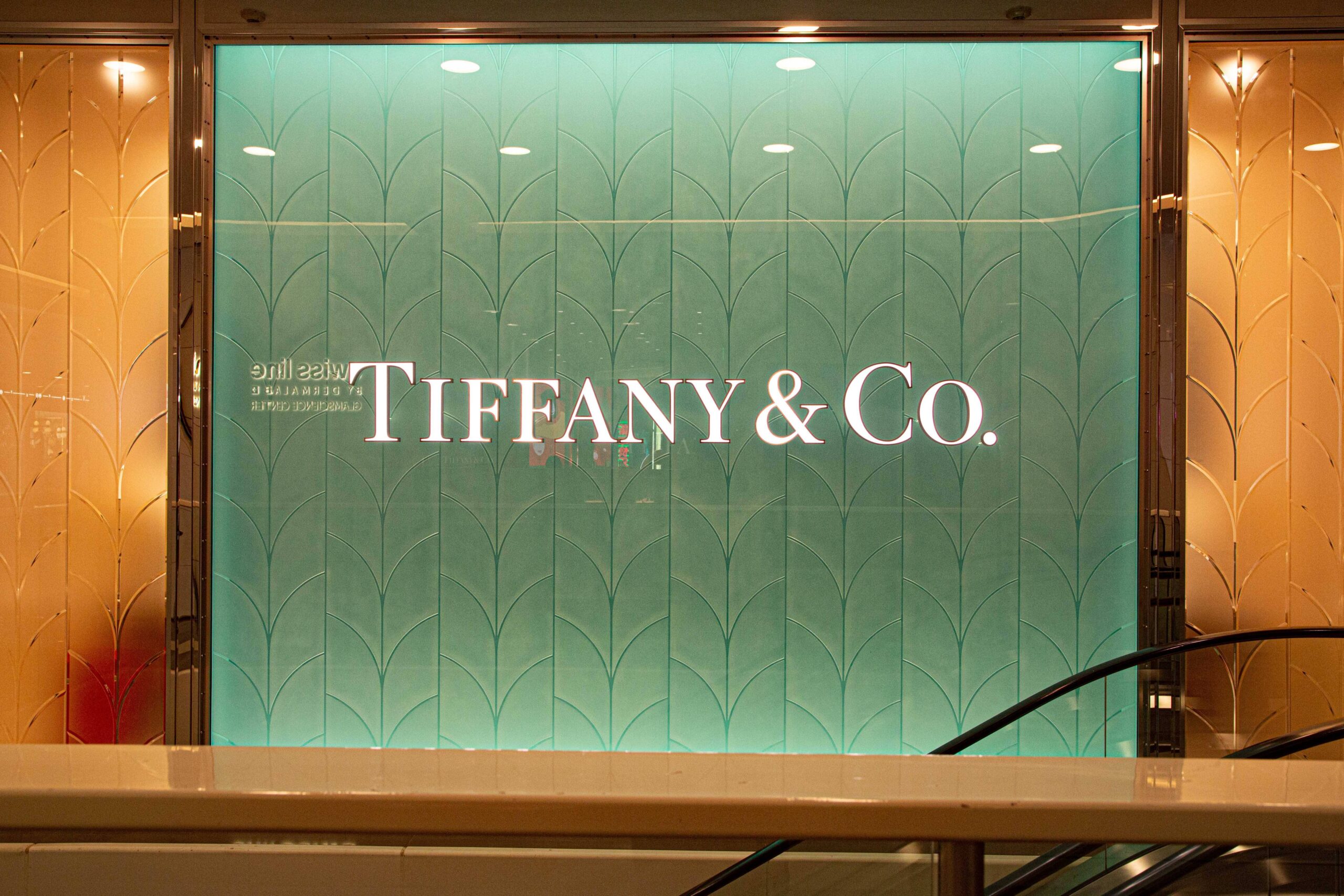
Recently, a consumer reported on a social platform that he spent RMB 200,000 at a Tiffany & Co. store in Chengdu. After the sale, the brand promised to send a box of mooncakes as a gift during the Mid-Autumn Festival. However, the consumer was later told that the Mid-Autumn gift box was mistakenly sent to another customer, and the salesperson wanted to compensate with peach cakes not of the brand. Consumers posted their experiences on Xiaohongshu, sparking heated discussions.
Tiffany sent the wrong Mid-Autumn Festival gift box, but got a package of bulk peach cakes to make up for it. This wave of operations attracted attention not only because they did not receive the mooncakes, or because the staff responded unprofessionally, but also because a large number of Chinese consumers have become increasingly sensitive to the “arrogance” of luxury brands as they age. What consumers care about is not the gift itself, but the fulfillment of the brand promise and the feeling of being respected.
Let’s look at the chain of facts first. The customer received the wrong gift box, and the brand salesperson offered peach cakes as compensation. What the consumer felt was not an apology, but a perfunctory response. Some consumers commented on the above-mentioned Tiffany incident on social networks and said that they had had a similar experience. The luxury brand sales staff did not respect customers, blurred the key points of their promises, and advised customers not to care.
However, front-line sales staff of luxury brands generally do not have the authority to decide the content and form of gift compensation. When it comes to brand official apology and compensation, it often needs to be reported at various levels and decided by higher-level staff.
Luxury goods used to have an effective logic in the Chinese market: selling not only products, but also identity imagination. The premise of this logic is that the relationship between supply and demand is tilted, brands are scarce, and consumers are chasing them. But the market structure has changed. Consumers have shifted from being enthusiastic to being cautious, and “superior” services are no longer accepted. When the characteristics of a buyer’s market gradually emerge, brand premiums must be supported by service contracts instead of continuing to be overdrawn by status narratives.
Chinese consumers’ attitude towards luxury goods is changing from “looking up” to “looking down”. The dream-like and status-based service attitude in the past will only be interpreted as arrogance in the current environment. If brands continue to use old scripts to play in new markets, every slight will turn into a net outflow of customer assets. The repurchase rate of luxury goods retail relies on trust, and trust relies on contract fulfillment. Once the performance of the contract is violated, the brand premium becomes negative equity.
There is a rule in communication science: the lethality of a negative event does not depend on the size of the event itself, but on whether it hits the collective mood of the public. The above-mentioned incident has also accurately hit the sensitive nerves of Chinese consumers about being “treated differently”. It’s not a question of how much Taosu is worth, but the brand’s default that “I’ve compensated consumers and they shouldn’t care anymore.” This kind of acquiescence is fatal in today’s Chinese market.
What Tiffany needs to do is not just send an apology email or statement, but recalibrate the power relationship in the service chain. Otherwise, every apology or any arrogant wording or behavior in the compensation will continue to further ferment the negative comments. The sales side must show enough sincerity to make consumers feel that “I serve you on behalf of the brand.” Commitments need to be specific, compensation needs to match, and communication needs to be transparent. If you fail to do these three things, any rescue actions or subsequent marketing investments will be wiped out by the next arrogance.
Related Reading
- Original In three months, Zhipu fell below 1 trillion2026-09-30
- Tax evasion? Luo Yonghao was reported under his real name! Open fire on all sides to be surrounded on all sides?2026-09-30
- Original: Why does Wufangzhai sell houses intensively?2026-09-29
- The west “breaks zero”, and the competition for the word “rice” in inland provincial capitals begins2026-09-29
- Original Luo Yonghao makes enemies everywhere, Zheng Gang resorts to “tax evasion” killer weapon2026-09-29