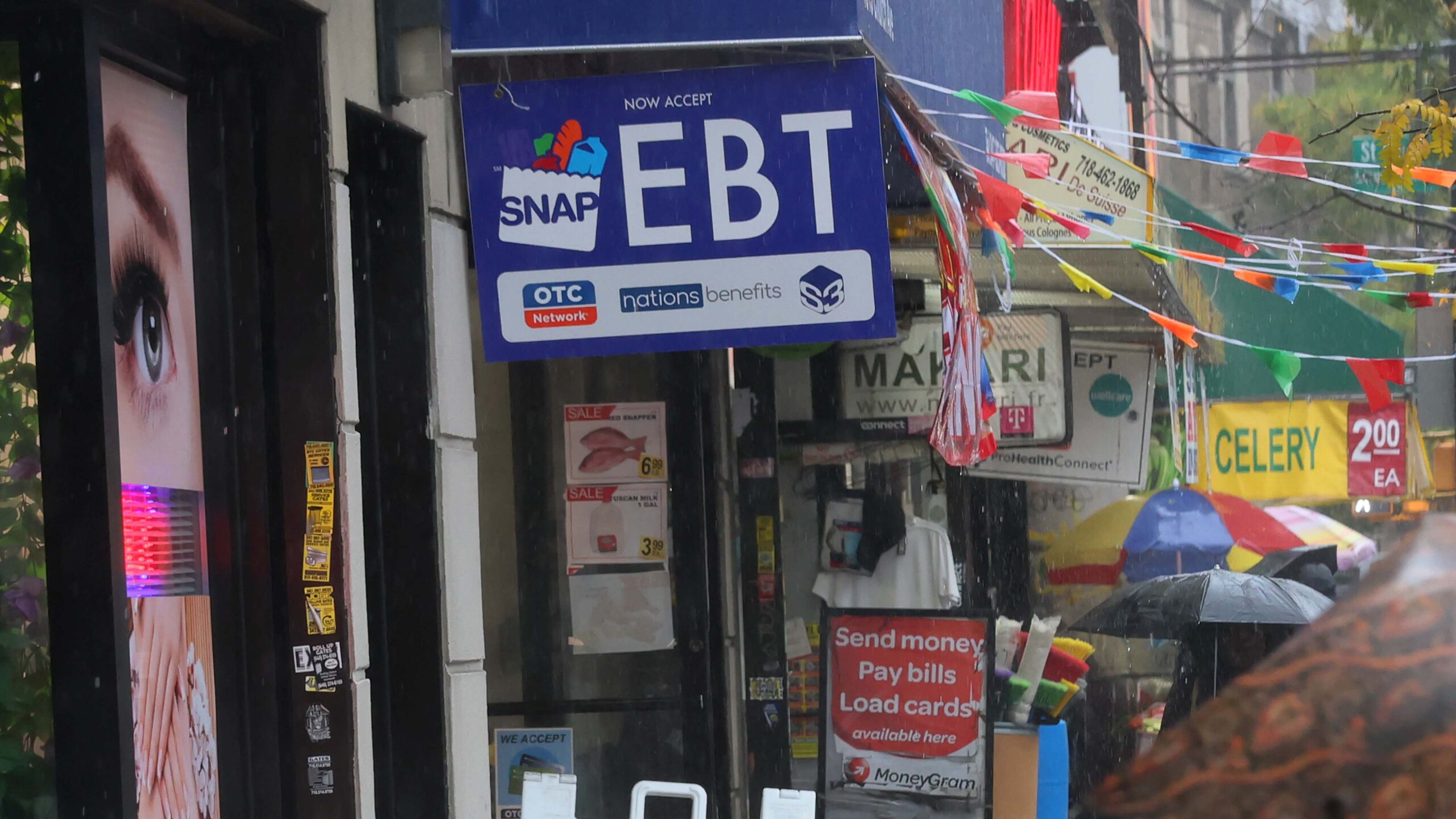
For the many millions of people who receive SNAP, grocery budgets will stretch a little further this month.
Starting Oct. 1, the maximum SNAP benefit for a family of four in the 48 contiguous states and D.C. will climb to $1,023 a month.
The annual bump is meant to help the roughly 36 million people on the food assistance program keep up with grocery prices. Income limits and deductions are rising, too, which means some families will get additional financial support, and more people could become eligible for help.
Here’s what’s changing and what it could mean for your benefits.
How much SNAP support will I receive from Oct. 1?
The figures in the table are maximums, and most households actually get less.
SNAP expects families to put about 30% of their own income toward food, so it takes 30% of a household’s net monthly income and subtracts that from the maximum.
For example, a family of four with $1,000 a month in net income would be expected to spend $300 on food. Their benefit would be $1,023 minus $300, or $723 a month. The lower a household’s income, the closer it gets to the maximum.
Alaska, Hawaii, Guam and the U.S. Virgin Islands each have their own benefit amounts, because groceries there tend to cost more than in the lower 48. Shipping distances and local supply chains push prices up.
Hawaii’s maximum is falling to $1,655 from $1,689 as USDA phases in a lower food-cost estimate.
Alaska splits the state into three zones: Urban, Rural 1 and Rural 2. People in towns and cities in the Urban zone get the lowest maximums, while those in more remote rural communities, where prices are higher, get more.
Other factors that affect your SNAP benefits
The maximum SNAP benefit isn’t the only figure changing in October.
All figures below are for the 48 contiguous states and D.C. Where a figure depends on household size, it’s for a household of four unless noted.
Income limits: $3,575 a month gross (up from $3,483 in 2025)
Gross income is your household’s total income before deductions, and net is what’s left after. Most households must fall under both limits to qualify.
Standard deduction: $217 for households of one to three people ($209 in 2025)
This amount is subtracted from every household’s income before benefits are calculated. Larger households get a higher deduction.
Shelter deduction cap: $769 ($744 in 2025)
If housing and utility costs eat up more than half your income after other deductions, you can deduct the amount above that 50% threshold, up to this cap. Households with an older or disabled member aren’t subject to the cap.
Asset limit: $3,000 (unchanged from 2025)
This is how much a household can have in savings and other countable assets and still qualify. For households with a member who is 60 or older or disabled, the limit rises to $4,750 (from $4,500 in 2025).
Minimum benefit: $25 a month ($24 in 2025)
This is the smallest benefit an eligible one- or two-person household can receive.
Changes to SNAP
While SNAP benefits are increasing from this month, the broader picture is a little more complicated.
Government data shows that there are actually millions fewer people receiving SNAP compared to last year.
Experts say two changes to SNAP introduced in the One Big Beautiful Bill Act, the tax and spending law President Donald Trump signed in July 2025, are having — or are set to have — an impact on the number of SNAP recipients.
The first of these changes is expanded work requirements and eligibility cuts enacted under the OBBBA, according to the Center on Budget and Policy Priorities (CBPP), a left-leaning think tank. For example, the law raised the age range subject to SNAP’s 80-hour-a-month work requirement from 18–54 to 18–64, and removed exemptions that had previously covered veterans, people experiencing homelessness, and young adults recently aged out of foster care.
It says that SNAP participation fell by roughly 5 million people, or 12%, between July 2025, when the law was signed, and May 2026. While it acknowledges that participation had started to decline prior to July 2025, the CBPP says the fall in numbers accelerated in almost all states after the OBBBA was signed into law.
The second of these factors relates to who pays to run the SNAP program.
Under the OBBBA, states will have to cover 75% of SNAP’s administrative costs from Oct. 1 — up from 50% previously. USDA estimates the change will shift about $16.9 billion in costs to states over five years.
Tim Shaw, director of the Benefits Transformation Initiative at the Aspen Institute’s Financial Security Program, warned this could make it harder to access SNAP over time.
“Most states knew the 75% administrative cost was coming and budgeted for it. But in the longer term, pressure on budgets will increase and states will have to make tough choices,” he told Money Talks News. “States will have less leeway to deliver benefits so there may be fewer technological improvements, longer wait times for call centers and more complications to get SNAP.”
Furthermore, the OBBBA states will also have to cover part of the benefit costs for the first time from Oct. 2027. This will range from 0% to 15% depending on the scale of each state’s error rates.
The Georgetown Center on Poverty and Inequality, a research and policy think tank based in Washington, D.C., is among those to warn that the wider OBBBA changes will mean states face “impossibly high costs—forcing them to cut other programs, raise taxes, reduce SNAP access, or end their SNAP programs altogether.”
The USDA says it projects that the changes in administrative costs will “have a negligible impact on SNAP benefit spending or SNAP participation.”
How are SNAP increases calculated?
Maximum benefits are tied to the Thrifty Food Plan, a USDA estimate of what it costs to feed a family of four (two adults and two children) a healthy diet on a tight budget.
Each June, USDA’s Food and Nutrition Administration, formerly the Food and Nutrition Service, works out what that basket of groceries costs at current prices. By law, that June figure sets the maximum SNAP benefits for the fiscal year starting Oct. 1. This year’s increase, about 3%, reflects how grocery prices have moved over the past year.
Related Reading
- White House removes CNN from press pool for Trump’s upcoming trip to Texas and Oklahoma2026-10-01
- ‘I felt like bait,’ Jane Doe said at 2025 Cornell University hearing investigating allegations of fraternity house sexual assault2026-10-01
- Trump and Vance hit the campaign trail in deep-red areas where GOP candidates seek a boost2026-10-01
- Tennessee halts executions after Christa Pike survives lethal injection attempt2026-10-01
- Changes to SNAP benefits begin Oct. 1 for millions of Americans: What to know2026-10-01